
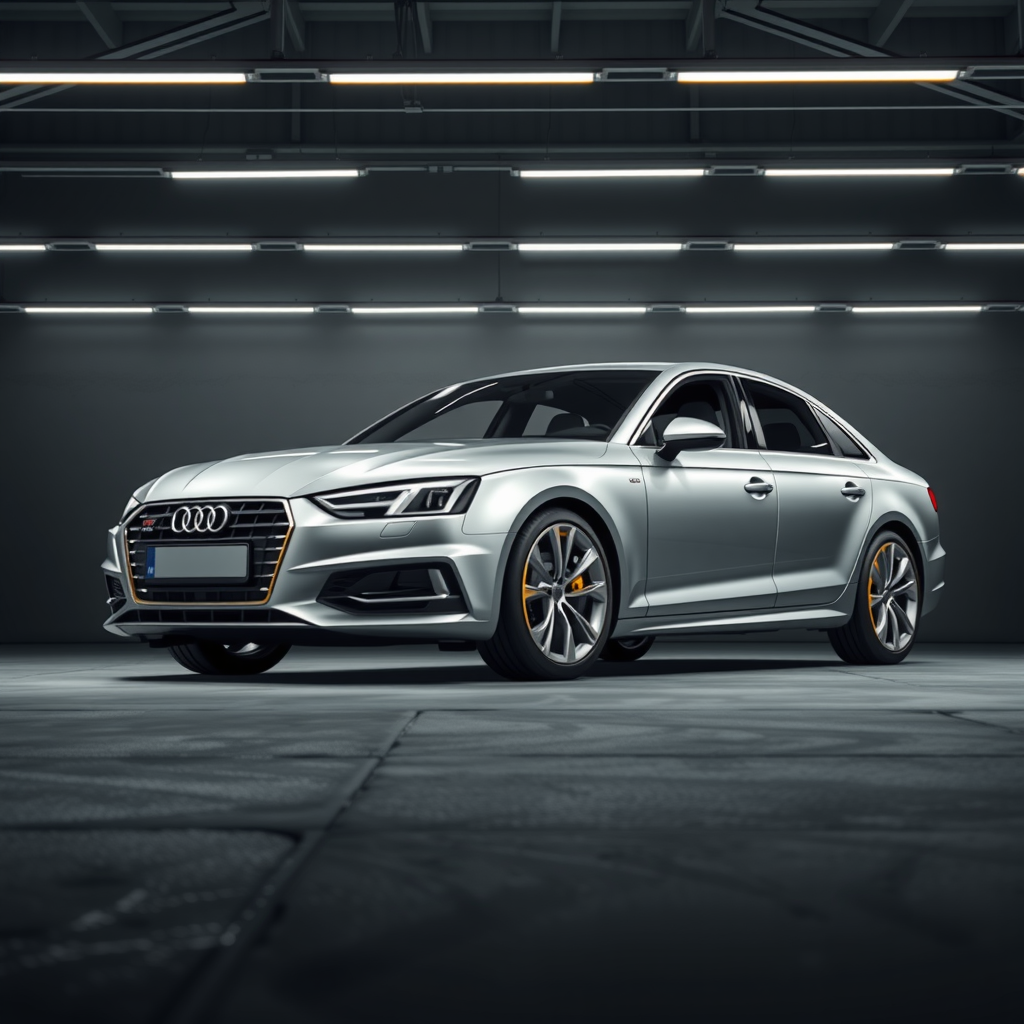
Audi A4 wheel fitment — B5
Overview
The first generation Audi A4 (B5) succeeded the Audi 80, marking a significant shift in Audi's lineup towards luxury compact executive cars. Built on the Volkswagen Group B5 platform from November 1994 to 2001, it was available as a four-door sedan and five-door Avant (station wagon). The A4 featured front-wheel drive or optional quattro all-wheel drive systems. It introduced Audi's new 1.8-liter 20v engine with five valves per cylinder, alongside various petrol and diesel engines ranging from 1.6 to 2.8 liters. In 1999, a significant facelift was introduced, enhancing the A4's performance and aesthetics.
Audi A4 wheel fitment
Audi A4 wheel fitment for the Audi A4 B5 (1994–1999): the factory PCD, centre bore and bolt spec, then the aftermarket width and offset window we fit to.
| Bolt pattern (PCD) | 5x112 |
| Centre bore | 57.1 mm |
| Bolt / thread | M14x1.5 (bolts) |
| Wheel-bolt torque | 120 Nm |
| Seat type | radius |
| Factory setup | square |
| TPMS | indirect |
Aftermarket wheel sizes — read per position:
| Position | Width | Offset |
|---|---|---|
| Front | 6.5J–8.5J | ET18–ET45 |
As a rule, each extra 1J of width wants roughly +8–10 ET to keep the wheel tucked. The exact offset and any spacer are confirmed by the fit-check.
UK popularity & demand
Based on DfT VEH0124 vehicle-parc data (2025), there are approximately 242,314 Audi A4 on UK roads, placing it in the top 1% of car models by volume across our fitment database.
That makes Audi A4 wheel fitment a high-demand spec to keep in stock. It is one reason we track it here.
Source: DfT/DVLA licensed-vehicle statistics (VEH0124), matched to the AIWheelTech fitment database.
Engines & drivetrain
| Variant | Engine | Fuel | Power | Drive |
|---|---|---|---|---|
| RS4, 2.7 V6 30v Biturbo | 2.7L V6 engine | petrol | 380 hp | Quattro |
| S4, 2.7 V6 30v Biturbo | 2.7L V6 engine | petrol | 265 hp | Quattro |
| 2.8 V6 30v DOHC | 2.8L V6 engine | petrol | 193 hp | Quattro |
| 2.8 V6 12v SOHC | 2.8L V6 engine | petrol | 174 hp | Quattro |
| 2.4 V6 30v DOHC BDV Engine | 2.4L V6 engine | petrol | 165 hp | Quattro |
| 1.8T I4 20v DOHC Turbo | 1.8L Straight-four engine | petrol | 150 hp | Quattro |
| 2.4 V6 12v SOHC | 2.4L V6 engine | petrol | 150 hp | Quattro |
| 2.6 V6 12v SOHC | 2.6L V6 engine | petrol | 150 hp | Quattro |
| 2.5 V6 TDI 24v DOHC | 2.5L V6 engine | diesel | 150 hp | Quattro |
| 1.8 I4 20v DOHC | 1.8L Straight-four engine | petrol | 125 hp | FWD |
| 1.9 TDI I4 8v SOHC PD | 1.9L Straight-four engine | diesel | 115 hp | Quattro |
| 1.6 I4 8v SOHC | 1.6L Straight-four engine | petrol | 101 hp | FWD |
| 1.9 TDI I4 8v SOHC | 1.9L Straight-four engine | diesel | 75 hp | Quattro |
Performance
| Variant | Power | 0–62 mph | Top speed |
|---|---|---|---|
| 1.6 I4 8v SOHC | 101 hp | 11.9 s | 118 mph |
| 1.8 I4 20v DOHC | 125 hp | 10.5 s | 127 mph |
| 1.8T I4 20v DOHC Turbo | 150 hp | 8.3 s | 139 mph |
| 2.4 V6 12v SOHC | 150 hp | 9.1 s | 131 mph |
| 2.4 V6 30v DOHC BDV Engine | 165 hp | 8.4 s | 137 mph |
| 2.6 V6 12v SOHC | 150 hp | 9.1 s | 134 mph |
| S4, 2.7 V6 30v Biturbo | 265 hp | 5.7 s | 154 mph |
| RS4, 2.7 V6 30v Biturbo | 380 hp | 4.9 s | 159 mph |
| 2.8 V6 12v SOHC | 174 hp | 8.2 s | 139 mph |
| 2.8 V6 30v DOHC | 193 hp | 7.4 s | 145 mph |
| 1.9 TDI I4 8v SOHC | 75 hp | 98 mph | |
| 1.9 TDI I4 8v SOHC PD | 115 hp | 10.5 s | 115 mph |
| 2.5 V6 TDI 24v DOHC | 150 hp | 9 s | 130 mph |
Dimensions
| Length | 4520 mm |
| Width | 1733 mm |
| Height | 1415 mm |
| Wheelbase | 2615 mm |
Body styles & production
| Body styles | Sedan, Avant |
| Produced | 1994–1999 |
| Units produced | 1,674,943 |
Trim levels
Factory colours
History & notable variants
The B5 generation saw continuous minor updates throughout its production run until a major facelift in 1999. Notable for introducing Audi's high-performance S4 variant into the lineup and later the RS4 Avant model. The A4 B5 was also part of Audi’s hybrid vehicle history with the introduction of the third-generation Audi duo based on the A4 Avant.
Reliability & owner notes
- Pros: Introduction of the new 1.8-liter engine with five valves per cylinder; wide range of petrol and diesel engines; quattro all-wheel drive option
- Cons: Initial mechanical issues reported in some markets; minor updates required to maintain competitiveness against rivals
- Common issues: Some early models experienced electrical glitches, particularly with the air conditioning system