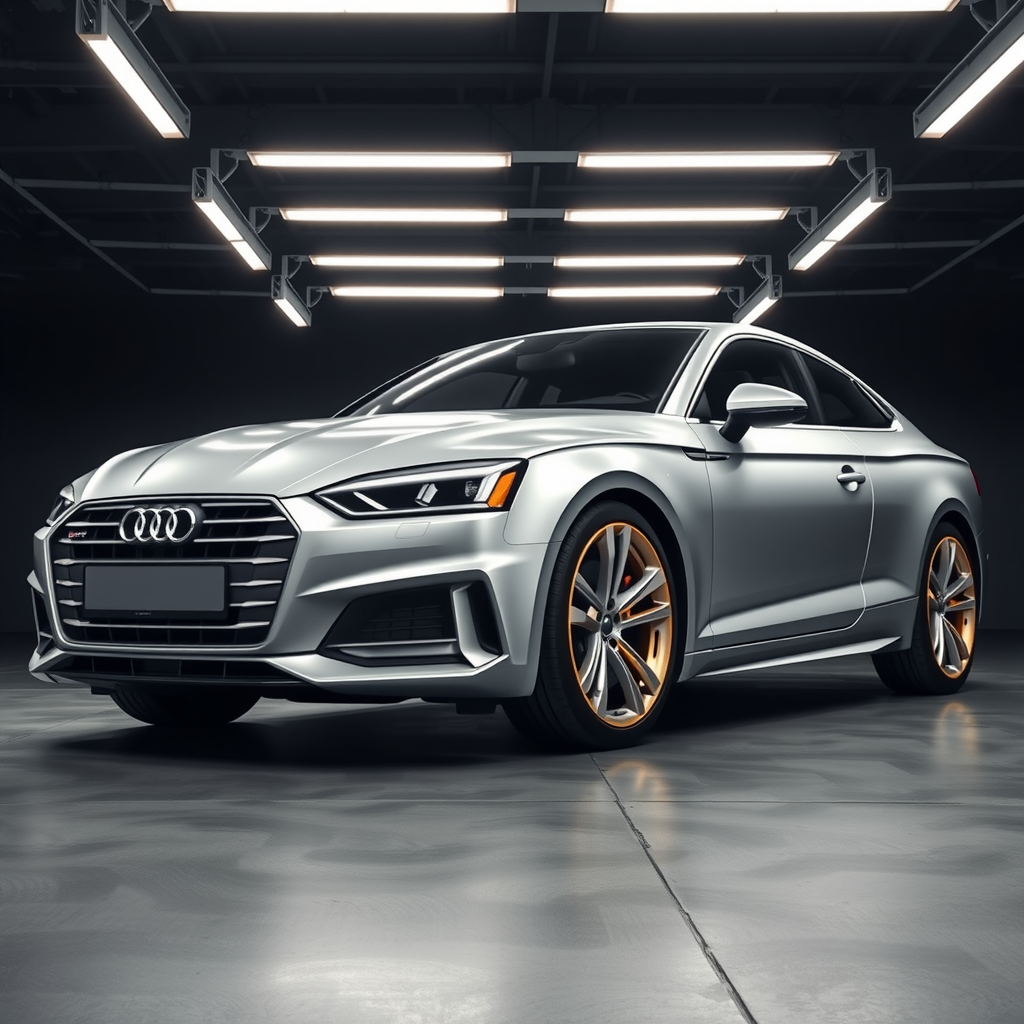
Audi A5 wheel fitment — 8T/8F Facelift
Audi A5 wheel fitment
Audi A5 wheel fitment comes down to two things: the factory hub spec, and how far the aftermarket width and offset can move from it. Both are here for the Audi A5 8T/8F Facelift (2011–2017).
| Bolt pattern (PCD) | 5x112 |
| Centre bore | 66.6 mm |
| Bolt / thread | M14x1.5 (bolts) |
| Wheel-bolt torque | 120 Nm |
| Seat type | radius |
| Factory setup | square |
| TPMS | indirect |
Aftermarket wheel sizes — read per position:
| Position | Width | Offset |
|---|---|---|
| Front | 7.5J–9J | ET15–ET40 |
Go wider and the offset has to rise with it, about 8 to 10 ET per extra 1J, or the wheel pokes past the arch. The fit-check settles the exact offset and any spacer.
Overview
The Audi A5 is a series of compact executive and grand touring coupé cars produced by Audi since June 2007, derived from the Volkswagen MLB platform architecture. The first generation (Type 8T) belongs to the B8 family, sharing its platform with the A4 saloon and Avant models. It includes coupe, cabriolet, and Sportback variants, each offering unique styling elements while maintaining a strong connection to Audi's design language.
Engines & drivetrain
| Variant | Engine | Fuel | Power | Drive, years |
|---|---|---|---|---|
| A5 1.8 TFSI Coupé | petrol | 125 kW (170 PS) | 2007 to 2008 | |
| A5 1.8 TFSI | petrol | 118 kW (160 PS) | 2009 to 2016 | |
| A5 1.8 TFSI | petrol | 130 kW (177 PS) | 2016 | |
| A5 2.0 TFSI | petrol | 132 kW (179 PS) | 2008 to 2011 | |
| A5 2.0 TFSI | petrol | 155 kW (211 PS) | 2008 to 2016 | |
| A5 2.0 TFSI quattro | petrol | 155 kW (211 PS) | quattro, 2008 to 2016 | |
| A5 3.0 TFSI, 3.0 TFSI quattro | petrol | 200 kW (272 PS) | quattro, 2011 to 2016 | |
| A5 3.2 FSI, 3.2 FSI quattro | petrol | 195 kW (265 PS) | quattro, 2007 to 2011 | |
| S5 3.0 TFSI quattro Cabriolet, Sportback | petrol | 245 kW (333 PS) | quattro, 2009 to 2016 | |
| S5 4.2 FSI quattro Coupé | petrol | 260 kW (354 PS) | quattro, 2007 to 2012 | |
| RS5 4.2 FSI quattro Coupé | petrol | 331 kW (450 PS) | quattro, 2010 to 2017 | |
| A5 2.0 TDIe Sportback | diesel | 100 kW (136 PS) | 2011 to 2016 | |
| A5 2.0 TDI Sportback | diesel | 105 kW (143 PS) | 2009 to 2016 | |
| A5 2.0 TDI, 2.0 TDI quattro | diesel | 125 kW (170 PS) | quattro, 2008 to 2011 | |
| A5 2.0 TDI, 2.0 TDI multitronic | diesel | 130 kW (177 PS) | 2011 to 2016 | |
| A5 2.7 TDI | diesel | 140 kW (190 PS) | 2007 to 2011 | |
| A5 3.0 TDI quattro | diesel | 150 kW (204 PS) | quattro, 2011 to 2015 | |
| A5 3.0 TDI quattro | diesel | 176 kW (239 PS) | quattro, 2007 to 2011 | |
| A5 3.0 TDI quattro | diesel | 180 kW (245 PS) | quattro, 2011 to 2015 |
Source: Audi A5, en.wikipedia.org.
UK popularity & demand
Based on DfT VEH0124 vehicle-parc data (2025), there are approximately 129,895 Audi A5 on UK roads, placing it in the top 3% of car models by volume across our fitment database.
That makes Audi A5 wheel fitment a high-demand spec to keep in stock. It is one reason we track it here.
Source: DfT/DVLA licensed-vehicle statistics (VEH0124), matched to the AIWheelTech fitment database.
History & notable variants
The A5 was unveiled at the 2007 Geneva Motor Show as Audi’s return to the compact executive coupé market after a decade-long absence. It marked the introduction of new body styles including the Sportback, which is essentially a five-door liftback with a fastback roofline. The S5 variant, featuring enhanced performance and styling elements, was also introduced alongside the A5. Notable for its advanced technology and design cues from the Nuvolari quattro concept car, the A5 received a facelift in 2013, introducing new features such as LED daytime running lights and updated interior trims.
Dimensions
| Length | 4,625 to 4,718 mm |
| Width | 1,854 to 1,860 mm |
| Height | 1,366 to 1,391 mm |
| Wheelbase | 2,751 to 2,810 mm |
| Kerb weight | 1,470 to 1,995 kg |
Source: Audi A5 8T, de.wikipedia.org.
Body styles & production
| Body styles | 2-door coupé, 2-door convertible, 4-door liftback sedan |
| Produced | 2011–2017 |
Trim levels
Factory colours
Reliability & owner notes
- Pros: Advanced technology features, distinctive design elements, strong performance options
- Cons: Limited availability of certain trims and engines in some markets
- Common issues: None specified