
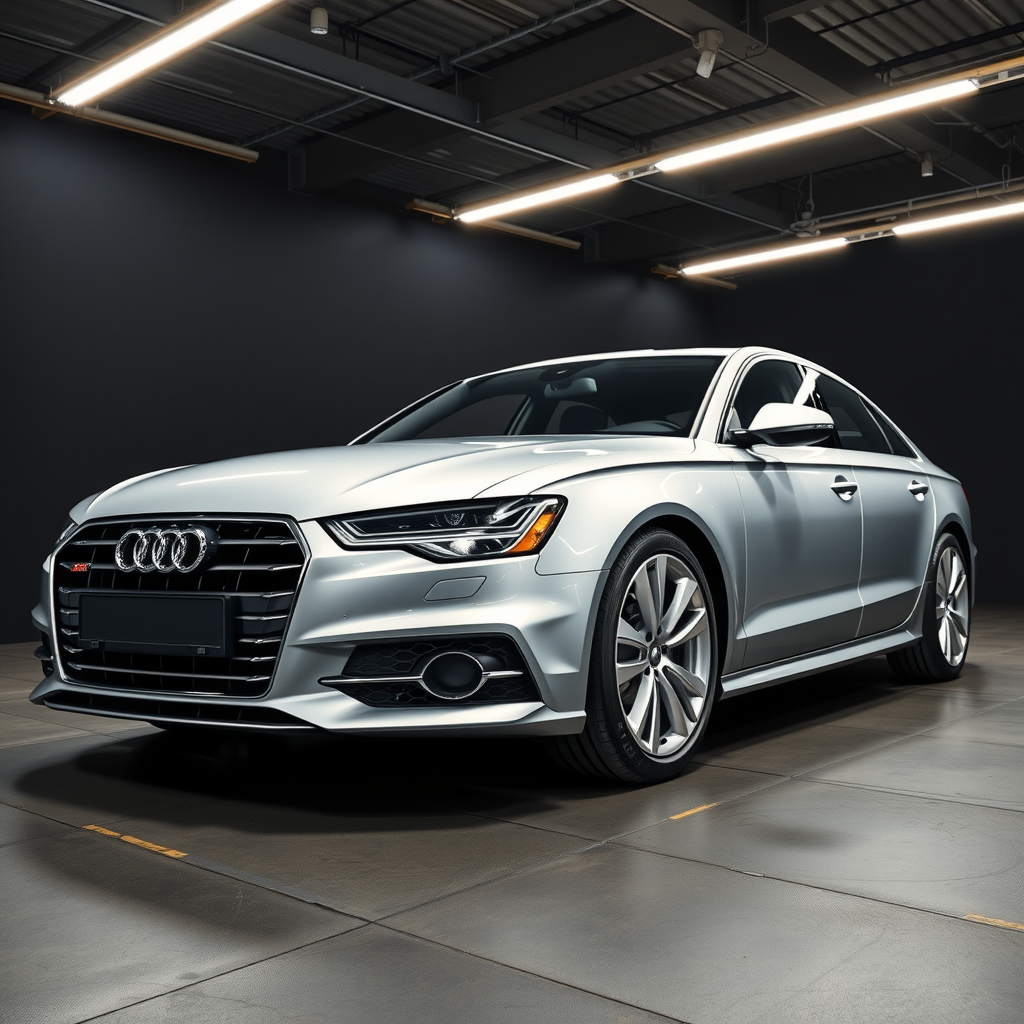
Audi A6 wheel fitment — C5
Overview
The Audi A6 C5 is an executive car manufactured by Audi AG, succeeding the C4 generation and preceding the C6. It was introduced in February 1997 based on the Volkswagen Group C5 platform and made its debut at the 1997 Geneva Motor Show. The C5 was available as a saloon (sedan) and Avant (estate/wagon), competing with models like the BMW 5 Series and Mercedes-Benz E-Class. It featured a redesigned body with improved aerodynamics, offering a drag coefficient of 0.28. Engine options included petrol V6 engines ranging from 2.4 to 4.2 liters, diesel variants, and later in its lifecycle, more powerful versions like the S6 and RS 6. The C5 was also notable for introducing Audi's multitronic continuously variable transmission (CVT) on some models.
Audi A6 wheel fitment
Start with the hub. The Audi A6 C5 spec table gives the bolt pattern and bore; the second table is the aftermarket window for Audi A6 wheel fitment.
| Bolt pattern (PCD) | 5x112 |
| Centre bore | 57.1 mm |
| Bolt / thread | M14x1.5 (bolts) |
| Wheel-bolt torque | 120 Nm |
| Seat type | radius |
| Factory setup | square |
| TPMS | indirect |
Aftermarket wheel sizes — read per position:
| Position | Width | Offset |
|---|---|---|
| Front | 6J–8.5J | ET15–ET45 |
As a rule, each extra 1J of width wants roughly +8 to 10 ET to keep the wheel tucked. The exact offset and any spacer are confirmed by the fit-check.
UK popularity & demand
Based on DfT VEH0124 vehicle-parc data (2025), there are approximately 128,620 Audi A6 on UK roads, placing it in the top 3% of car models by volume across our fitment database.
That makes Audi A6 wheel fitment a high-demand spec to keep in stock. It is one reason we track it here.
Source: DfT/DVLA licensed-vehicle statistics (VEH0124), matched to the AIWheelTech fitment database.
Engines & drivetrain
| Variant | Engine | Fuel | Power | Drive, years |
|---|---|---|---|---|
| 1.8 | 92 kW (125 PS) | |||
| 1.8 T | 110 kW (150 PS) | |||
| 1.8 T | 132 kW (180 PS) | |||
| 2.4 | 100 kW (136 PS) | |||
| 2.4 | 120 kW (163 PS) | |||
| 2.4 | 121 kW (165 PS) | |||
| 2.7 T | 169 kW (230 PS) | |||
| 2.7 T | 184 kW (250 PS) | |||
| 2.8 | 142 kW (193 PS) | |||
| 4.2 | 220 kW (299 PS) | |||
| S6 | 250 kW (340 PS) | |||
| 1.9 TDI (VEP) | diesel | 81 kW (110 PS) | ||
| 1.9 TDI (PD) | diesel | 85 kW (115 PS) | ||
| 2.5 TDI (VEP) | diesel | 110 kW (150 PS) | ||
| 2.5 TDI (VEP) | diesel | 132 kW (180 PS) | ||
| 2.0 | 96 kW (130 PS) | |||
| 2.4 | 125 kW (170 PS) | |||
| 3.0 | 162 kW (220 PS) | |||
| RS6 | 331 kW (450 PS) | |||
| RS6 plus | 353 kW (480 PS) | |||
| 1.9 TDI (PD) | diesel | 96 kW (130 PS) | ||
| 2.5 TDI (VEP) | diesel | 114 kW (155 PS) | ||
| 2.5 TDI (VEP) | diesel | 120 kW (163 PS) |
Source: Audi A6 C5, de.wikipedia.org.
Performance
| Variant | Power | 0 to 62 mph (0 to 100 km/h) | Top speed |
|---|---|---|---|
| 1.8 | 92 kW (125 PS) | 11.3 s | |
| 1.8 T | 110 kW (150 PS) | 9.4 s | |
| 2.4 | 120 kW (163 PS) | 9.1 s | |
| 2.4 | 121 kW (165 PS) | 9.1 s | |
| 2.7 T | 169 kW (230 PS) | 7.3 s | |
| 2.7 T | 184 kW (250 PS) | 6.8 s | |
| 2.8 | 142 kW (193 PS) | 8.1 s | |
| 4.2 | 220 kW (299 PS) | 6.9 s | |
| S6 | 250 kW (340 PS) | 5.7 s | |
| 1.9 TDI (VEP) | 81 kW (110 PS) | 12.3 s | |
| 1.9 TDI (PD) | 85 kW (115 PS) | 11.6 s | |
| 2.5 TDI (VEP) | 110 kW (150 PS) | 9.7 s | |
| 2.5 TDI (VEP) | 132 kW (180 PS) | 8.9 s | |
| 2.0 | 96 kW (130 PS) | 10.5 s | |
| 2.4 | 125 kW (170 PS) | 9.3 s | |
| 3.0 | 162 kW (220 PS) | 7.5 s | |
| RS6 | 331 kW (450 PS) | 4.7 s | |
| RS6 plus | 353 kW (480 PS) | 4.5 s | |
| 1.9 TDI (PD) | 96 kW (130 PS) | 10.5 s | |
| 2.5 TDI (VEP) | 114 kW (155 PS) | 9.7 s | |
| 2.5 TDI (VEP) | 120 kW (163 PS) | 9.3 s |
Source: Audi A6 C5, de.wikipedia.org.
Dimensions
| Length | 4,796 to 4,886 mm |
| Width | 1,819 mm |
| Height | 1,477 mm |
| Wheelbase | 2,760 to 2,850 mm |
| Kerb weight | 1,320 to 1,765 kg |
Source: Audi A6 C5, de.wikipedia.org.
Body styles & production
| Body styles | Limousine, Kombi |
| Produced | 1997–2005 |
Trim levels
Factory colours
History & notable variants
The A6 C5 received a facelift in 2002, featuring revised headlight and grille designs, exposed exhaust tips, and minor changes to the body styling. This update brought new engine options such as enhanced V6 diesel engines and a more powerful version of the 4.2-liter petrol V8. The model was recognized with awards including Car and Driver's Ten Best list in 2000 and 2001, and the World Car of the Year award for 2005. Additionally, the C5 Avant served as the basis for Audi’s allroad quattro variant introduced in 1999.
Reliability & owner notes
- Pros: Improved aerodynamics; wide range of engine options; advanced air suspension on allroad variant
- Cons: Limited production numbers for high-performance variants like RS 6; some models had higher fuel consumption compared to competitors