
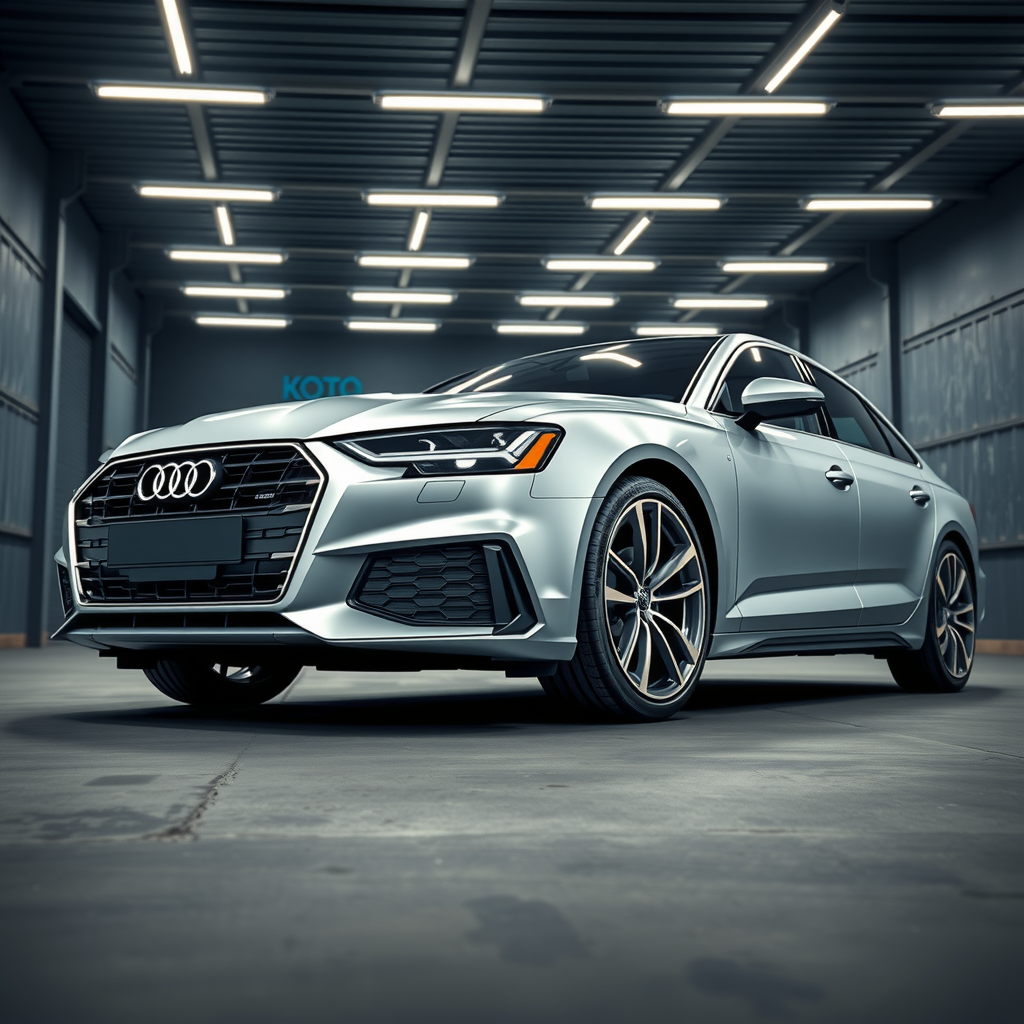
Audi A6 wheel fitment — C8
Overview
The Audi A6 C8 is an executive car manufactured by Audi AG from 2018 to 2023, succeeding the A6 C7 and continuing the lineage of the Audi 100 series. It was produced in Neckarsulm, Germany, and offered as a saloon (sedan) and Avant (estate/wagon). The platform is based on Volkswagen Group's Premium architecture, featuring advanced technology and design improvements over its predecessor.
Audi A6 wheel fitment
Start with the hub. The Audi A6 C8 spec table gives the bolt pattern and bore; the second table is the aftermarket window for Audi A6 wheel fitment.
| Bolt pattern (PCD) | 5x112 |
| Centre bore | 66.6 mm |
| Bolt / thread | M14x1.5 (bolts) |
| Wheel-bolt torque | 120 Nm |
| Seat type | radius |
| Factory setup | square |
| TPMS | indirect |
Aftermarket wheel sizes — read per position:
| Position | Width | Offset |
|---|---|---|
| Front | 7.5J–10J | ET22–ET50 |
Go wider and the offset has to rise with it, about 8 to 10 ET per extra 1J, or the wheel pokes past the arch. The fit-check settles the exact offset and any spacer.
UK popularity & demand
Based on DfT VEH0124 vehicle-parc data (2025), there are approximately 128,620 Audi A6 on UK roads, placing it in the top 3% of car models by volume across our fitment database.
That makes Audi A6 wheel fitment a high-demand spec to keep in stock. It is one reason we track it here.
Source: DfT/DVLA licensed-vehicle statistics (VEH0124), matched to the AIWheelTech fitment database.
Engines & drivetrain
| Variant | Engine | Fuel | Power | Drive, years |
|---|---|---|---|---|
| A6 45 TFSI quattro | 1984 cc I4 turbo | petrol | 180 kW (245 PS) | quattro, 2019 to present |
| A6 55 TFSI quattro | 2995 cc V6 twin-scroll turbo | petrol | 250 kW (340 PS) | quattro, 2018 to present |
| S6 2.9 TFSI quattro | 2894 cc V6 twin-turbo | petrol | 331 kW (450 PS) | quattro, 2019 to present |
| RS6 Avant 4.0 TFSI quattro | 3996 cc V8 twin-turbo | petrol | 441 kW (600 PS) | quattro, 2019 to present |
| A6 50 TFSI e quattro | 1984 cc I4 turbo + 143 hp electric motor + 17.9 kWh battery | phev | 220 kW (299 PS) | quattro, 2021 to present |
| A6 55 TFSI e quattro | 1984 cc I4 turbo + 143 hp electric motor + 14.1 kWh battery | phev | 270 kW (367 PS) | quattro, 2019 to present |
| A6 35 TDI | 1968 cc I4 turbo | diesel | 120 kW (163 PS) | 2019 to present |
| A6 40 TDI quattro | 1968 cc I4 turbo | diesel | 150 kW (204 PS) | quattro, 2018 to present |
| A6 45 TDI quattro | 2967 cc V6 turbo | diesel | 170 kW (231 PS) | quattro, 2018 to present |
| A6 50 TDI quattro | 2967 cc V6 turbo | diesel | 210 kW (286 PS) | quattro, 2018 to present |
| S6 3.0 TDI quattro / A6 55 TDI quattro (Allroad) | 2967 cc V6 turbo | diesel | 257 kW (349 PS) | quattro, 2019 to present |
Source: Audi A6, en.wikipedia.org.
Performance
| Variant | Power | 0 to 62 mph (0 to 100 km/h) | Top speed |
|---|---|---|---|
| A6 45 TFSI quattro | 180 kW (245 PS) | 6 s | |
| A6 55 TFSI quattro | 250 kW (340 PS) | 5.1 s | |
| S6 2.9 TFSI quattro | 331 kW (450 PS) | 4.4 s | |
| RS6 Avant 4.0 TFSI quattro | 441 kW (600 PS) | 3.6 s | |
| A6 50 TFSI e quattro | 220 kW (299 PS) | 6.2 s | |
| A6 55 TFSI e quattro | 270 kW (367 PS) | 5.6 s | |
| A6 35 TDI | 120 kW (163 PS) | 9.3 s | |
| A6 40 TDI quattro | 150 kW (204 PS) | 7.6 s | |
| A6 45 TDI quattro | 170 kW (231 PS) | 6.3 s | |
| A6 50 TDI quattro | 210 kW (286 PS) | 5.5 s | |
| S6 3.0 TDI quattro / A6 55 TDI quattro (Allroad) | 257 kW (349 PS) | 5 s |
Source: Audi A6, en.wikipedia.org.
Dimensions
| Length | 4,939 to 4,995 mm |
| Width | 1,886 to 1,951 mm |
| Height | 1,445 to 1,467 mm |
| Wheelbase | 2,924 to 2,928 mm |
| Kerb weight | 1,715 to 2,175 kg |
Source: Audi A6 C8, de.wikipedia.org.
Body styles & production
| Body styles | Limousine, Kombi |
| Produced | 2018–2023 |
Trim levels
Factory colours
History & notable variants
The A6 C8 received a mid-cycle refresh in 2021, introducing new exterior styling elements such as redesigned headlights and taillights. Notable performance variants include the S6 and RS 6 models, with the latter being particularly acclaimed for its high-performance capabilities. The model has been well-received by automotive critics, earning several awards including World Car of the Year nominations.
Reliability & owner notes
- Pros: Advanced technology features, improved aerodynamics, enhanced performance variants
- Cons: High pricing for premium trims, limited availability of certain configurations
- Common issues: No significant reliability issues reported