
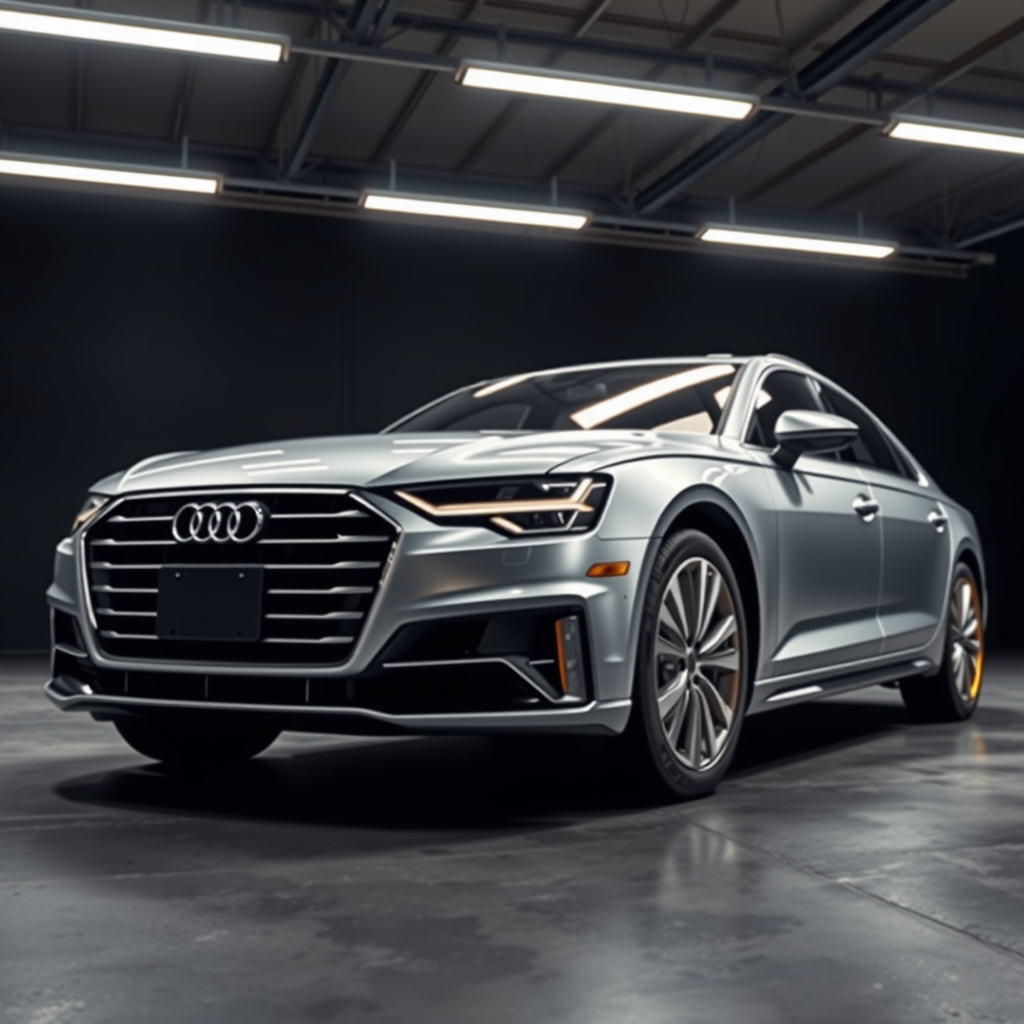
Audi A8 wheel fitment — D3 Facelift
Overview
The Audi A8 D3 generation is a full-size luxury sedan manufactured by Audi from late 2002 to 2010. Built on the Volkswagen Group D3 platform, it succeeded the first-generation A8 and was introduced in Europe in November 2002 and in North America as a 2004 model year car. The D3 generation features an extended wheelbase compared to its predecessor, offering more space for four or five adult passengers depending on rear seat configuration. It continued Audi's tradition of using the lightweight Audi Space Frame (ASF) construction method, which was co-developed with Alcoa and debuted in the first A8 model.
Audi A8 wheel fitment
Audi A8 wheel fitment for the Audi A8 D3 Facelift (2005–2010): the factory PCD, centre bore and bolt spec, then the aftermarket width and offset window we fit to.
| Bolt pattern (PCD) | 5x112 |
| Centre bore | 57.1 mm |
| Bolt / thread | M14x1.5 (bolts) |
| Wheel-bolt torque | 120 Nm |
| Seat type | radius |
| Factory setup | square |
| TPMS | indirect |
Aftermarket wheel sizes — read per position:
| Position | Width | Offset |
|---|---|---|
| Front | 7J–9.5J | ET15–ET50 |
As a rule, each extra 1J of width wants roughly +8–10 ET to keep the wheel tucked. The exact offset and any spacer are confirmed by the fit-check.
UK popularity & demand
Based on DfT VEH0124 vehicle-parc data (2025), there are approximately 9,653 Audi A8 on UK roads, placing it in the top 14% of car models by volume across our fitment database.
That makes Audi A8 wheel fitment a high-demand spec to keep in stock. It is one reason we track it here.
Source: DfT/DVLA licensed-vehicle statistics (VEH0124), matched to the AIWheelTech fitment database.
Engines & drivetrain
| Variant | Engine | Fuel | Power | Drive |
|---|---|---|---|---|
| 6.0L W12 | 5.998 L W12 | petrol | 500 hp | Quattro |
| 5.2L V10 FSI | 5.2 L V10 | petrol | 450 hp | Quattro |
| 4.2L V8 FSI | 4.172 L V8 | petrol | 370 hp | Quattro |
| 3.7L V8 | 3.697 L V8 | petrol | 350 hp | Quattro |
| 4.1L V8 TDI | 4.1 L V8 | diesel | 340 hp | Quattro |
| 3.9L V8 TDI | 3.9 L V8 | diesel | 310 hp | Quattro |
| 3.0L V6 FSI | 2.995 L V6 | petrol | 272 hp | Quattro |
| 3.0L TDI | 2.995 L V6 | diesel | 240 hp | Quattro |
| 2.8L V6 | 2.771 L V6 | petrol | 193 hp | Quattro |
Performance
| Variant | Power | 0–62 mph | Top speed |
|---|---|---|---|
| 2.8L V6 | 193 hp | 8.4 s | 146 mph |
| 3.0L V6 FSI | 272 hp | 6.8 s | 149 mph |
| 3.0L TDI | 240 hp | 7.1 s | 148 mph |
| 3.7L V8 | 350 hp | 5.7 s | 154 mph |
| 4.2L V8 FSI | 370 hp | 5.3 s | 154 mph |
| 5.2L V10 FSI | 450 hp | 4.7 s | 153 mph |
| 6.0L W12 | 500 hp | 4.7 s | 153 mph |
| 3.9L V8 TDI | 310 hp | 5.4 s | 147 mph |
| 4.1L V8 TDI | 340 hp | 5.1 s | 149 mph |
Dimensions
| Length | 5138 mm |
| Width | 1880 mm |
| Height | 1438 mm |
| Wheelbase | 2882 mm |
| Kerb weight | 1630 kg |
Body styles & production
| Body styles | Saloon |
| Produced | 2005–2010 |
Trim levels
Factory colours
History & notable variants
The D3 generation was previewed by the Audi Avantissimo concept car at the 2001 Frankfurt Motor Show. This concept introduced several technologies that would later be available on the production version of the A8, including the Multi Media Interface (MMI), adaptive air suspension with continuously controlled damping, and bi-xenon headlights with static Adaptive Front Lighting System (AFS). The development process for this generation was extensive, starting in 1996, with design work beginning in Ingolstadt in 1997. It featured a more driver-focused interior layout and advanced technology integration.
Reliability & owner notes
- Pros: Advanced technology integration, spacious interior, lightweight construction
- Cons: No specific weaknesses mentioned in the reference
- Common issues: No reliability issues specified