
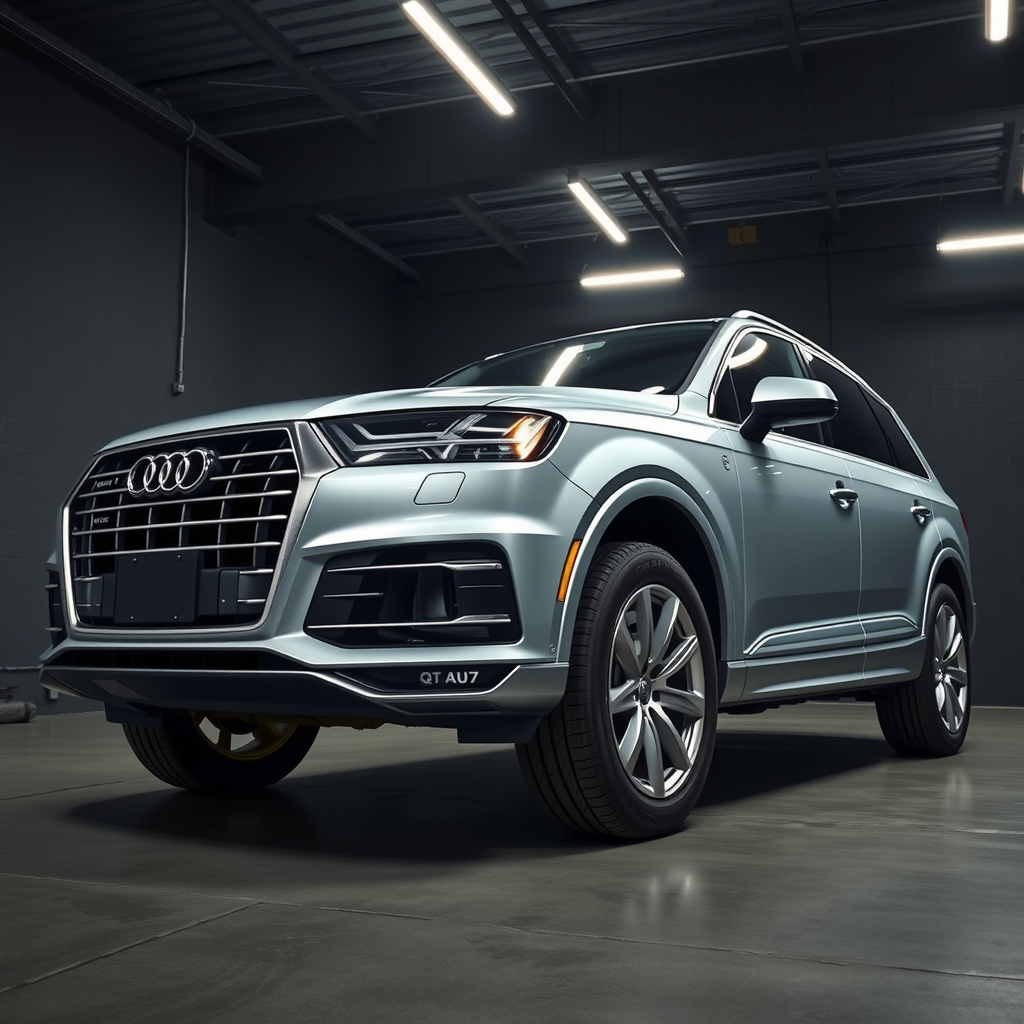
Audi Q7 wheel fitment — 4L
Overview
The Audi Q7 is a full-size luxury crossover SUV, first unveiled in September 2005 at the Frankfurt Motor Show. Production began in November 2005 at the Volkswagen Bratislava Plant in Slovakia. It was Audi's first SUV and went on sale in 2006. The Q7 utilizes a modified version of the Volkswagen Group PL71 platform, designed more for on-road use rather than serious off-roading. This generation introduced several engine variants including petrol V6, V8, and diesel V6, V8, and V12 options.
History & notable variants
Notable for being Audi's first SUV, the Q7 faced challenges such as recalls due to emissions issues and class-action lawsuits over brake squeal. It also received a facelift in 2010 with updated styling and interior features like LED lighting and an improved MMI system. The V12 TDI version was particularly significant for its performance capabilities.
Audi Q7 wheel fitment
Everything below is what the fit-check uses for Audi Q7 wheel fitment: the factory bolt spec first, then the width and offset window that clears the arches and the brakes on the Audi Q7 4L.
| Bolt pattern (PCD) | 5x130 |
| Centre bore | 71.6 mm |
| Bolt / thread | M14x1.5 (bolts) |
| Wheel-bolt torque | 140 Nm |
| Seat type | radius |
| Factory setup | square |
| TPMS | indirect |
Aftermarket wheel sizes — read per position:
| Position | Width | Offset |
|---|---|---|
| Front | 7.5J–9.5J | ET22–ET55 |
As a rule, each extra 1J of width wants roughly +8 to 10 ET to keep the wheel tucked. The exact offset and any spacer are confirmed by the fit-check.
Engines & drivetrain
| Variant | Engine | Fuel | Power | Drive, years |
|---|---|---|---|---|
| 3.0 TFSI | V-Bauart, 2,995 cc | petrol | 200 kW (272 PS) | quattro, 2010 to 2015 |
| 3.0 TFSI | V-Bauart, 2,995 cc | petrol | 245 kW (333 PS) | quattro, 2010 to 2015 |
| 3.6 FSI | VR-Bauart, 3,597 cc | petrol | 206 kW (280 PS) | quattro, 2006 to 2010 |
| 4.2 FSI | V-Bauart, 4,163 cc | petrol | 257 kW (350 PS) | quattro, 2005 to 2010 |
| 3.0 TDI | VW EA896G2, 2,967 cc, CJMA | diesel | 150 kW (204 PS) | quattro, 2010 to 2015 |
| 3.0 TDI | VW EA896, 2,967 cc, BUG | diesel | 171 kW (233 PS) | quattro, 2005 to 2007 |
| 3.0 TDI | VW EA896 evo, 2,967 cc, CASA | diesel | 176 kW (240 PS) | quattro, 2007 to 2011 |
| 3.0 TDI | VW EA896G2, 2,967 cc, CRCA | diesel | 180 kW (245 PS) | quattro, 2011 to 2015 |
| 4.2 TDI | ?, 4,134 cc, BTR | diesel | 240 kW (326 PS) | quattro, 2007 to 2009 |
| 4.2 TDI | ?, 4,134 cc, CCFA / CCFC | diesel | 250 kW (340 PS) | quattro, 2009 to 2015 |
| V12 TDI | ?, 5,934 cc, CCGA | diesel | 368 kW (500 PS) | quattro, 2008 to 2012 |
Source: Audi Q7 4L, de.wikipedia.org.
Performance
| Variant | Power | 0 to 62 mph (0 to 100 km/h) | Top speed |
|---|---|---|---|
| 3.0 TFSI | 200 kW (272 PS) | 7.9 s | 222 km/h (138 mph) |
| 3.0 TFSI | 245 kW (333 PS) | 6.9 s | 243 km/h (151 mph) |
| 3.6 FSI | 206 kW (280 PS) | 8.3 to 8.5 s | 225 km/h (140 mph) |
| 4.2 FSI | 257 kW (350 PS) | 7.4 s | 244 km/h (152 mph) |
| 3.0 TDI | 150 kW (204 PS) | 9.1 s | 202 km/h (126 mph) |
| 3.0 TDI | 171 kW (233 PS) | 8.5 s | 210 km/h (130 mph) |
| 3.0 TDI | 176 kW (240 PS) | 7.9 to 8.5 s | 210 to 215 km/h (130 to 134 mph) |
| 3.0 TDI | 180 kW (245 PS) | 7.8 to 8 s | 216 km/h (134 mph) |
| 4.2 TDI | 240 kW (326 PS) | 6.4 s | 236 km/h (147 mph) |
| 4.2 TDI | 250 kW (340 PS) | 6.4 s | 240 to 242 km/h (149 to 150 mph) |
| V12 TDI | 368 kW (500 PS) | 5.5 s | 250 km/h (155 mph) |
Source: Audi Q7 4L, de.wikipedia.org.
UK popularity & demand
Based on DfT VEH0124 vehicle-parc data (2025), there are approximately 53,366 Audi Q7 on UK roads, placing it in the top 6% of car models by volume across our fitment database.
That makes Audi Q7 wheel fitment a high-demand spec to keep in stock. It is one reason we track it here.
Source: DfT/DVLA licensed-vehicle statistics (VEH0124), matched to the AIWheelTech fitment database.
Dimensions
| Length | 5,086 to 5,089 mm |
| Width | 1,983 mm |
| Height | 1,737 mm |
| Wheelbase | 3,002 mm |
| Kerb weight | 2,310 to 2,525 kg |
Source: Audi Q7 4L, de.wikipedia.org; EU type-approval data (EEA).
Body styles & production
| Body styles | Kombi |
| Produced | 2005–2009 |
Factory colours
Trim levels
Reliability & owner notes
- Pros: Luxurious interior, powerful engine options including the world's first V12 diesel in a passenger car
- Cons: High fuel consumption, potential emissions issues
- Common issues: Engine failure complaints and brake squeal