Audi Q7 wheel fitment — 4M
Overview
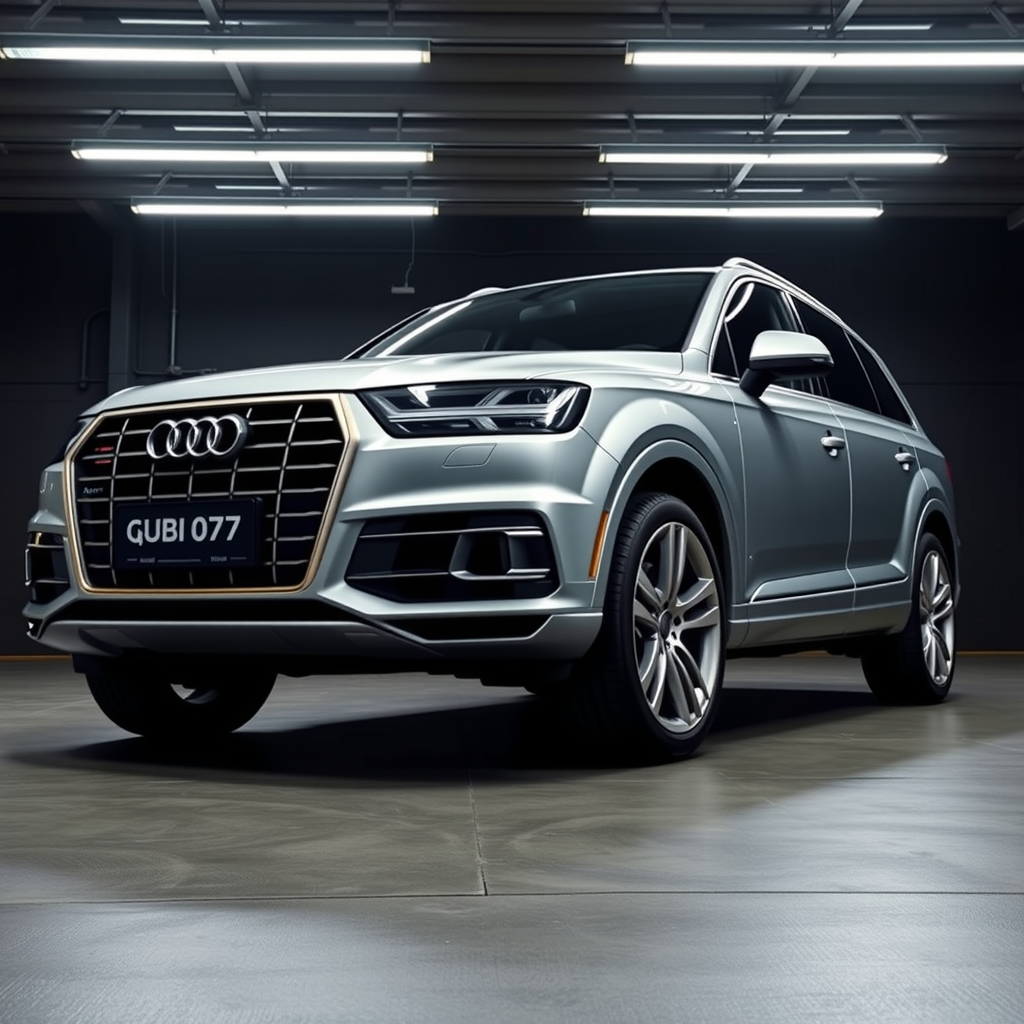
The Audi Q7 is a full-size luxury crossover SUV made by German manufacturer Audi, unveiled in September 2005 at the Frankfurt Motor Show. Production began in November 2005 at the Volkswagen Bratislava Plant in Slovakia. The first-generation Q7 was designed more for on-road use and utilized a modified version of the Volkswagen Group PL71 platform. It introduced several engine options including petrol V6, VR6, V8 engines, as well as diesel V6, V8, and the world's only series production passenger car V12 TDI diesel engine.
Audi Q7 wheel fitment
Start with the hub. The Audi Q7 4M spec table gives the bolt pattern and bore; the second table is the aftermarket window for Audi Q7 wheel fitment.
| Bolt pattern (PCD) | 5x112 |
| Centre bore | 66.6 mm |
| Bolt / thread | M14x1.5 (bolts) |
| Wheel-bolt torque | 160 Nm |
| Seat type | radius |
| Factory setup | square |
| TPMS | indirect |
Aftermarket wheel sizes — read per position:
| Position | Width | Offset |
|---|---|---|
| Front | 7.5J–10J | ET16–ET55 |
Go wider and the offset has to rise with it, about 8 to 10 ET per extra 1J, or the wheel pokes past the arch. The fit-check settles the exact offset and any spacer.
UK popularity & demand
Based on DfT VEH0124 vehicle-parc data (2025), there are approximately 53,366 Audi Q7 on UK roads, placing it in the top 6% of car models by volume across our fitment database.
With that many on the road, Audi Q7 wheel fitment is a spec fitters see constantly. We keep it current for that reason.
Source: DfT/DVLA licensed-vehicle statistics (VEH0124), matched to the AIWheelTech fitment database.
Engines & drivetrain
| Variant | Engine | Fuel | Power | Drive, years |
|---|---|---|---|---|
| 2.0 TFSI | VW EA888, 1,984 cc, CYMC, CYRB | petrol | 185 kW (252 PS) | quattro, 2015 to 2026 |
| 3.0 TFSI | VW EA837, 2,995 cc, CREC | petrol | 245 kW (333 PS) | quattro, 2015 to present |
| 55 TFSI | VW EA839, 2,995 cc | petrol | 250 kW (340 PS) | quattro, 2019 to 2020 |
| 55 TFSI | VW EA839, 2,995 cc | petrol | 250 kW (340 PS) | quattro, 2020 to 2022 |
| 55 TFSI | VW EA839, 2,995 cc | petrol | 250 kW (340 PS) | quattro, 2024 to 2026 |
| SQ7 TFSI | VW EA825, 3,996 cc, DCU | petrol | 373 kW (507 PS) | quattro, 2020 to 2022 |
| SQ7 TFSI | VW EA825, 3,996 cc | petrol | 373 kW (507 PS) | quattro, 2024 to 2026 |
| 3.0 TDI e-tron | VW EA897evo, 2,967 cc, CVZA | hybrid | 275 kW (373 PS) | AWD, 2016 to 2018 |
| 60 TFSI e | VW EA839, 2,995 cc | hybrid | 335 kW (456 PS) | AWD, 2019 to 2020 |
| 60 TFSI e | VW EA839, 2,995 cc | hybrid | 335 kW (456 PS) | AWD, 2020 to 2021 |
| 55 TFSI e | VW EA839, 2,995 cc | petrol | 290 kW (394 PS) | AWD, 2024 to 2026 |
| 60 TFSI e | VW EA839, 2,995 cc | petrol | 360 kW (490 PS) | AWD, 2024 to 2026 |
| 3.0 TDI ultra | VW EA897evo, 2,967 cc, CZZA, CZZB | diesel | 160 kW (218 PS) | quattro, 2015 to 2018 |
| 45 TDI | VW EA897evo2, 2,967 cc, DHXC | diesel | 170 kW (231 PS) | quattro, 2018 to 2020 |
| 45 TDI | VW EA897evo2, 2,967 cc, DHXC | diesel | 170 kW (231 PS) | quattro, 2020 to 2024 |
| 45 TDI | VW EA897evo2, 2,967 cc | diesel | 170 kW (231 PS) | quattro, 2024 to 2026 |
| 3.0 TDI | VW EA897evo, 2,967 cc, CRTC | diesel | 200 kW (272 PS) | quattro, 2015 to 2018 |
| 50 TDI | VW EA897evo2, 2,967 cc, DHXA | diesel | 210 kW (286 PS) | quattro, 2018 to 2020 |
| 50 TDI | VW EA897evo2, 2,967 cc, DHXA | diesel | 210 kW (286 PS) | quattro, 2020 to 2024 |
| 50 TDI | VW EA897evo2, 2,967 cc | diesel | 210 kW (286 PS) | quattro, 2024 to 2026 |
| SQ7 TDI | VW EA898, 3,956 cc, CZAC | diesel | 320 kW (435 PS) | quattro, 2016 to 2018 |
| SQ7 TDI | VW EA898, 3,956 cc, CZAC | diesel | 320 kW (435 PS) | quattro, 2019 to 2020 |
Source: Audi Q7 4M, de.wikipedia.org.
Performance
| Variant | Power | 0 to 62 mph (0 to 100 km/h) | Top speed |
|---|---|---|---|
| 2.0 TFSI | 185 kW (252 PS) | 6.9 s | 233 km/h (145 mph) |
| 3.0 TFSI | 245 kW (333 PS) | 6.1 to 6.3 s | 250 km/h (155 mph) |
| 55 TFSI | 250 kW (340 PS) | 5.9 s | 250 km/h (155 mph) |
| 55 TFSI | 250 kW (340 PS) | 5.9 s | 250 km/h (155 mph) |
| 55 TFSI | 250 kW (340 PS) | 5.6 s | 250 km/h (155 mph) |
| SQ7 TFSI | 373 kW (507 PS) | 4.1 s | 250 km/h (155 mph) |
| SQ7 TFSI | 373 kW (507 PS) | 4.1 s | 250 km/h (155 mph) |
| 3.0 TDI e-tron | 275 kW (373 PS) | 6.2 s | 230 km/h (143 mph) |
| 60 TFSI e | 335 kW (456 PS) | 5.7 s | 240 km/h (149 mph) |
| 60 TFSI e | 335 kW (456 PS) | 5.4 s | 240 km/h (149 mph) |
| 55 TFSI e | 290 kW (394 PS) | 5.7 s | 240 km/h (149 mph) |
| 60 TFSI e | 360 kW (490 PS) | 5 s | 240 km/h (149 mph) |
| 3.0 TDI ultra | 160 kW (218 PS) | 7.1 to 7.3 s | 216 km/h (134 mph) |
| 45 TDI | 170 kW (231 PS) | 7.1 s | 229 km/h (142 mph) |
| 45 TDI | 170 kW (231 PS) | 7.1 s | 226 km/h (140 mph) |
| 45 TDI | 170 kW (231 PS) | 7.1 s | 226 km/h (140 mph) |
| 3.0 TDI | 200 kW (272 PS) | 6.3 to 6.5 s | 234 km/h (145 mph) |
| 50 TDI | 210 kW (286 PS) | 6.3 s | 241 km/h (150 mph) |
| 50 TDI | 210 kW (286 PS) | 6.1 s | 241 km/h (150 mph) |
| 50 TDI | 210 kW (286 PS) | 6.1 s | 241 km/h (150 mph) |
| SQ7 TDI | 320 kW (435 PS) | 4.8 s | 250 km/h (155 mph) |
| SQ7 TDI | 320 kW (435 PS) | 4.8 s | 250 km/h (155 mph) |
Source: Audi Q7 4M, de.wikipedia.org.
Dimensions
| Length | 5,052 to 5,072 mm |
| Width | 1,968 to 1,970 mm |
| Height | 1,734 to 1,741 mm |
| Wheelbase | 2,994 to 3,001 mm |
| Kerb weight | 1,985 to 2,535 kg |
Source: Audi Q7 4M, de.wikipedia.org; EU type-approval data (EEA).
Body styles & production
| Body styles | Kombi |
| Produced | 2015–2019 |
Trim levels
Factory colours
History & notable variants
The Q7 was Audi’s first SUV and went on sale in 2006. It faced notable issues including recalls due to emissions scandal affecting cars manufactured between 2009 and 2012, and complaints about potentially catastrophic engine failures and squealing brakes. Notable facelifts included the introduction of LED lighting, an 8-speed transmission, start/stop technology, and Audi Connect.
Reliability & owner notes
- Pros: Luxurious interior, powerful engine options including V12 diesel, advanced safety features
- Cons: High fuel consumption, potential reliability issues with certain engines
- Common issues: Engine failures, squealing brakes