
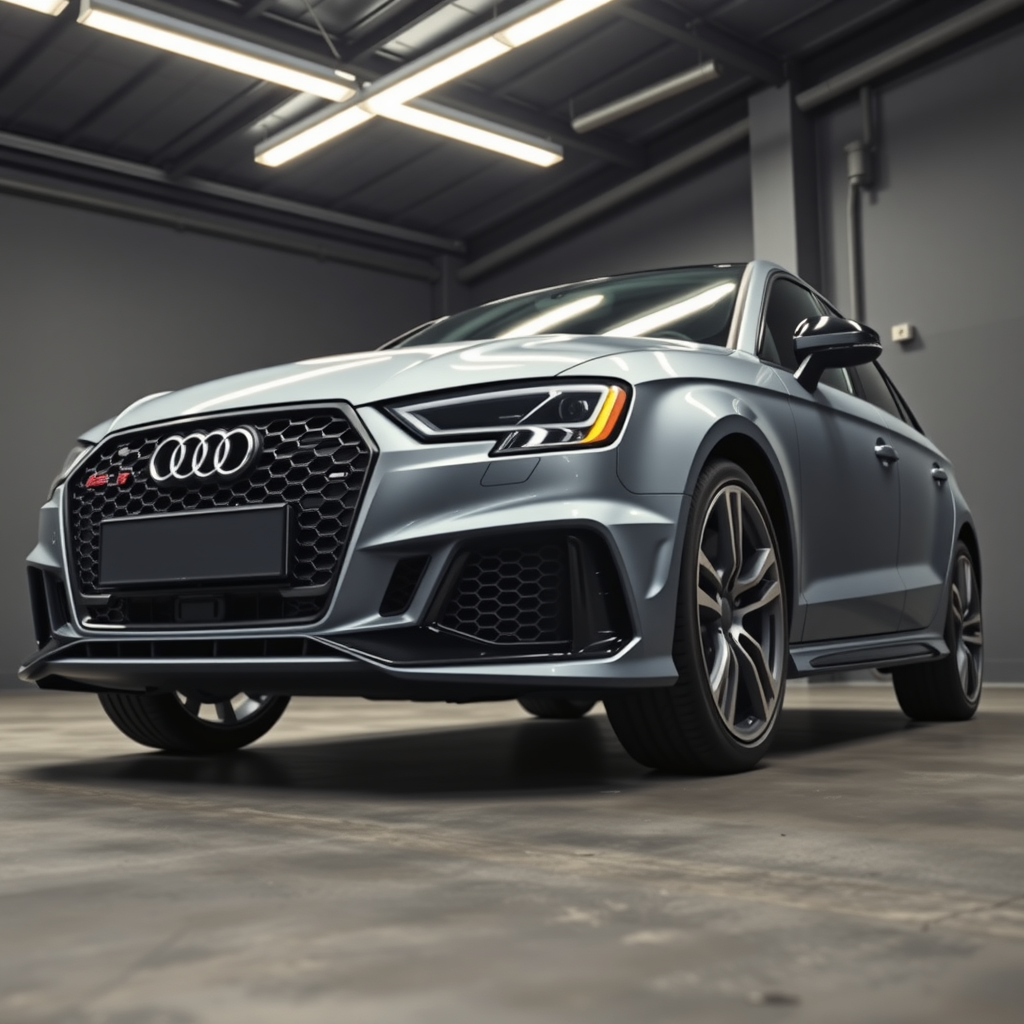
Audi RS3 wheel fitment — 8Y Facelift
Audi RS3 wheel fitment
Audi RS3 wheel fitment for the Audi RS3 8Y Facelift (2024–2026): the factory PCD, centre bore and bolt spec, then the aftermarket width and offset window we fit to.
| Bolt pattern (PCD) | 5x112 |
| Centre bore | 57.1 mm |
| Bolt / thread | M14x1.5 (bolts) |
| Wheel-bolt torque | 120 Nm |
| Seat type | radius |
| Factory setup | square |
| TPMS | indirect |
Aftermarket wheel sizes — read per position:
| Position | Width | Offset |
|---|---|---|
| Front | 8J–9J | ET20–ET35 |
Go wider and the offset has to rise with it, about 8 to 10 ET per extra 1J, or the wheel pokes past the arch. The fit-check settles the exact offset and any spacer.
UK popularity & demand
Based on DfT VEH0124 vehicle-parc data (2025), there are approximately 8,548 Audi RS3 on UK roads, placing it in the top 15% of car models by volume across our fitment database.
A parc that size is why Audi RS3 wheel fitment is worth getting exactly right: a lot of owners are shopping for these numbers.
Source: DfT/DVLA licensed-vehicle statistics (VEH0124), matched to the AIWheelTech fitment database.
Overview
The Audi RS3 is a high-performance variant of the A3 Sportback, introduced in 2011 as part of the fourth generation. It features a powerful 5-cylinder turbocharged engine and advanced drivetrain technology to deliver exceptional performance while maintaining Audi's reputation for engineering excellence. The RS3 was designed to appeal to enthusiasts seeking a compact yet potent vehicle with distinctive styling cues that set it apart from standard A3 models.
Dimensions
| Length | 4,343 to 4,542 mm |
| Width | 1,816 to 1,851 mm |
| Height | 1,391 to 1,486 mm |
| Wheelbase | 2,618 to 2,636 mm |
| Kerb weight | 1,255 to 1,660 kg |
Source: Audi A3 8Y, de.wikipedia.org.
Body styles & production
| Body styles | 5-door hatchback (Sportback), 4-door saloon |
| Produced | 2024–2026 |
Engines & drivetrain
| Variant | Engine | Fuel | Power | Drive, years |
|---|---|---|---|---|
| 40 TFSI e | HEM80evo, 1,395 cc, DGEA | phev | 150 kW (204 PS) | FWD, 2020 to 2024 |
| 45 TFSI e | HEM80evo, 1,395 cc, DGEA | phev | 180 kW (245 PS) | FWD, 2020 to 2024 |
| 30 TFSI | VW EA211evo2, 1,498 cc, DXDE | petrol | 85 kW (116 PS) | FWD, 2024 to present |
| 35 TFSI | VW EA211evo2, 1,498 cc, DXDB | petrol | 110 kW (150 PS) | FWD, 2024 to present |
| 40 TFSI | VW EA888, 1,984 cc | petrol | 150 kW (204 PS) | quattro, 2025 to 2026 |
| S3 TFSI | VW EA888, 1,984 cc, DNFF | petrol | 245 kW (333 PS) | quattro, 2024 to present |
| RS3 TFSI | VW EA855evo, 2,480 cc, DXHB | petrol | 294 kW (400 PS) | quattro, 2024 to present |
| 40 TFSI e | 1,498 cc, DUCB | phev | 150 kW (204 PS) | FWD, 2024 to present |
| 45 TFSI e | 1,498 cc, DUCA | phev | 200 kW (272 PS) | FWD, 2024 to present |
| 30 TDI | VW EA288 evo, 1,968 cc, DXRC | diesel | 85 kW (116 PS) | FWD, 2024 to present |
| 35 TDI | VW EA288 evo, 1,968 cc, DXPA | diesel | 110 kW (150 PS) | FWD, 2024 to present |
Source: Audi A3 8Y, de.wikipedia.org.
Performance
| Variant | Power | 0 to 62 mph (0 to 100 km/h) | Top speed |
|---|---|---|---|
| 40 TFSI e | 150 kW (204 PS) | 7.6 s | 140 to 227 km/h (87 to 141 mph) |
| 45 TFSI e | 180 kW (245 PS) | 6.8 s | 140 to 232 km/h (87 to 144 mph) |
| 30 TFSI | 85 kW (116 PS) | 9.7 to 9.9 s | 205 to 210 km/h (127 to 130 mph) |
| 35 TFSI | 110 kW (150 PS) | 8.1 to 8.4 s | 226 km/h (140 mph) |
| 40 TFSI | 150 kW (204 PS) | 6.3 s | 245 to 250 km/h (152 to 155 mph) |
| S3 TFSI | 245 kW (333 PS) | 4.7 s | 250 km/h (155 mph) |
| RS3 TFSI | 294 kW (400 PS) | 3.8 s | 250 to 290 km/h (155 to 180 mph) |
| 40 TFSI e | 150 kW (204 PS) | 7.4 s | 140 to 225 km/h (87 to 140 mph) |
| 45 TFSI e | 200 kW (272 PS) | 6.3 s | 140 to 237 km/h (87 to 147 mph) |
| 30 TDI | 85 kW (116 PS) | 10.1 s | 205 to 210 km/h (127 to 130 mph) |
| 35 TDI | 110 kW (150 PS) | 8.1 s | 222 km/h (138 mph) |
Source: Audi A3 8Y, de.wikipedia.org.
Trim levels
Factory colours
History & notable variants
The RS3 made its debut as part of the 2011 model year, marking the first time Audi offered an RS variant in the A3 line. It underwent minor updates during its production run to enhance performance and refine handling characteristics, solidifying its status as a benchmark for high-performance compact cars.
Reliability & owner notes
- Pros: Powerful 5-cylinder engine; Advanced all-wheel drive system; Distinctive styling
- Cons: Limited production run; High cost relative to standard A3 models