
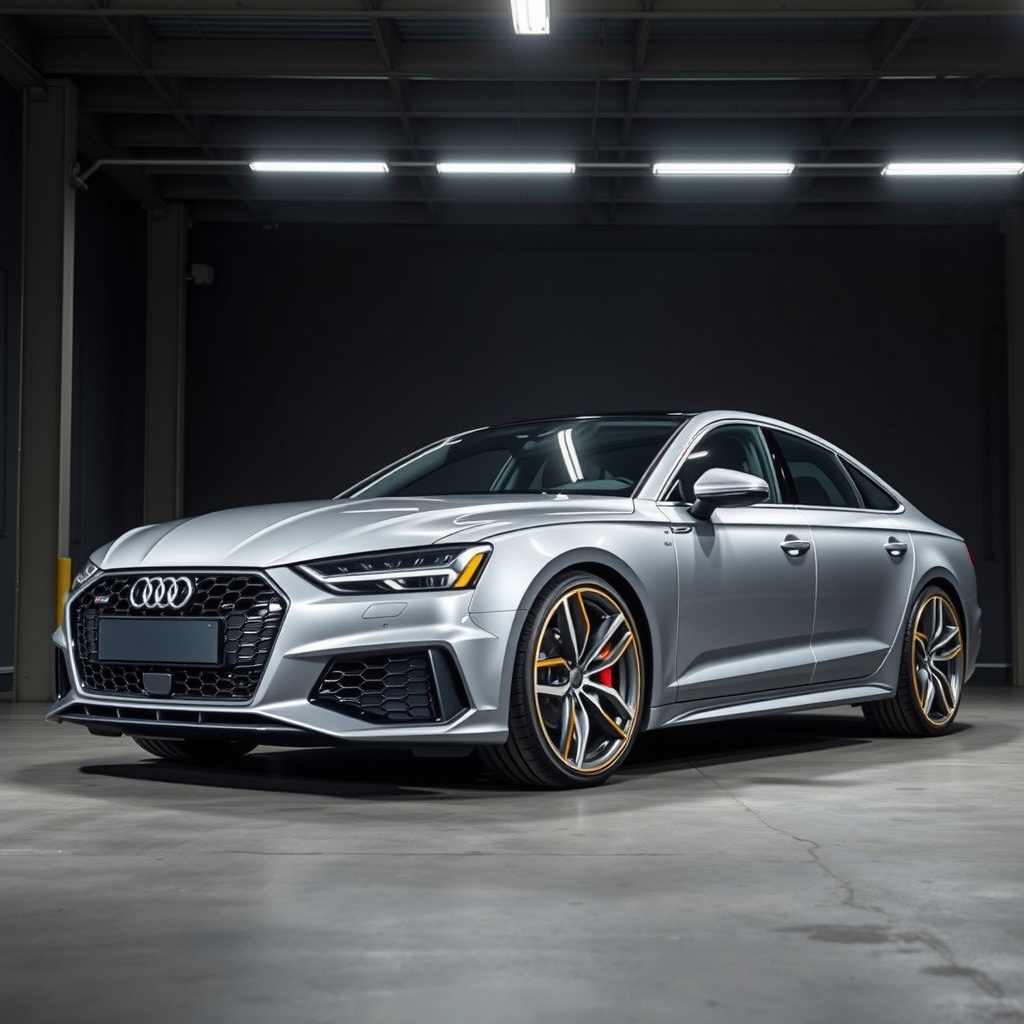
Audi S6 wheel fitment — C5
Overview
The Audi S6 C5 (1999–2003) is a high-performance variant of the Audi A6 executive car, produced by German automaker Audi on the Volkswagen Group C platform series. It was available in saloon and Avant body styles, featuring a 4.2-litre V8 engine with quattro all-wheel drive as standard. Compared to its predecessor, it offered improved performance, emissions compliance, and enhanced suspension tuning for better handling.
Audi S6 wheel fitment
Start with the hub. The Audi S6 C5 spec table gives the bolt pattern and bore; the second table is the aftermarket window for Audi S6 wheel fitment.
| Bolt pattern (PCD) | 5x112 |
| Centre bore | 57.1 mm |
| Bolt / thread | M14x1.5 (bolts) |
| Wheel-bolt torque | 120 Nm |
| Seat type | radius |
| Factory setup | square |
| TPMS | indirect |
Aftermarket wheel sizes — read per position:
| Position | Width | Offset |
|---|---|---|
| Front | 8J–9J | ET27–ET42 |
As a rule, each extra 1J of width wants roughly +8 to 10 ET to keep the wheel tucked. The exact offset and any spacer are confirmed by the fit-check.
UK popularity & demand
Based on DfT VEH0124 vehicle-parc data (2025), there are approximately 1,742 Audi S6 on UK roads, placing it in the top 26% of car models by volume across our fitment database.
With that many on the road, Audi S6 wheel fitment is a spec fitters see constantly. We keep it current for that reason.
Source: DfT/DVLA licensed-vehicle statistics (VEH0124), matched to the AIWheelTech fitment database.
Engines & drivetrain
| Variant | Engine | Fuel | Power | Drive, years |
|---|---|---|---|---|
| 1.8 | 92 kW (125 PS) | |||
| 1.8 T | 110 kW (150 PS) | |||
| 1.8 T | 132 kW (180 PS) | |||
| 2.4 | 100 kW (136 PS) | |||
| 2.4 | 120 kW (163 PS) | |||
| 2.4 | 121 kW (165 PS) | |||
| 2.7 T | 169 kW (230 PS) | |||
| 2.7 T | 184 kW (250 PS) | |||
| 2.8 | 142 kW (193 PS) | |||
| 4.2 | 220 kW (299 PS) | |||
| S6 | 250 kW (340 PS) | |||
| 1.9 TDI (VEP) | diesel | 81 kW (110 PS) | ||
| 1.9 TDI (PD) | diesel | 85 kW (115 PS) | ||
| 2.5 TDI (VEP) | diesel | 110 kW (150 PS) | ||
| 2.5 TDI (VEP) | diesel | 132 kW (180 PS) | ||
| 2.0 | 96 kW (130 PS) | |||
| 2.4 | 125 kW (170 PS) | |||
| 3.0 | 162 kW (220 PS) | |||
| RS6 | 331 kW (450 PS) | |||
| RS6 plus | 353 kW (480 PS) | |||
| 1.9 TDI (PD) | diesel | 96 kW (130 PS) | ||
| 2.5 TDI (VEP) | diesel | 114 kW (155 PS) | ||
| 2.5 TDI (VEP) | diesel | 120 kW (163 PS) |
Source: Audi A6 C5, de.wikipedia.org.
Performance
| Variant | Power | 0 to 62 mph (0 to 100 km/h) | Top speed |
|---|---|---|---|
| 1.8 | 92 kW (125 PS) | 11.3 s | |
| 1.8 T | 110 kW (150 PS) | 9.4 s | |
| 2.4 | 120 kW (163 PS) | 9.1 s | |
| 2.4 | 121 kW (165 PS) | 9.1 s | |
| 2.7 T | 169 kW (230 PS) | 7.3 s | |
| 2.7 T | 184 kW (250 PS) | 6.8 s | |
| 2.8 | 142 kW (193 PS) | 8.1 s | |
| 4.2 | 220 kW (299 PS) | 6.9 s | |
| S6 | 250 kW (340 PS) | 5.7 s | |
| 1.9 TDI (VEP) | 81 kW (110 PS) | 12.3 s | |
| 1.9 TDI (PD) | 85 kW (115 PS) | 11.6 s | |
| 2.5 TDI (VEP) | 110 kW (150 PS) | 9.7 s | |
| 2.5 TDI (VEP) | 132 kW (180 PS) | 8.9 s | |
| 2.0 | 96 kW (130 PS) | 10.5 s | |
| 2.4 | 125 kW (170 PS) | 9.3 s | |
| 3.0 | 162 kW (220 PS) | 7.5 s | |
| RS6 | 331 kW (450 PS) | 4.7 s | |
| RS6 plus | 353 kW (480 PS) | 4.5 s | |
| 1.9 TDI (PD) | 96 kW (130 PS) | 10.5 s | |
| 2.5 TDI (VEP) | 114 kW (155 PS) | 9.7 s | |
| 2.5 TDI (VEP) | 120 kW (163 PS) | 9.3 s |
Source: Audi A6 C5, de.wikipedia.org.
Dimensions
| Length | 4,796 to 4,886 mm |
| Width | 1,819 mm |
| Height | 1,477 mm |
| Wheelbase | 2,760 to 2,850 mm |
| Kerb weight | 1,320 to 1,765 kg |
Source: Audi A6 C5, de.wikipedia.org.
Body styles & production
| Body styles | Limousine, Kombi |
| Produced | 1999–2003 |
Trim levels
Factory colours
History & notable variants
The Audi S6 C5 was introduced in late 1997 alongside the new A6 platform. It featured a more powerful 4.2-litre V8 engine with advanced emission control technology to meet EU3 standards. The model received an upgrade in May 2000, improving power output and emissions compliance. Notably, Audi's high-performance subsidiary quattro GmbH developed the RS6 variant based on this platform from 2002-2004.
Reliability & owner notes
- Pros: Powerful V8 engine, advanced emissions control technology, improved handling
- Cons: Limited production run, high fuel consumption