
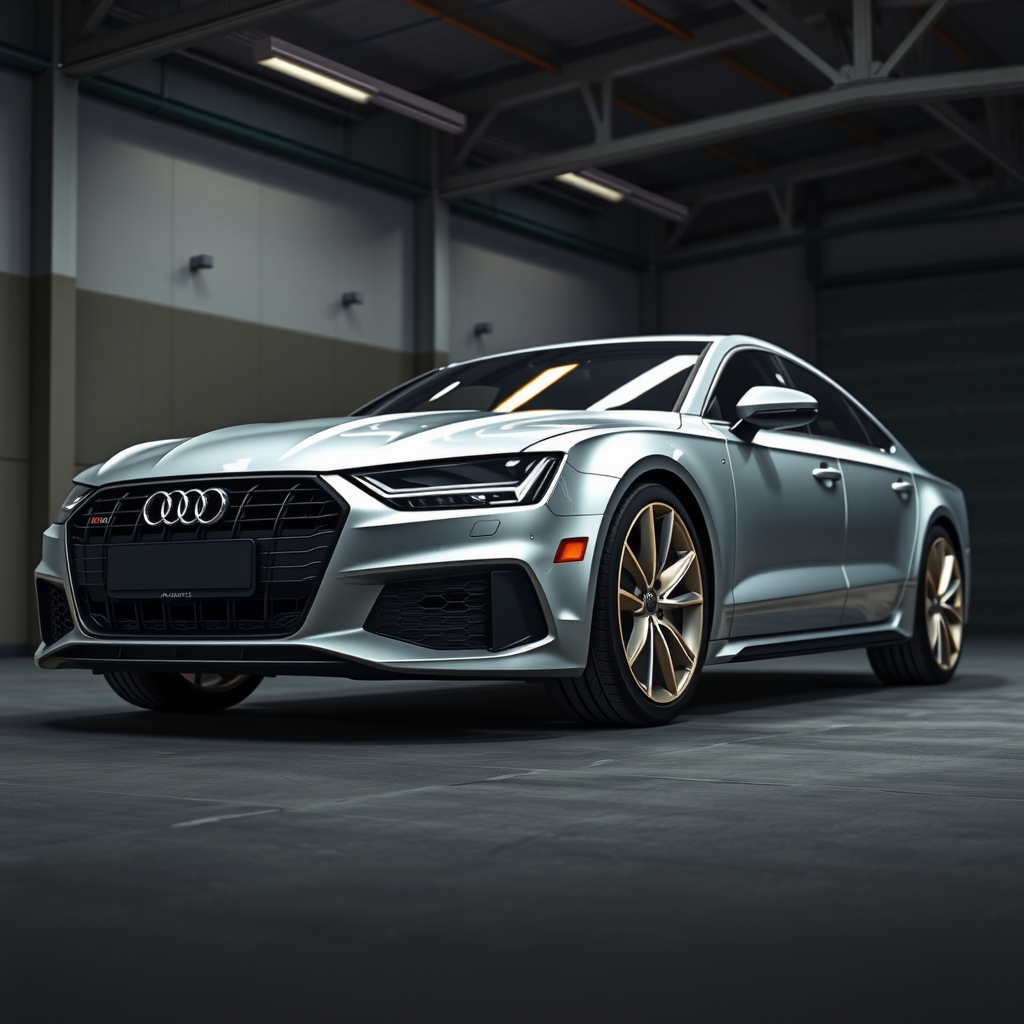
Audi S7 wheel fitment — 4K8
Overview
The second generation of the Audi A7, officially launched in Germany in February 2018 and available in Europe since late 2017. It made its North American debut at the Detroit Auto Show in January 2018. The car is produced at Audi's Neckarsulm plant. This generation features a more modern design with advanced technology, including a mild hybrid system for improved efficiency. In China, an extended-wheelbase sedan variant called A7L was introduced by SAIC Volkswagen in April 2021.
Audi S7 wheel fitment
Audi S7 wheel fitment for the Audi S7 4K8 (2019–2023): the factory PCD, centre bore and bolt spec, then the aftermarket width and offset window we fit to.
| Bolt pattern (PCD) | 5x112 |
| Centre bore | 66.6 mm |
| Bolt / thread | M14x1.5 (bolts) |
| Wheel-bolt torque | 120 Nm |
| Seat type | radius |
| Factory setup | square |
| TPMS | indirect |
Aftermarket wheel sizes — read per position:
| Position | Width | Offset |
|---|---|---|
| Front | 8J–9J | ET18–ET35 |
As a rule, each extra 1J of width wants roughly +8–10 ET to keep the wheel tucked. The exact offset and any spacer are confirmed by the fit-check.
UK popularity & demand
Based on DfT VEH0124 vehicle-parc data (2025), there are approximately 642 Audi S7 on UK roads, placing it in the top 35% of car models by volume across our fitment database.
That makes Audi S7 wheel fitment a high-demand spec to keep in stock. It is one reason we track it here.
Source: DfT/DVLA licensed-vehicle statistics (VEH0124), matched to the AIWheelTech fitment database.
Engines & drivetrain
| Variant | Engine | Fuel | Power | Drive |
|---|---|---|---|---|
| S7 4.0 TFSI quattro | 4998 cc V8 twin turbo | petrol | 420 hp | quattro |
| A7 3.0 TFSI quattro (US) | 2995 cc V6 supercharged | petrol | 340 hp | quattro |
| A7 2.0 TFSI | 1984 cc I4 turbocharged | petrol | 252 hp | FWD |
| A7 3.0 TDI quattro (US) | 2967 cc V6 turbo | diesel | 245 hp | quattro |
| A7 2.8 FSI quattro | 2773 cc V6 | petrol | 204 hp | quattro |
| A7 2.8 FSI | 2773 cc V6 | petrol | 204 hp | FWD |
| A7 3.0 TDI quattro | 2967 cc V6 turbo | diesel | 204 hp | quattro |
| A7 3.0 TDI | 2967 cc V6 turbo | diesel | 204 hp | FWD |
Performance
| Variant | Power | 0–62 mph | Top speed |
|---|---|---|---|
| S7 4.0 TFSI quattro | 420 hp | 4.7 s | 153 mph |
| A7 3.0 TFSI quattro (US) | 340 hp | 5.3 s | 128 mph |
| A7 2.8 FSI quattro | 204 hp | 8.3 s | 145 mph |
| A7 2.8 FSI | 204 hp | 8.3 s | 145 mph |
| A7 2.0 TFSI | 252 hp | 6.9 s | 155 mph |
| A7 3.0 TDI quattro (US) | 245 hp | 6.3 s | 154 mph |
| A7 3.0 TDI quattro | 204 hp | 7.2 s | 145 mph |
| A7 3.0 TDI | 204 hp | 7.4 s | 145 mph |
Dimensions
| Length | 4970 mm |
| Width | 1905 mm |
| Height | 1425 mm |
| Wheelbase | 2936 mm |
Body styles & production
| Body styles | Liftback |
| Produced | 2019–2023 |
Trim levels
Factory colours
History & notable variants
The second-generation Audi A7 underwent a facelift in 2015, introducing styling tweaks and advanced features such as the latest MMI infotainment system. The RS 7 Sportback, a high-performance variant of this generation, was first unveiled at the Frankfurt Motor Show in 2019.
Reliability & owner notes
- Pros: Advanced technology, improved efficiency with mild hybrid system, high-performance RS variant
- Cons: Limited production figures available, no specific performance data for standard variants other than top-of-the-line model