
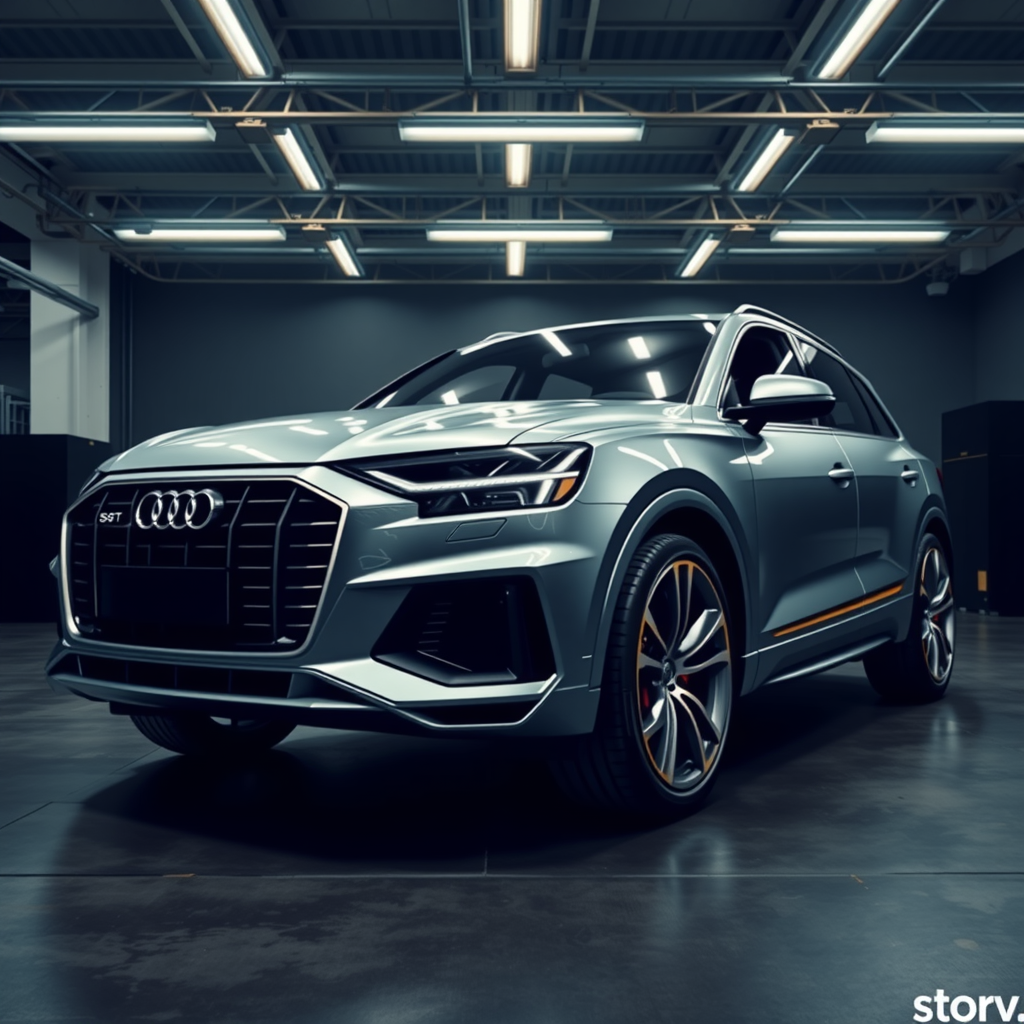
Audi SQ8 wheel fitment — 4M
Overview
The Audi Q8 is a mid-size luxury crossover SUV made by Audi that was launched in 2018. It is the flagship of the Audi SUV line, and is being produced at the Volkswagen Bratislava Plant in Slovakia. The Q8 shares its platform with the Audi Q7 and Lamborghini Urus among others within the Volkswagen Group's product lineup. Compared to the Q7, it is slightly shorter but wider, featuring a sloped roofline that results in less cargo space and no third-row seating option. It features full-laser headlamps and taillamps, an interior with three touch screens including an enlarged virtual cockpit, and advanced driver assistance systems.
History & notable variants
The Q8 was unveiled as a concept vehicle at the North American International Auto Show in 2017. Its production version went on sale in Europe starting July 2018. In June 2019, Audi launched the performance-focused SQ8 with a powerful diesel engine and advanced technology features. A facelift for the Q8 was unveiled in September 2023, introducing subtle exterior changes and new interior options.
Audi SQ8 wheel fitment
Everything below is what the fit-check uses for Audi SQ8 wheel fitment: the factory bolt spec first, then the width and offset window that clears the arches and the brakes on the Audi SQ8 4M.
| Bolt pattern (PCD) | 5x112 |
| Centre bore | 66.6 mm |
| Bolt / thread | M14x1.5 (bolts) |
| Wheel-bolt torque | 160 Nm |
| Seat type | radius |
| Factory setup | square |
| TPMS | indirect |
Aftermarket wheel sizes — read per position:
| Position | Width | Offset |
|---|---|---|
| Front | 8.5J–10.5J | ET0–ET25 |
Width and offset move together: roughly 8 to 10 ET more for every extra 1J keeps the wheel inside the arch. Final offset and any spacer come from the fit-check.
Engines & drivetrain
| Variant | Engine | Fuel | Power | Drive, years |
|---|---|---|---|---|
| 2.0 TFSI | VW EA888, 1,984 cc, CYMC, CYRB | petrol | 185 kW (252 PS) | quattro, 2015 to 2026 |
| 3.0 TFSI | VW EA837, 2,995 cc, CREC | petrol | 245 kW (333 PS) | quattro, 2015 to present |
| 55 TFSI | VW EA839, 2,995 cc | petrol | 250 kW (340 PS) | quattro, 2019 to 2020 |
| 55 TFSI | VW EA839, 2,995 cc | petrol | 250 kW (340 PS) | quattro, 2020 to 2022 |
| 55 TFSI | VW EA839, 2,995 cc | petrol | 250 kW (340 PS) | quattro, 2024 to 2026 |
| SQ7 TFSI | VW EA825, 3,996 cc, DCU | petrol | 373 kW (507 PS) | quattro, 2020 to 2022 |
| SQ7 TFSI | VW EA825, 3,996 cc | petrol | 373 kW (507 PS) | quattro, 2024 to 2026 |
| 3.0 TDI e-tron | VW EA897evo, 2,967 cc, CVZA | hybrid | 275 kW (373 PS) | AWD, 2016 to 2018 |
| 60 TFSI e | VW EA839, 2,995 cc | hybrid | 335 kW (456 PS) | AWD, 2019 to 2020 |
| 60 TFSI e | VW EA839, 2,995 cc | hybrid | 335 kW (456 PS) | AWD, 2020 to 2021 |
| 55 TFSI e | VW EA839, 2,995 cc | petrol | 290 kW (394 PS) | AWD, 2024 to 2026 |
| 60 TFSI e | VW EA839, 2,995 cc | petrol | 360 kW (490 PS) | AWD, 2024 to 2026 |
| 3.0 TDI ultra | VW EA897evo, 2,967 cc, CZZA, CZZB | diesel | 160 kW (218 PS) | quattro, 2015 to 2018 |
| 45 TDI | VW EA897evo2, 2,967 cc, DHXC | diesel | 170 kW (231 PS) | quattro, 2018 to 2020 |
| 45 TDI | VW EA897evo2, 2,967 cc, DHXC | diesel | 170 kW (231 PS) | quattro, 2020 to 2024 |
| 45 TDI | VW EA897evo2, 2,967 cc | diesel | 170 kW (231 PS) | quattro, 2024 to 2026 |
| 3.0 TDI | VW EA897evo, 2,967 cc, CRTC | diesel | 200 kW (272 PS) | quattro, 2015 to 2018 |
| 50 TDI | VW EA897evo2, 2,967 cc, DHXA | diesel | 210 kW (286 PS) | quattro, 2018 to 2020 |
| 50 TDI | VW EA897evo2, 2,967 cc, DHXA | diesel | 210 kW (286 PS) | quattro, 2020 to 2024 |
| 50 TDI | VW EA897evo2, 2,967 cc | diesel | 210 kW (286 PS) | quattro, 2024 to 2026 |
| SQ7 TDI | VW EA898, 3,956 cc, CZAC | diesel | 320 kW (435 PS) | quattro, 2016 to 2018 |
| SQ7 TDI | VW EA898, 3,956 cc, CZAC | diesel | 320 kW (435 PS) | quattro, 2019 to 2020 |
Source: Audi Q7 4M, de.wikipedia.org.
Performance
| Variant | Power | 0 to 62 mph (0 to 100 km/h) | Top speed |
|---|---|---|---|
| 2.0 TFSI | 185 kW (252 PS) | 6.9 s | 233 km/h (145 mph) |
| 3.0 TFSI | 245 kW (333 PS) | 6.1 to 6.3 s | 250 km/h (155 mph) |
| 55 TFSI | 250 kW (340 PS) | 5.9 s | 250 km/h (155 mph) |
| 55 TFSI | 250 kW (340 PS) | 5.9 s | 250 km/h (155 mph) |
| 55 TFSI | 250 kW (340 PS) | 5.6 s | 250 km/h (155 mph) |
| SQ7 TFSI | 373 kW (507 PS) | 4.1 s | 250 km/h (155 mph) |
| SQ7 TFSI | 373 kW (507 PS) | 4.1 s | 250 km/h (155 mph) |
| 3.0 TDI e-tron | 275 kW (373 PS) | 6.2 s | 230 km/h (143 mph) |
| 60 TFSI e | 335 kW (456 PS) | 5.7 s | 240 km/h (149 mph) |
| 60 TFSI e | 335 kW (456 PS) | 5.4 s | 240 km/h (149 mph) |
| 55 TFSI e | 290 kW (394 PS) | 5.7 s | 240 km/h (149 mph) |
| 60 TFSI e | 360 kW (490 PS) | 5 s | 240 km/h (149 mph) |
| 3.0 TDI ultra | 160 kW (218 PS) | 7.1 to 7.3 s | 216 km/h (134 mph) |
| 45 TDI | 170 kW (231 PS) | 7.1 s | 229 km/h (142 mph) |
| 45 TDI | 170 kW (231 PS) | 7.1 s | 226 km/h (140 mph) |
| 45 TDI | 170 kW (231 PS) | 7.1 s | 226 km/h (140 mph) |
| 3.0 TDI | 200 kW (272 PS) | 6.3 to 6.5 s | 234 km/h (145 mph) |
| 50 TDI | 210 kW (286 PS) | 6.3 s | 241 km/h (150 mph) |
| 50 TDI | 210 kW (286 PS) | 6.1 s | 241 km/h (150 mph) |
| 50 TDI | 210 kW (286 PS) | 6.1 s | 241 km/h (150 mph) |
| SQ7 TDI | 320 kW (435 PS) | 4.8 s | 250 km/h (155 mph) |
| SQ7 TDI | 320 kW (435 PS) | 4.8 s | 250 km/h (155 mph) |
Source: Audi Q7 4M, de.wikipedia.org.
UK popularity & demand
Based on DfT VEH0124 vehicle-parc data (2025), there are approximately 1,362 Audi SQ8 on UK roads, placing it in the top 28% of car models by volume across our fitment database.
That makes Audi SQ8 wheel fitment a high-demand spec to keep in stock. It is one reason we track it here.
Source: DfT/DVLA licensed-vehicle statistics (VEH0124), matched to the AIWheelTech fitment database.
Dimensions
| Length | 5,052 to 5,072 mm |
| Width | 1,968 to 1,970 mm |
| Height | 1,734 to 1,741 mm |
| Wheelbase | 2,994 to 3,001 mm |
| Kerb weight | 1,985 to 2,535 kg |
Source: Audi Q7 4M, de.wikipedia.org.
Body styles & production
| Body styles | Kombi |
| Produced | 2019–2023 |
Factory colours
Trim levels
Reliability & owner notes
- Pros: Luxurious interior with advanced technology features; powerful engine options; distinctive design
- Cons: Limited cargo space compared to other SUVs in its class; higher price point