
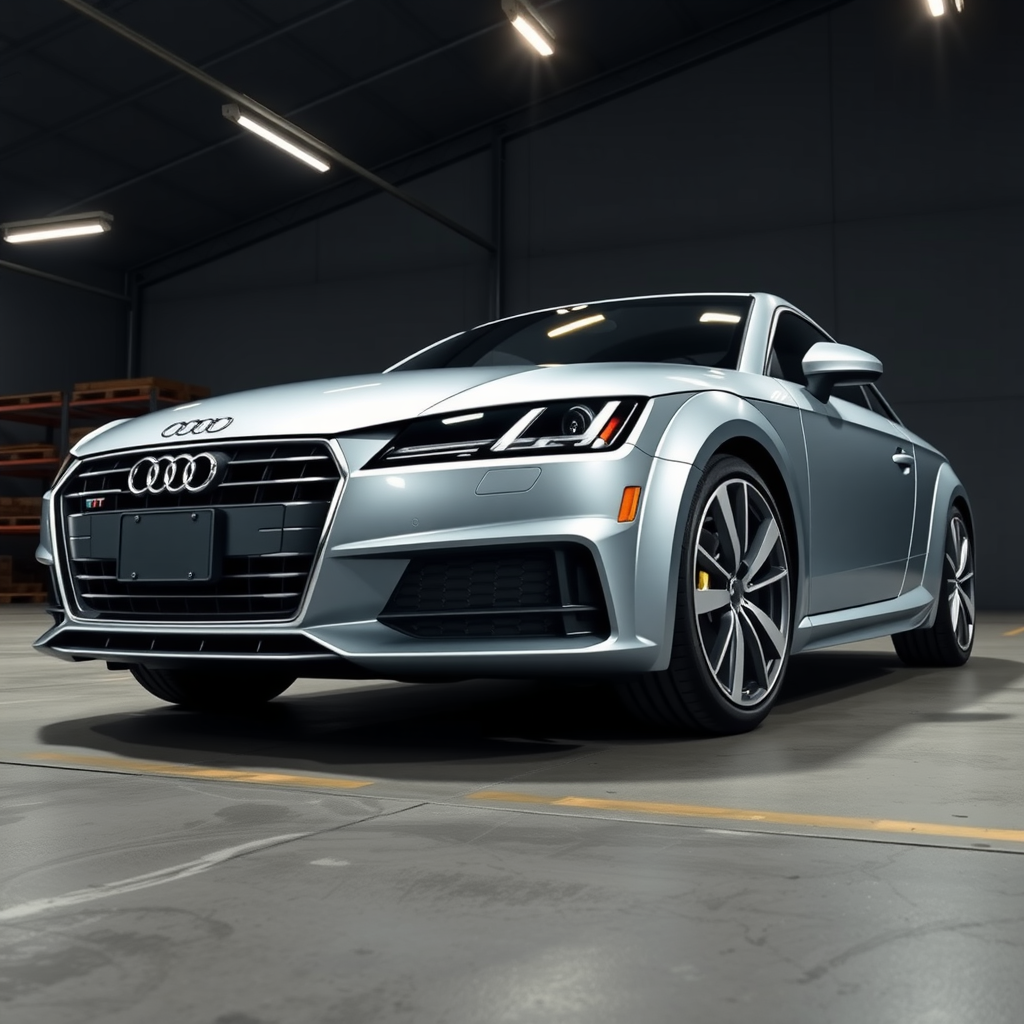
Audi TT wheel fitment — 8J Facelisft
Overview
The Audi TT Mk2 (Type 8J) is the second generation of the sports car manufactured by Audi from 2006 to 2014. It was built on the Volkswagen Group A5 (PQ35) platform, featuring aluminium front body panels and steel in the rear for a near-neutral weight distribution. Available as both a coupé with a 2+2 seating arrangement and a two-seater roadster, this generation saw an increase in size compared to its predecessor, being five inches longer and three inches wider. The second-generation TT was assembled by Audi Hungaria in Győr, Hungary.
Audi TT wheel fitment
Start with the hub. The Audi TT 8J Facelisft spec table gives the bolt pattern and bore; the second table is the aftermarket window for Audi TT wheel fitment.
| Bolt pattern (PCD) | 5x112 |
| Centre bore | 57.1 mm |
| Bolt / thread | M14x1.5 (bolts) |
| Wheel-bolt torque | 125 Nm |
| Seat type | radius |
| Factory setup | square |
| TPMS | indirect |
Aftermarket wheel sizes — read per position:
| Position | Width | Offset |
|---|---|---|
| Front | 7J–9J | ET19–ET55 |
Width and offset move together: roughly 8 to 10 ET more for every extra 1J keeps the wheel inside the arch. Final offset and any spacer come from the fit-check.
UK popularity & demand
Based on DfT VEH0124 vehicle-parc data (2025), there are approximately 60,071 Audi TT on UK roads, placing it in the top 5% of car models by volume across our fitment database.
A parc that size is why Audi TT wheel fitment is worth getting exactly right: a lot of owners are shopping for these numbers.
Source: DfT/DVLA licensed-vehicle statistics (VEH0124), matched to the AIWheelTech fitment database.
Engines & drivetrain
| Variant | Engine | Fuel | Power | Drive, years |
|---|---|---|---|---|
| 1.8 TFSI | VW EA888, 1,798 cc, CDAA | petrol | 118 kW (160 PS) | FWD, 2008 to 2014 |
| 2.0 TFSI | VW EA113, (VW EA888), 1,984 cc, BWA, BPY, (CCZA) | petrol | 147 kW (200 PS) | FWD or AWD, 2006 to 2010 |
| 2.0 TFSI | VW EA888, 1,984 cc, CESA, CETA | petrol | 155 kW (211 PS) | FWD or AWD, 2010 to 2014 |
| 2.0 TFSI / (TTS) | VW EA113, 1,984 cc, CDLB | petrol | 200 kW (272 PS) | quattro, 2008 to 2014 |
| 2.5 TFSI / (TT RS) | VW EA855, 2,480 cc, CEPA | petrol | 250 kW (340 PS) | quattro, 2009 to 2014 |
| 2.5 TFSI / (TT RS plus) | VW EA855, 2,480 cc, CEPB | petrol | 265 kW (360 PS) | quattro, 2012 to 2014 |
| 3.2 | VW EA390, 3,189 cc, BUB | petrol | 184 kW (250 PS) | quattro, 2006 to 2010 |
| 2.0 TDI | VW EA189, 1,968 cc, CBBB, CFGB | diesel | 125 kW (170 PS) | quattro, 2008 to 2014 |
Source: Audi TT 8J, de.wikipedia.org.
Performance
| Variant | Power | 0 to 62 mph (0 to 100 km/h) | Top speed |
|---|---|---|---|
| 1.8 TFSI | 118 kW (160 PS) | 7.2 to 7.5 s | 223 to 226 km/h (139 to 140 mph) |
| 2.0 TFSI | 147 kW (200 PS) | 6.2 to 6.7 s | 235 to 240 km/h (146 to 149 mph) |
| 2.0 TFSI | 155 kW (211 PS) | 5.7 to 6.3 s | 240 to 245 km/h (149 to 152 mph) |
| 2.0 TFSI / (TTS) | 200 kW (272 PS) | 5.2 to 5.7 s | 250 km/h (155 mph) |
| 2.5 TFSI / (TT RS) | 250 kW (340 PS) | 4.3 to 4.7 s | 250 km/h (155 mph) |
| 2.5 TFSI / (TT RS plus) | 265 kW (360 PS) | 4.1 to 4.4 s | 280 km/h (174 mph) |
| 3.2 | 184 kW (250 PS) | 5.7 to 6.1 s | 250 km/h (155 mph) |
| 2.0 TDI | 125 kW (170 PS) | 7.5 to 7.8 s | 222 to 226 km/h (138 to 140 mph) |
Source: Audi TT 8J, de.wikipedia.org.
Dimensions
| Length | 4,178 to 4,198 mm |
| Width | 1,842 mm |
| Height | 1,342 to 1,358 mm |
| Wheelbase | 2,468 mm |
| Kerb weight | 1,285 to 1,585 kg |
Source: Audi TT 8J, de.wikipedia.org; EU type-approval data (EEA).
Body styles & production
| Body styles | Kombicoupé, Roadster |
| Produced | 2010–2015 |
Trim levels
Factory colours
History & notable variants
The Mk2 TT was announced in August 2004 with the promise of aluminium construction for improved weight distribution. It debuted on April 6, 2006, showcasing a more angular design and advanced features like the new EA888 Turbocharged Fuel Stratified Injection (TFSI) engine and Audi Magnetic Ride suspension system. The generation was notable for introducing diesel options with the TT 2.0 TDI quattro variant.
Reliability & owner notes
- Pros: Advanced engine technology (TFSI), improved weight distribution, enhanced suspension system
- Cons: Limited diesel options initially, higher price point compared to competitors