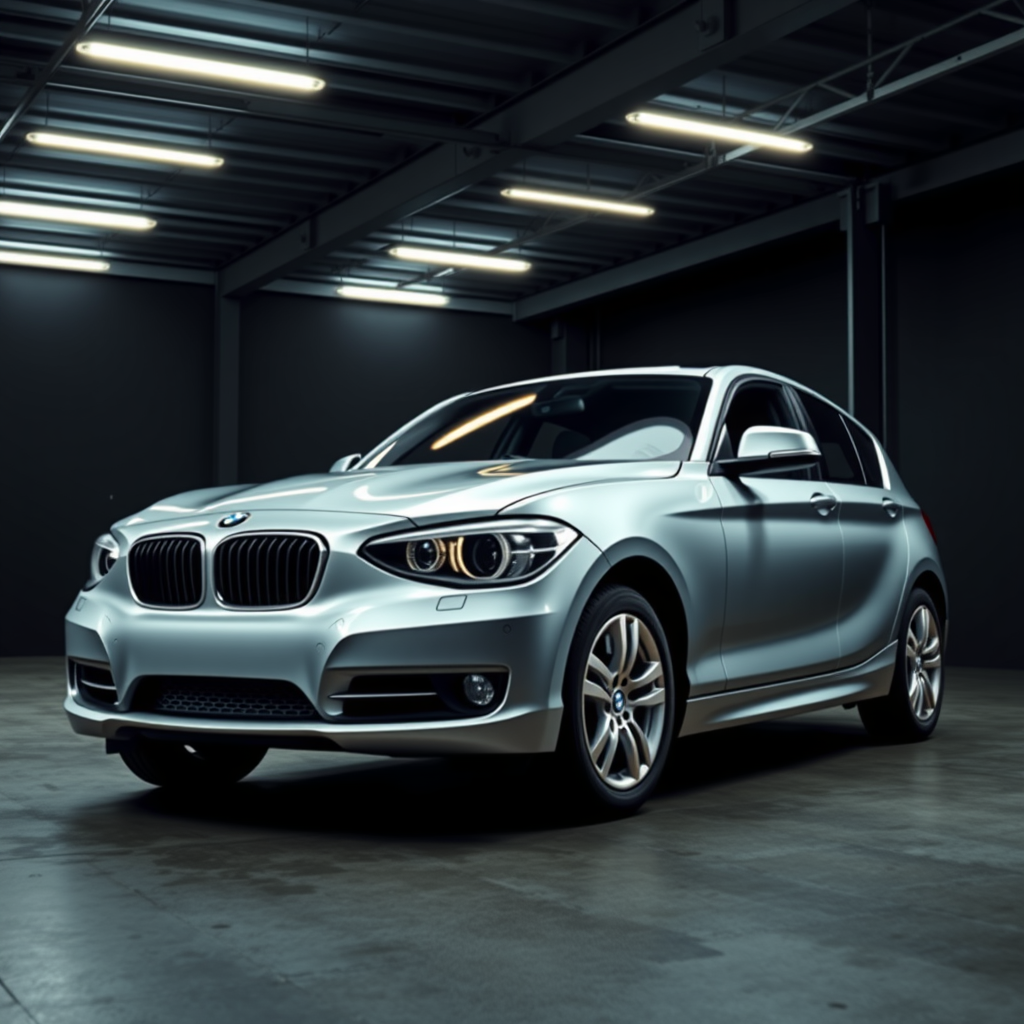
BMW 1 Series wheel fitment — I E87
Overview
The first generation of the BMW 1 Series consists of the E81 (3-door hatchback), E82 (coupe), E87 (5-door hatchback) and E88 (convertible). The E8x generation was produced from 2004 until 2013, replacing the 3 Series Compact as BMW's entry-level models. It features an aluminum multi-link suspension with a rear-wheel drive layout and longitudinally-mounted engine for a balanced weight distribution. Engines include four-cylinder turbo-diesel, naturally aspirated petrol, six-cylinder naturally aspirated petrol, and six-cylinder turbocharged petrol (available on coupe and convertible).
BMW 1 Series wheel fitment
BMW 1 Series wheel fitment for the BMW 1 Series I (E87) (2004–2007): the factory PCD, centre bore and bolt spec, then the aftermarket width and offset window we fit to.
| Bolt pattern (PCD) | 5x120 |
| Centre bore | 72.6 mm |
| Bolt / thread | M12 x 1.5 (bolts) |
| Wheel-bolt torque | 120 Nm |
| Seat type | tapered |
| Factory setup | staggered |
| TPMS | none |
| Run-flat | Yes |
Aftermarket wheel sizes — read per position:
| Position | Width | Offset |
|---|---|---|
| Front | 5.5J–7.5J | ET19–ET45 |
| Rear (staggered) | 7J–8.5J | ET33–ET45 |
As a rule, each extra 1J of width wants roughly +8–10 ET to keep the wheel tucked. The exact offset and any spacer are confirmed by the fit-check.
UK popularity & demand
Based on DfT VEH0124 vehicle-parc data (2025), there are approximately 397,465 BMW 1 Series on UK roads, placing it in the top 1% of car models by volume across our fitment database.
That makes BMW 1 Series wheel fitment a high-demand spec to keep in stock. It is one reason we track it here.
Source: DfT/DVLA licensed-vehicle statistics (VEH0124), matched to the AIWheelTech fitment database.
Engines & drivetrain
| Variant | Engine | Fuel | Power | Drive |
|---|---|---|---|---|
| 1M Coupe | 3.0L BMW N54 I6 turbo | petrol | 250 hp | RWD |
| 135is | 3.0L BMW N55 I6 turbo | petrol | 239 hp | RWD |
| 135i (late) | 3.0L BMW N55 I6 turbo | petrol | 225 hp | RWD |
| 135i (early) | 3.0L BMW N54 I6 turbo | petrol | 225 hp | RWD |
| 130i (early) | 3.0L BMW N52 I6 | petrol | 195 hp | RWD |
| 130i (late) | 3.0L BMW N52 I6 | petrol | 190 hp | RWD |
| 128i | 3.0L BMW N52 I6 | petrol | 170 hp | RWD |
| 125i | 3.0L BMW N52 I6 | petrol | 160 hp | RWD |
| 120i (late) | 2.0L BMW N46N I4 | petrol | 125 hp | RWD |
| 120i (mid) | 2.0L BMW N43 I4 | petrol | 125 hp | RWD |
| 120i (early) | 2.0L BMW N46 I4 | petrol | 110 hp | RWD |
| 118i (mid) | 2.0L BMW N43 I4 | petrol | 105 hp | RWD |
| 118i (early) | 2.0L BMW N46 I4 | petrol | 95 hp | RWD |
| 116i (late) | 2.0L BMW N43 I4 | petrol | 95 hp | RWD |
| 118i (late) | 2.0L BMW N43 I4 | petrol | 90 hp | RWD |
| 116i (mid) | 1.6L BMW N43 I4 | petrol | 90 hp | RWD |
| 116i (early) | 1.6L BMW N45 I4 | petrol | 85 hp | RWD |
Performance
| Variant | Power | 0–62 mph | Top speed |
|---|---|---|---|
| 135i (late) | 225 hp | 4.8 s | 155 mph |
| 135is | 239 hp | 4.7 s | 155 mph |
| 1M Coupe | 250 hp | 4.8 s | 155 mph |
Dimensions
| Length | 4227 mm |
| Width | 1748 mm |
| Height | 1420 mm |
| Wheelbase | 2660 mm |
| Kerb weight | 1245 kg |
Body styles & production
| Body styles | 5-door Hatchback, 3-door Hatchback, Coupe, Convertible |
| Produced | 2004–2007 |
Trim levels
Factory colours
History & notable variants
Development of the E8x began alongside the E90 3 Series, sharing approximately 60% components. The first models were launched at the Paris Motor Show in September 2004 as a five-door hatchback. Over time, it received facelifts and performance variants like the M Coupé (E82). Production of the E81/E87 hatchbacks phased out by 2011, while coupes and convertibles continued until 2013.
Reliability & owner notes
- Pros: Rear-wheel drive layout with balanced weight distribution; variety of engine options including turbocharged petrol and diesel engines; performance variants like M Coupé
- Cons: Higher fuel consumption compared to front-wheel drive competitors; initial criticism for unusual proportions, especially in hatchback models
- Common issues: Security flaw allowing thieves to start the car through OBD connection (patched later)