BMW 1 Series wheel fitment — IV F70
Overview
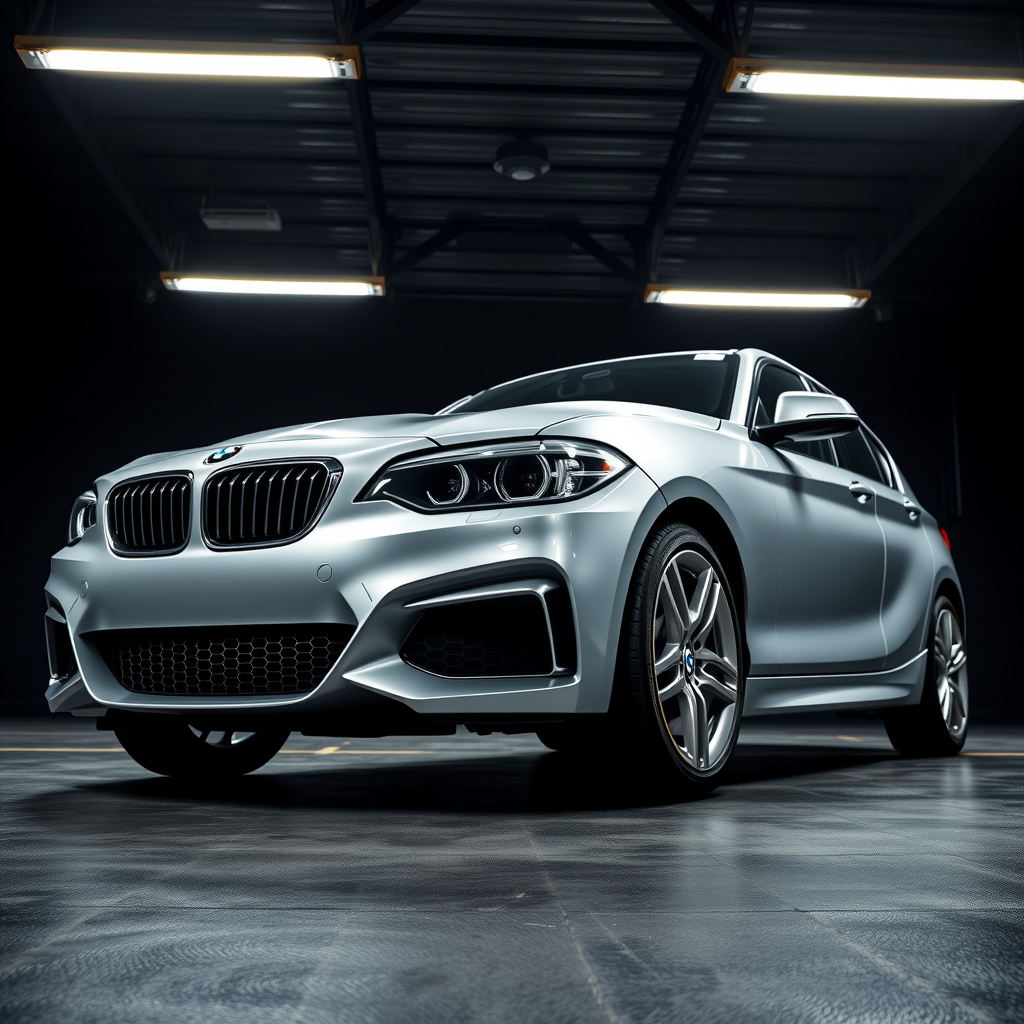
The BMW 1 Series (F70) is the fourth generation of subcompact executive hatchbacks from BMW, produced from July 2024 to present at the Leipzig Plant in Germany. It uses the UKL2 platform and comes exclusively as a five-door hatchback. Compared to its predecessor, it is slightly longer and taller but retains similar boot capacity. The exterior design is an evolution of the F40 model with notable features like LED taillights and contrast roof options. The interior has been completely redesigned with a BMW Curved Display featuring both digital instrument cluster and touchscreen infotainment system. All models come standard with 7-speed Steptronic automatic transmission, marking the first time the series does not offer manual transmission.
BMW 1 Series wheel fitment
BMW 1 Series wheel fitment for the BMW 1 Series IV (F70) (2024–2026): the factory PCD, centre bore and bolt spec, then the aftermarket width and offset window we fit to.
| Bolt pattern (PCD) | 5x112 |
| Centre bore | 66.6 mm |
| Bolt / thread | M14 x 1.25 (bolts) |
| Wheel-bolt torque | 140 Nm |
| Seat type | tapered |
| Factory setup | staggered |
| TPMS | direct |
| Run-flat | Yes |
Aftermarket wheel sizes — read per position:
| Position | Width | Offset |
|---|---|---|
| Front | 6.5J–8J | ET26–ET45 |
| Rear (staggered) | 8.5J–8.5J | ET32–ET42 |
As a rule, each extra 1J of width wants roughly +8–10 ET to keep the wheel tucked. The exact offset and any spacer are confirmed by the fit-check.
UK popularity & demand
Based on DfT VEH0124 vehicle-parc data (2025), there are approximately 397,465 BMW 1 Series on UK roads, placing it in the top 1% of car models by volume across our fitment database.
That makes BMW 1 Series wheel fitment a high-demand spec to keep in stock. It is one reason we track it here.
Source: DfT/DVLA licensed-vehicle statistics (VEH0124), matched to the AIWheelTech fitment database.
Engines & drivetrain
| Variant | Engine | Fuel | Power | Drive |
|---|---|---|---|---|
| M135 | 2.0L B48 turbo I4 | petrol | 296 hp | xDrive |
| 123 (mild hybrid) | 2.0L B48 turbo I4 | petrol | 215 hp | FWD |
| 120 (Australia) | 2.0L B48 turbo I4 | petrol | 204 hp | FWD |
| 120 (mild hybrid) | 1.5L B38 turbo I3 | petrol | 168 hp | FWD |
| 120d (mild hybrid) | 2.0L B47 turbo I4 | diesel | 161 hp | FWD |
| 118 (Australia) - 115 kW variant | 1.5L B38 turbo I3 | petrol | 154 hp | FWD |
| 118d | 2.0L B47 turbo I4 | diesel | 148 hp | FWD |
| 118 (Australia) | 1.5L B38 turbo I3 | petrol | 134 hp | FWD |
| 116 | 1.5L B38 turbo I3 | petrol | 122 hp | FWD |
Performance
| Variant | Power | 0–62 mph | Top speed |
|---|---|---|---|
| 116 | 122 hp | 9.2 s | 124 mph |
| 118 (Australia) | 134 hp | 9.2 s | 129 mph |
| 118 (Australia) - 115 kW variant | 154 hp | 9 s | 134 mph |
| 120 (Australia) | 204 hp | 7.2 s | 153 mph |
| M135 | 296 hp | 4.9 s | 155 mph |
| 120 (mild hybrid) | 168 hp | 8.3 s | 134 mph |
| 123 (mild hybrid) | 215 hp | 6.3 s | 145 mph |
| 118d | 148 hp | 8.9 s | 130 mph |
| 120d (mild hybrid) | 161 hp | 8.6 s | 140 mph |
Dimensions
| Length | 4361 mm |
| Width | 1800 mm |
| Height | 1459 mm |
| Wheelbase | 2670 mm |
| Kerb weight | 1425 kg |
Body styles & production
| Body styles | Hatchback |
| Produced | 2024–2026 |
Trim levels
Factory colours
History & notable variants
The F70 was officially unveiled on June 4, 2024, and production began in July 2024 at BMW's Leipzig Plant, with a market launch scheduled for October 2024. Notable changes include dropping the 'i' suffix for petrol models to align with BMW’s strategy for electric vehicles and retaining diesel models with the 'd' suffix. The M135 variant features an Adaptive M Chassis and specific brake systems but is detuned in Europe due to emission standards.
Reliability & owner notes
- Pros: Redesigned interior with advanced infotainment system; Adaptive M Chassis in high-performance variants; Complete range of petrol and diesel engines
- Cons: No manual transmission option available; Boot space reduced for mild hybrid models