
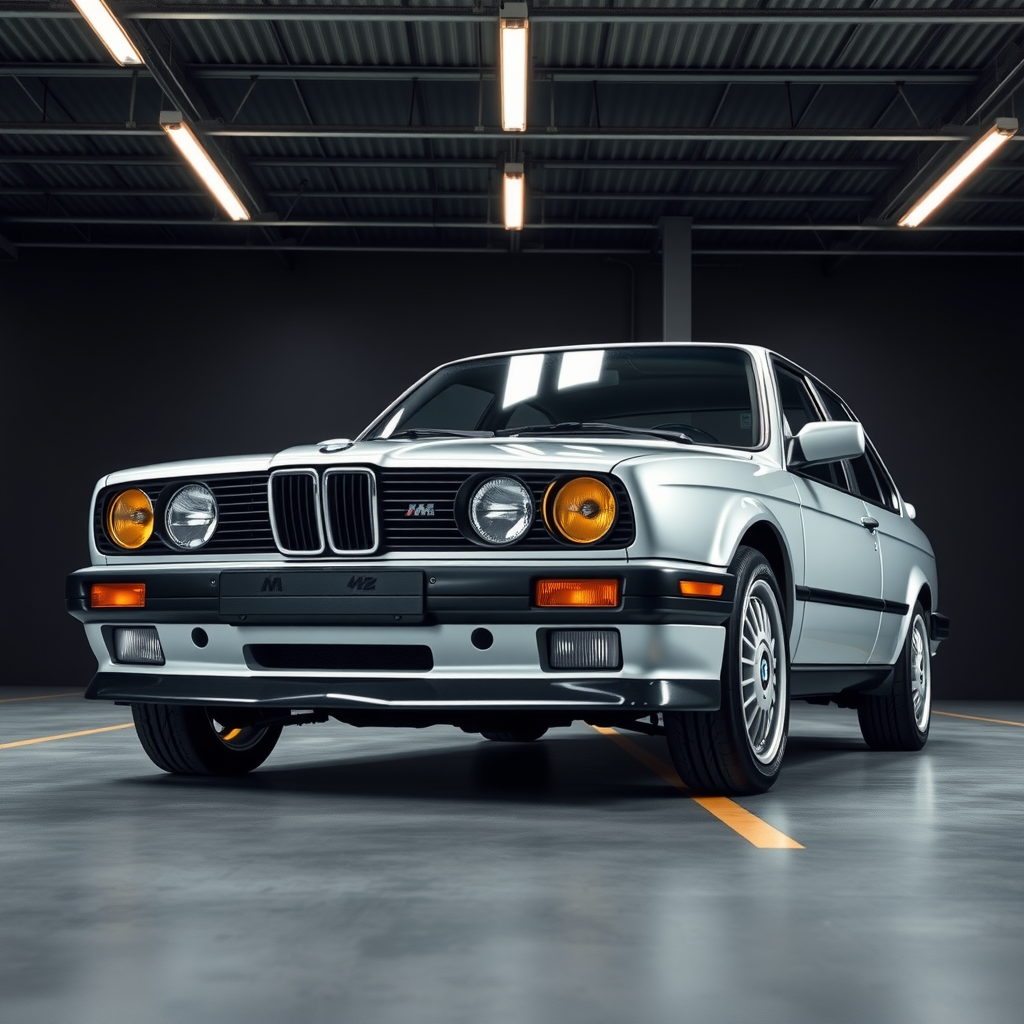
BMW 3 Series wheel fitment — II E30
Overview
The BMW E30 is the second generation of the BMW 3 Series, produced from 1982 to 1994 and replacing the E21 model. It was manufactured in West Germany (Munich and Regensburg) and South Africa (Rosslyn). The E30 introduced new body styles including four-door saloon and station wagon variants, alongside two-door saloons and convertibles. This generation featured a revised suspension to address oversteer issues of its predecessor and was the first 3 Series with diesel engine options.
BMW 3 Series wheel fitment
BMW 3 Series wheel fitment for the BMW 3 Series II (E30) (1982–1994): the factory PCD, centre bore and bolt spec, then the aftermarket width and offset window we fit to.
| Bolt pattern (PCD) | 4x100 |
| Centre bore | 57.1 mm |
| Bolt / thread | M12 x 1.5 (bolts) |
| Wheel-bolt torque | 115 Nm |
| Seat type | tapered |
| Factory setup | square |
| TPMS | none |
Aftermarket wheel sizes — read per position:
| Position | Width | Offset |
|---|---|---|
| Front | 5.5J–6.5J | ET19–ET40 |
As a rule, each extra 1J of width wants roughly +8–10 ET to keep the wheel tucked. The exact offset and any spacer are confirmed by the fit-check.
UK popularity & demand
Based on DfT VEH0124 vehicle-parc data (2025), there are approximately 467,458 BMW 3 Series on UK roads, placing it in the top 1% of car models by volume across our fitment database.
That makes BMW 3 Series wheel fitment a high-demand spec to keep in stock. It is one reason we track it here.
Source: DfT/DVLA licensed-vehicle statistics (VEH0124), matched to the AIWheelTech fitment database.
Engines & drivetrain
| Variant | Engine | Fuel | Power | Drive |
|---|---|---|---|---|
| M3, M3 Evo 1 | 2.3L S14B23 straight-4 | petrol | 259 hp | RWD |
| 320is | 2.0L S14B20 straight-4 | petrol | 259 hp | RWD |
| M3 Sport Evo | 2.5L S14B25 straight-4 | petrol | 235 hp | RWD |
| M3 Evo 2 | 2.3L S14B23 straight-4 | petrol | 217 hp | RWD |
| 325, 325e, 325es | 2.7L M20B27 straight-6 | petrol | 170 hp | RWD |
| 320i (pre 1987) | 2.0L M20B20 straight-6 | petrol | 168 hp | RWD |
| 323i (post 1987) | 2.5L M20B25 straight-6 | petrol | 168 hp | RWD |
| 325i, 325is, 325ix | 2.5L M20B25 straight-6 | petrol | 167 hp | RWD|AWD |
| 324td | 2.4L M21D24 turbo straight-6 | diesel | 154 hp | RWD |
| 323i (pre 1987) | 2.3L M20 straight-6 | petrol | 136 hp | RWD |
| 318is | 1.8L M42B18 straight-4 | petrol | 135 hp | RWD |
| 320i (post 1987) | 2.0L M20B20 straight-6 | petrol | 127 hp | RWD |
| 324d | 2.4L M21D24 straight-6 | diesel | 115 hp | RWD |
| 318i (post 1987) | 1.8L M40B18 straight-4 | petrol | 111 hp | RWD |
| 318i (pre 1987) | 1.8L M10B18 straight-4 | petrol | 103 hp | RWD |
| 316i | 1.6L M40B16 straight-4 | petrol | 98 hp | RWD |
| 316 | 1.8L M10B18 straight-4 | petrol | 90 hp | RWD |
| 316s | 1.6L M10B16 straight-4 | petrol | 73 hp | RWD |
Performance
| Variant | Power | 0–62 mph | Top speed |
|---|---|---|---|
| 325i | 168 hp |
Dimensions
| Length | 4320 mm |
| Width | 1645 mm |
| Height | 1360 mm |
| Wheelbase | 2570 mm |
| Kerb weight | 1080 kg |
Body styles & production
| Body styles | Saloon, Convertible, Touring |
| Produced | 1982–1994 |
Trim levels
Factory colours
History & notable variants
Development began in July 1976 under chief designer Claus Luthe and exterior styling by Boyke Boyer, leading to production launch at the end of November 1982. A minor update occurred in 1985, introducing a factory convertible model alongside the Baur conversion. In 1988, significant changes were made including redesigned rear lights and bumpers, improved rust protection, and the introduction of the Touring body style.
Reliability & owner notes
- Pros: Improved handling over E21; introduction of diesel engines and Touring body style
- Cons: Limited production in North America due to emissions regulations; bulky bumpers in early models
- Common issues: Rust issues, particularly on the convertible model