BMW 3 Series wheel fitment — III E36
Overview
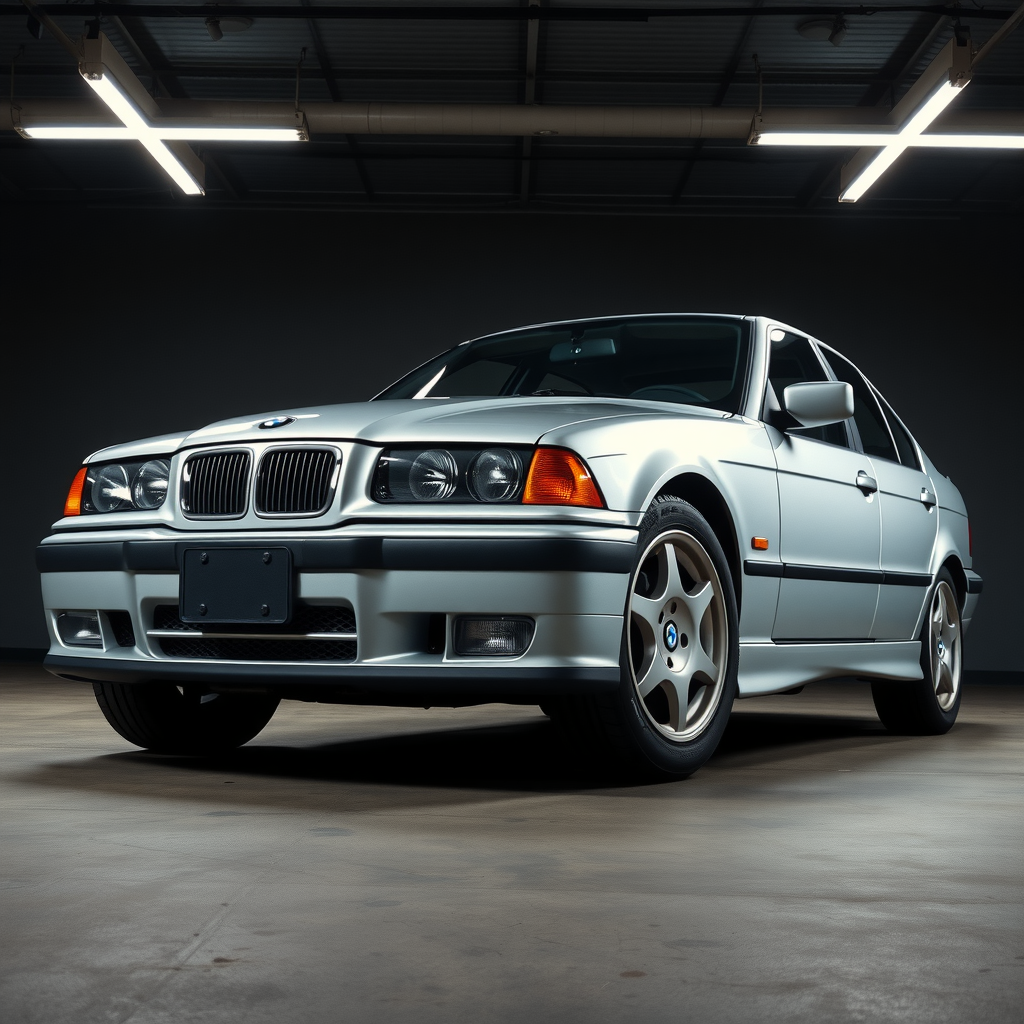
The third generation of the BMW 3 Series (E36) was produced from 1990 to 2000 by BMW. It introduced a hatchback body style for the first time, along with significant mechanical upgrades such as multi-link rear suspension and diesel engine options. The E36 was manufactured in Germany, South Africa, the United States, Mexico, Indonesia, Egypt, and the Philippines. It succeeded the E30 model and preceded the E46 generation.
BMW 3 Series wheel fitment
BMW 3 Series wheel fitment for the BMW 3 Series III (E36) (1990–2000): the factory PCD, centre bore and bolt spec, then the aftermarket width and offset window we fit to.
| Bolt pattern (PCD) | 5x120 |
| Centre bore | 72.6 mm |
| Bolt / thread | M12 x 1.5 (bolts) |
| Wheel-bolt torque | 115 Nm |
| Seat type | tapered |
| Factory setup | square |
| TPMS | none |
Aftermarket wheel sizes — read per position:
| Position | Width | Offset |
|---|---|---|
| Front | 6J–7J | ET37–ET52 |
As a rule, each extra 1J of width wants roughly +8–10 ET to keep the wheel tucked. The exact offset and any spacer are confirmed by the fit-check.
UK popularity & demand
Based on DfT VEH0124 vehicle-parc data (2025), there are approximately 467,458 BMW 3 Series on UK roads, placing it in the top 1% of car models by volume across our fitment database.
That makes BMW 3 Series wheel fitment a high-demand spec to keep in stock. It is one reason we track it here.
Source: DfT/DVLA licensed-vehicle statistics (VEH0124), matched to the AIWheelTech fitment database.
Engines & drivetrain
| Variant | Engine | Fuel | Power | Drive |
|---|---|---|---|---|
| M3 (US-spec late) | 3.2L S52 | petrol | 286 hp | RWD |
| M3 (US-spec early) | 3.0L S50B30US | petrol | 240 hp | RWD |
| M3 (Euro-spec late) | 3.2L S50B32 | petrol | 236 hp | RWD |
| M3 (Euro-spec early) | 3.0L S50B30 | petrol | 210 hp | RWD |
| 318is/318ti (late) | 1.9L M44B19 | petrol | 181 hp | RWD |
| 328i | 2.8L M52B28 | petrol | 142 hp | RWD |
| 325i (late) | 2.5L M50B25TU | petrol | 141 hp | RWD |
| 325i (early) | 2.5L M50B25 | petrol | 141 hp | RWD |
| 323i/323ti | 2.5L M52B25 | petrol | 125 hp | RWD |
| 325td (early) | 2.5L M51D25 UL | diesel | 115 hp | RWD |
| 318i/318ti (late) | 1.8L M43B18 | petrol | 115 hp | RWD |
| 318i/318ti (early) | 1.8L M40B18 | petrol | 113 hp | RWD |
| 320i (late) | 2.0L M52B20 | petrol | 110 hp | RWD |
| 320i (early) | 2.0L M50B20 | petrol | 110 hp | RWD |
| 318is/318ti (early) | 1.8L M42B18 | petrol | 103 hp | RWD |
| 316i (late) | 1.6L M43B16 | petrol | 75 hp | RWD |
| 316i (early) | 1.6L M40B16 | petrol | 73 hp | RWD |
| 318tds | 1.7L M41D17 | diesel | 66 hp | RWD |
Performance
| Variant | Power | 0–62 mph | Top speed |
|---|---|---|---|
| E36 M3 (S50B30) | 247 hp |
Dimensions
| Length | 4433 mm |
| Width | 1710 mm |
| Height | 1366 mm |
| Wheelbase | 2700 mm |
| Kerb weight | 1175 kg |
Body styles & production
| Body styles | Saloon, Coupé, Convertible, Touring (Wagon), Compact |
| Produced | 1990–2000 |
Trim levels
Factory colours
History & notable variants
Development of the E36 began in 1981 with a focus on aerodynamics and multi-link suspension. The production version was launched in October 1990, followed by coupés and convertibles later. The Touring variant debuted in March 1995. Notable for its consistent presence in Car and Driver's 10Best list throughout its run, the E36 saw a gradual phase-out after the introduction of the E46 in 1998.
Reliability & owner notes
- Pros: Innovative multi-link suspension, introduction of diesel engines, aerodynamic design, consistent performance and reliability
- Cons: Limited all-wheel drive availability compared to predecessor/successor generations