BMW 3 Series wheel fitment — IV E46
Overview
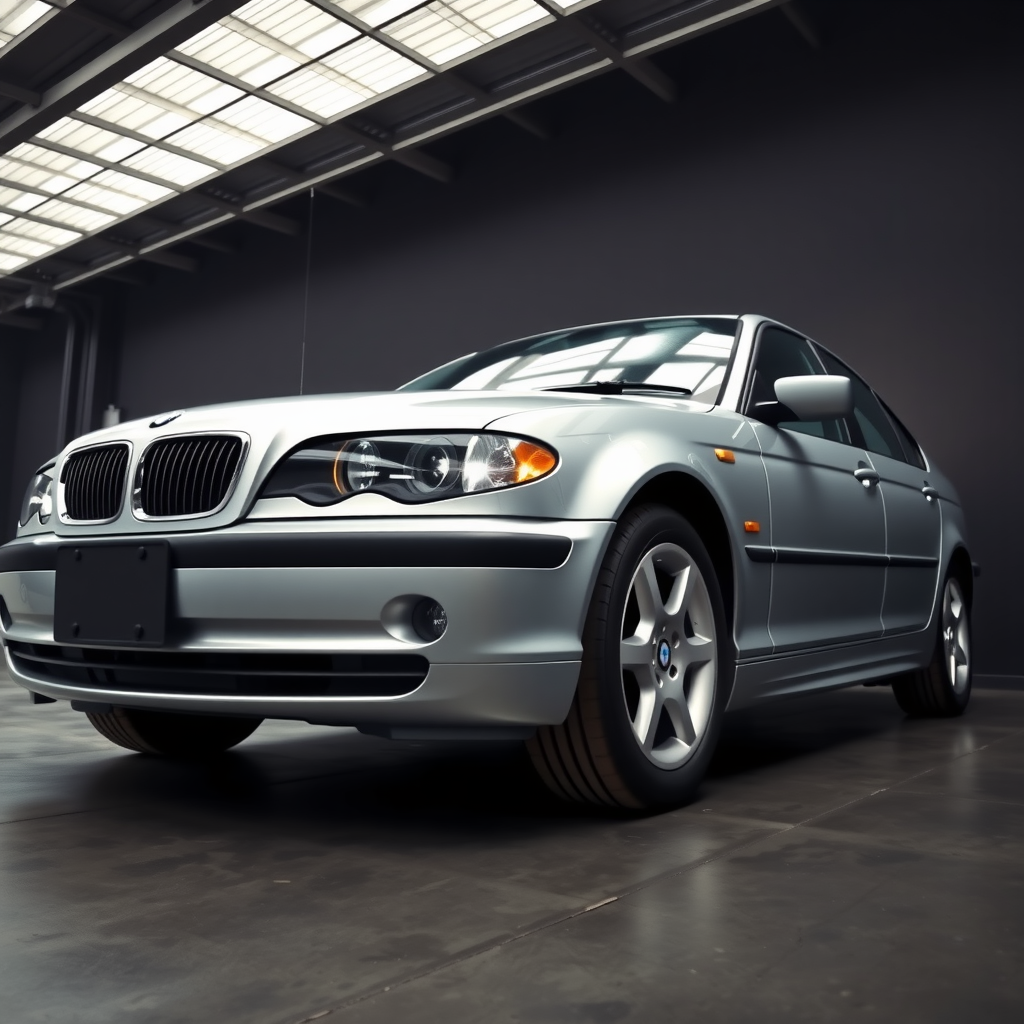
The BMW 3 Series IV (E46) is the fourth generation of compact executive cars manufactured by German automaker BMW from December 1997 to November 2006. It succeeded the E36 series and was available in sedan, coupé, convertible, station wagon, and hatchback body styles. The production line-up included performance variants like the M3 and special models such as the ZHP package.
BMW 3 Series wheel fitment
BMW 3 Series wheel fitment for the BMW 3 Series IV (E46) (1998–2003): the factory PCD, centre bore and bolt spec, then the aftermarket width and offset window we fit to.
| Bolt pattern (PCD) | 5x120 |
| Centre bore | 72.6 mm |
| Bolt / thread | M12 x 1.5 (bolts) |
| Wheel-bolt torque | 100 Nm |
| Seat type | tapered |
| Factory setup | staggered |
| TPMS | none |
Aftermarket wheel sizes — read per position:
| Position | Width | Offset |
|---|---|---|
| Front | 6J–8J | ET36–ET55 |
| Rear (staggered) | 8J–9.5J | ET30–ET45 |
As a rule, each extra 1J of width wants roughly +8–10 ET to keep the wheel tucked. The exact offset and any spacer are confirmed by the fit-check.
UK popularity & demand
Based on DfT VEH0124 vehicle-parc data (2025), there are approximately 467,458 BMW 3 Series on UK roads, placing it in the top 1% of car models by volume across our fitment database.
That makes BMW 3 Series wheel fitment a high-demand spec to keep in stock. It is one reason we track it here.
Source: DfT/DVLA licensed-vehicle statistics (VEH0124), matched to the AIWheelTech fitment database.
Engines & drivetrain
| Variant | Engine | Fuel | Power | Drive |
|---|---|---|---|---|
| M3 (E46) | 3.2L BMW S54 I6 | petrol | 338 hp | RWD |
| 330i | 3.0L BMW S54/M54/M56 I6 | petrol | 218 hp | RWD |
| 330xd | 3.0L BMW M57 I6 | diesel | 204 hp | xDrive |
| 325xi/330xi | 2.5L BMW N42/N46 I4 / 3.0L BMW M57 I6 | 197 hp | xDrive | |
| 328i | 2.8L BMW M54/M56 I6 | petrol | 192 hp | RWD |
| 330d | 2.9L BMW M57 I6 | diesel | 177 hp | RWD |
| 325i | 2.5L BMW N42/N46 I4 | petrol | 170 hp | RWD |
| 323i | 2.2L BMW N42/N46 I4 | petrol | 156 hp | RWD |
| 320i | 2.0L BMW N42/N46 I4 | petrol | 150 hp | RWD |
| 316i | 1.8L BMW N42 I4 | petrol | 115 hp | RWD |
| 320d | 2.0L BMW M47 I4 | diesel | 110 hp | RWD |
| 318d | 2.0L BMW M47 I4 | diesel | 90 hp | RWD |
Performance
| Variant | Power | 0–62 mph | Top speed |
|---|---|---|---|
| M3 (E46) | 338 hp | 5.1 s | 155 mph |
Dimensions
| Length | 4470 mm |
| Width | 1740 mm |
| Height | 1410 mm |
| Wheelbase | 2725 mm |
| Kerb weight | 1285 kg |
Body styles & production
| Body styles | Sedan, Touring (estate), Coupé, Convertible, Compact (hatchback) |
| Produced | 1998–2003 |
| Units produced | 3,185,781 |
Trim levels
Factory colours
History & notable variants
Development of the E46 began in 1993 under chief engineer Wolfgang Ziebart and head designer Chris Bangle. It was unveiled in November 1997, with sedan deliveries starting at the end of April 1998. The M3 performance model debuted in June 2000 for coupé and convertible variants. Production continued until August 2006 despite the introduction of the E90 series.
Reliability & owner notes
- Pros: Improved aerodynamics, advanced electronics, performance variants like M3
- Cons: Heavier than its predecessor, some models had reliability issues with the SMG-II transmission
- Common issues: SMG-II transmission failures