
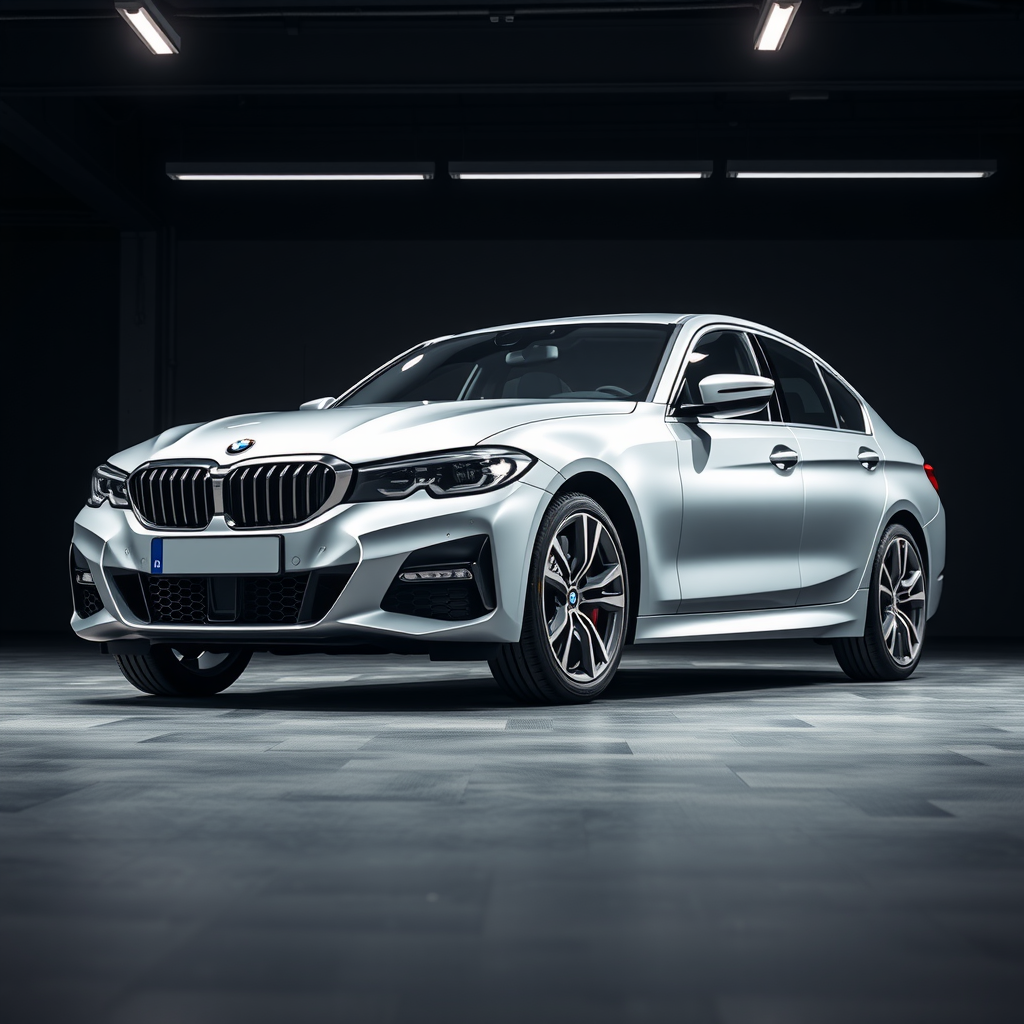
BMW 3 Series wheel fitment — VI F30/F31/F34
Overview
The sixth generation of the BMW 3 Series, known as F30 (sedan), F31 (Touring), and F34 (Gran Turismo), was produced from October 2011 to 2019. This generation marked a significant shift with all models powered by turbocharged engines exclusively and the introduction of electric power steering. The F30 sedan, launched in February 2012, was followed by the Touring (F31) and Gran Turismo (F34). A long-wheelbase version (F35) was produced for the Chinese market. Notable changes included a facelift in 2016 introducing new engines and features such as LED headlights and revised suspension.
BMW 3 Series wheel fitment
BMW 3 Series wheel fitment for the BMW 3 Series VI (F30/F31/F34) (2013–2016): the factory PCD, centre bore and bolt spec, then the aftermarket width and offset window we fit to.
| Bolt pattern (PCD) | 5x120 |
| Centre bore | 72.6 mm |
| Bolt / thread | M14 x 1.25 (bolts) |
| Wheel-bolt torque | 140 Nm |
| Seat type | tapered |
| Factory setup | staggered |
| TPMS | direct |
| Run-flat | Yes |
Aftermarket wheel sizes — read per position:
| Position | Width | Offset |
|---|---|---|
| Front | 6.5J–8.5J | ET24–ET45 |
| Rear (staggered) | 8J–10J | ET33–ET50 |
As a rule, each extra 1J of width wants roughly +8–10 ET to keep the wheel tucked. The exact offset and any spacer are confirmed by the fit-check.
UK popularity & demand
Based on DfT VEH0124 vehicle-parc data (2025), there are approximately 467,458 BMW 3 Series on UK roads, placing it in the top 1% of car models by volume across our fitment database.
That makes BMW 3 Series wheel fitment a high-demand spec to keep in stock. It is one reason we track it here.
Source: DfT/DVLA licensed-vehicle statistics (VEH0124), matched to the AIWheelTech fitment database.
Engines & drivetrain
| Variant | Engine | Fuel | Power | Drive |
|---|---|---|---|---|
| 335i xDrive | 3.0L N55 turbo petrol | petrol | 326 hp | xDrive |
| 330d xDrive | 3.0L N57 turbo diesel | diesel | 258 hp | xDrive |
| 330i xDrive | 2.0L B48 turbo petrol | petrol | 252 hp | xDrive |
| 330e Plug-in Hybrid | combined petrol and electric hybrid system | hybrid | 252 hp | xDrive |
| 320i | 2.0L B48 turbo petrol | petrol | 192 hp | RWD |
| 320d | 2.0L B47 turbo diesel | diesel | 190 hp | RWD |
| 320i Efficient Dynamics Edition | 2.0L B48 turbo petrol | petrol | 184 hp | RWD |
| 318d | 2.0L N47 turbo diesel | diesel | 150 hp | RWD |
| 320d Efficient Dynamics Edition | 2.0L B47 turbo diesel | diesel | 150 hp | RWD |
| 318i | 1.5L B38 turbo petrol | petrol | 136 hp | FWD |
Performance
| Variant | Power | 0–62 mph | Top speed |
|---|---|---|---|
| 320d | 190 hp | 7.5 s | 138 mph |
| 318d | 150 hp | 9.1 s | 130 mph |
| 320i | 192 hp | 7.5 s | 145 mph |
| 318i | 136 hp | 9 s | 130 mph |
| 330d xDrive | 258 hp | 6.4 s | 155 mph |
| 330i xDrive | 252 hp | 5.9 s | 155 mph |
| 335i xDrive | 326 hp | 4.8 s | 155 mph |
| 320i Efficient Dynamics Edition | 184 hp | 7.9 s | 145 mph |
| 320d Efficient Dynamics Edition | 150 hp | 8.9 s | 130 mph |
| 330e Plug-in Hybrid | 252 hp | 6.1 s | 143 mph |
Dimensions
| Length | 4624 mm |
| Width | 1811 mm |
| Height | 1429 mm |
| Wheelbase | 2810 mm |
| Kerb weight | 1385 kg |
Body styles & production
| Body styles | Saloon, Touring (estate), Gran Turismo |
| Produced | 2013–2016 |
Trim levels
Factory colours
History & notable variants
The F30 generation saw the introduction of the BMW M3 (F80) in 2014, powered by the S55 twin-turbocharged straight-six engine. The ActiveHybrid 3 was introduced in 2012, followed by the plug-in hybrid 330e iPerformance in 2016. Production of the F30 sedan and Touring ended in 2019 with the introduction of the G20 generation, while the Gran Turismo continued until early 2020.
Reliability & owner notes
- Pros: Turbocharged engines exclusively, electric power steering, improved aerodynamics, advanced safety features
- Cons: Increased complexity with turbocharging and hybrid options, higher maintenance costs for some models
- Common issues: None specified in reference