BMW 5 Series wheel fitment — VII G30/G31/G38
Overview
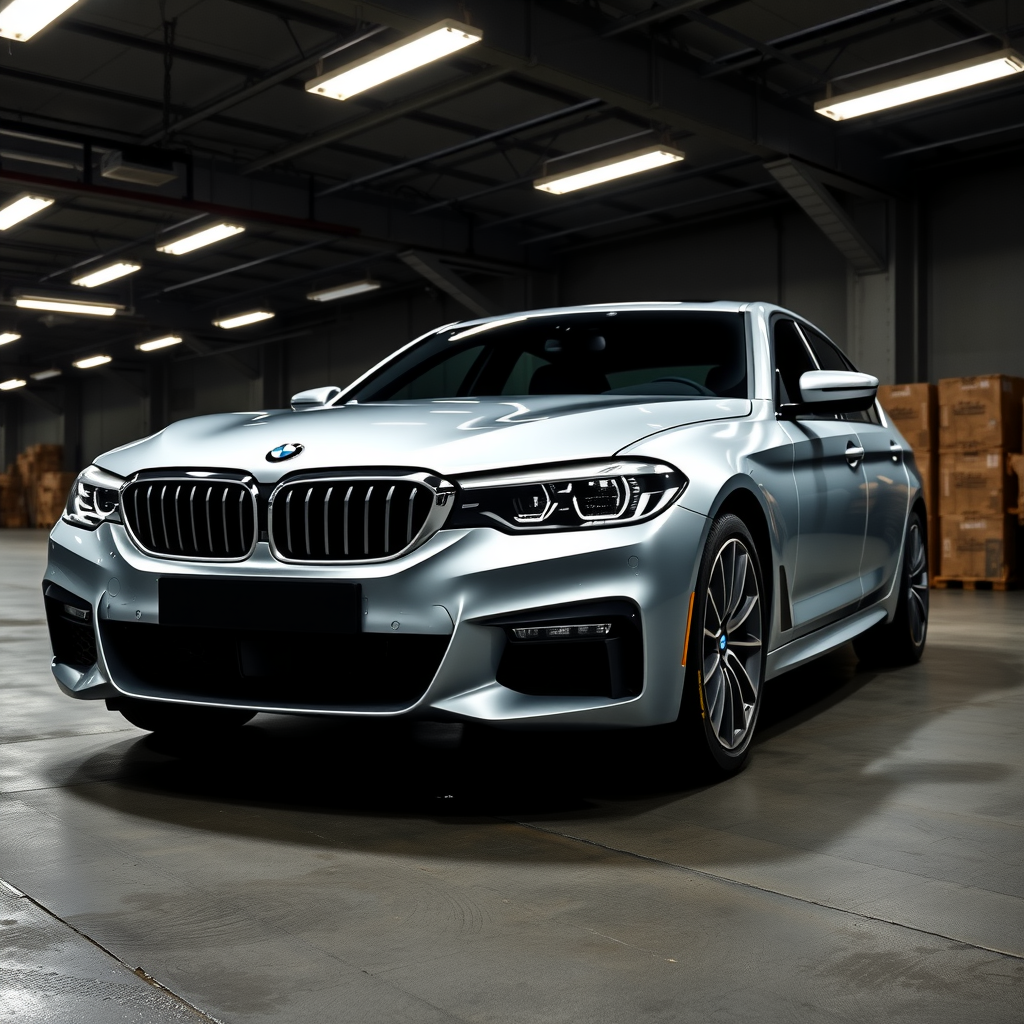
The seventh generation of BMW's executive car series, known as the G30 (sedan) and G31 (Touring), was produced from November 2016 to 2023. It is built on BMW’s Cluster Architecture (CLAR) platform, featuring a mix of steel and aluminum construction for weight reduction and improved handling. The series includes both standard wheelbase and long-wheelbase versions (G38) specifically for the Chinese market. Notable changes from its predecessor include an updated iDrive system with enhanced connectivity features such as gesture control and advanced driver assistance systems.
BMW 5 Series wheel fitment
Start with the hub. The BMW 5 Series VII (G30/G31/G38) spec table gives the bolt pattern and bore; the second table is the aftermarket window for BMW 5 Series wheel fitment.
| Bolt pattern (PCD) | 5x112 |
| Centre bore | 66.6 mm |
| Bolt / thread | M14 x 1.25 (bolts) |
| Wheel-bolt torque | 140 Nm |
| Seat type | tapered |
| Factory setup | staggered |
| TPMS | direct |
| Run-flat | Yes |
Aftermarket wheel sizes — read per position:
| Position | Width | Offset |
|---|---|---|
| Front | 8J–9J | ET20–ET35 |
| Rear (staggered) | 9J–10.5J | ET30–ET50 |
Go wider and the offset has to rise with it, about 8 to 10 ET per extra 1J, or the wheel pokes past the arch. The fit-check settles the exact offset and any spacer.
UK popularity & demand
Based on DfT VEH0124 vehicle-parc data (2025), there are approximately 196,854 BMW 5 Series on UK roads, placing it in the top 2% of car models by volume across our fitment database.
That makes BMW 5 Series wheel fitment a high-demand spec to keep in stock. It is one reason we track it here.
Source: DfT/DVLA licensed-vehicle statistics (VEH0124), matched to the AIWheelTech fitment database.
Engines & drivetrain
| Variant | Engine | Fuel | Power | Drive, years |
|---|---|---|---|---|
| 520i | 1.6 L B48 I4 turbo | petrol | 125 kW (170 PS) | 2018 to 2024 |
| 520i | 2.0 L B48 I4 turbo | petrol | 135 kW (184 PS) | 2017 to 2024 |
| 520e / iPerformance | 2.0 L B48 I4 turbo, with electric motor | phev | 150 kW (204 PS) | 2021 to 2024 |
| 530i | 2.0 L B48 I4 turbo | petrol | 185 kW (252 PS) | 2017 to 2024 |
| 530e / iPerformance | 2.0 L B48 I4 turbo, with electric motor | phev | 185 kW (252 PS) | 2017 to 2024 |
| 530e LCI / iPerformance | 2.0 L B48 I4 turbo, with electric motor | phev | 218 kW (296 PS) | 2017 to 2024 |
| 540i | 3.0 L B58 I6 turbo | petrol | 250 kW (340 PS) | 2017 to 2024 |
| 540i xDrive | 3.0 L B58 I6 turbo | petrol | 250 kW (340 PS) | xDrive, 2017 to 2024 |
| 545e xDrive | 3.0 L B58 I6 turbo, with electric motor | phev | 290 kW (394 PS) | xDrive, 2021 to 2024 |
| M550i xDrive | 4.4 L N63 V8 twin-turbo | petrol | 340 kW (462 PS) | xDrive, 2018 to 2020 |
| M550i xDrive | 4.4 L N63 V8 twin-turbo | petrol | 390 kW (530 PS) | xDrive, 2020 to 2024 |
| M5/M5 Competition | 4.4 L S63 V8 twin-turbo | petrol | 441 kW (600 PS) | 2018 to 2024 |
| Alpina B5 | 4.4 L N63 V8 twin-turbo | petrol | 447 kW (608 PS) | 2018 to 2024 |
| 518d | 2.0 L B47 I4 turbo | diesel | 110 kW (150 PS) | 2017 to 2020 |
| 520d / 523d | 2.0 L B47 I4 turbo | diesel | 140 kW (190 PS) | 2017 to 2023 |
| 525d | 2.0 L B47 I4 turbo | diesel | 170 kW (231 PS) | 2017 to 2020 |
| 530d | 3.0 L B57 I6 turbo | diesel | 195 kW (265 PS) | 2017 to 2020 |
| 530d | 3.0 L B57 I6 turbo | diesel | 210 kW (286 PS) | 2020 to 2023 |
| 540d xDrive | 3.0 L B57 I6 twin-turbo | diesel | 235 kW (320 PS) | xDrive, 2017 to 2020 |
| 540d xDrive | 3.0 L B57 I6 twin-turbo | diesel | 250 kW (340 PS) | xDrive, 2020 to 2023 |
| M550d xDrive | 3.0 L B57 I6 quad-turbo | diesel | 294 kW (400 PS) | xDrive, 2017 to 2020 |
| Alpina D5 S | 3.0 L B57 I6 tri-turbo | diesel | 282 kW (383 PS) | 2017 to 2024 |
| Alpina D5 S | 3.0 L B57 I6 twin-turbo | diesel | 240 kW (326 PS) | 2017 to 2024 |
Source: BMW 5 Series (G30), en.wikipedia.org.
Performance
| Variant | Power | 0 to 62 mph (0 to 100 km/h) | Top speed |
|---|---|---|---|
| 520i | 125 kW (170 PS) | 8.7 s | 224 km/h (139 mph) |
| 520i | 135 kW (184 PS) | 7.8 s | 235 km/h (146 mph) |
| 520e / iPerformance | 150 kW (204 PS) | 8.2 s | 218 km/h (135 mph) |
| 530i | 185 kW (252 PS) | 6.2 s | 250 km/h (155 mph) |
| 530e / iPerformance | 185 kW (252 PS) | 6.2 s | 235 km/h (146 mph) |
| 530e LCI / iPerformance | 218 kW (296 PS) | 5.8 s | 235 km/h (146 mph) |
| 540i | 250 kW (340 PS) | 5.1 s | 250 km/h (155 mph) |
| 540i xDrive | 250 kW (340 PS) | 4.8 s | 250 km/h (155 mph) |
| 545e xDrive | 290 kW (394 PS) | 4.6 s | 250 km/h (155 mph) |
| M550i xDrive | 340 kW (462 PS) | 3.8 s | 250 km/h (155 mph) |
| M550i xDrive | 390 kW (530 PS) | 3.6 s | 250 km/h (155 mph) |
| M5/M5 Competition | 441 kW (600 PS) | 3.1 s | |
| Alpina B5 | 447 kW (608 PS) | 3.5 s | 330 km/h (205 mph) |
| 518d | 110 kW (150 PS) | 10 s | |
| 520d / 523d | 140 kW (190 PS) | 7.3 s | |
| 525d | 170 kW (231 PS) | 6.6 s | |
| 530d | 195 kW (265 PS) | 5.8 s | |
| 530d | 210 kW (286 PS) | 5.4 s | |
| 540d xDrive | 235 kW (320 PS) | 4.9 s | |
| 540d xDrive | 250 kW (340 PS) | 4.7 s | |
| M550d xDrive | 294 kW (400 PS) | 4.4 s | |
| Alpina D5 S | 282 kW (383 PS) | 4.4 s | |
| Alpina D5 S | 240 kW (326 PS) | 4.9 s |
Source: BMW 5 Series (G30), en.wikipedia.org.
Dimensions
| Length | 4,936 to 5,092 mm |
| Width | 1,858 to 1,868 mm |
| Height | 1,479 to 1,498 mm |
| Wheelbase | 2,975 to 3,105 mm |
| Kerb weight | 1,615 to 2,045 kg |
Source: BMW 5 Series (G30), en.wikipedia.org; EU type-approval data (EEA).
Body styles & production
| Body styles | 4-door saloon (G30), 5-door estate (G31) |
| Produced | 2016–2020 |
Trim levels
Factory colours
History & notable variants
The G30/G31 was unveiled on October 12, 2016, followed by public debut at the North American International Auto Show in January 2017. It underwent a facelift in May 2020, introducing new exterior and interior features while retaining its technological advancements. Special variants include the M5 (F90), Alpina B5 Bi-Turbo, and D5 S.
Reliability & owner notes
- Pros: Advanced technology features, improved fuel efficiency, enhanced driving dynamics
- Cons: High price point, complex infotainment system can be overwhelming for some users