BMW i4 wheel fitment — G26 Facelift
Overview
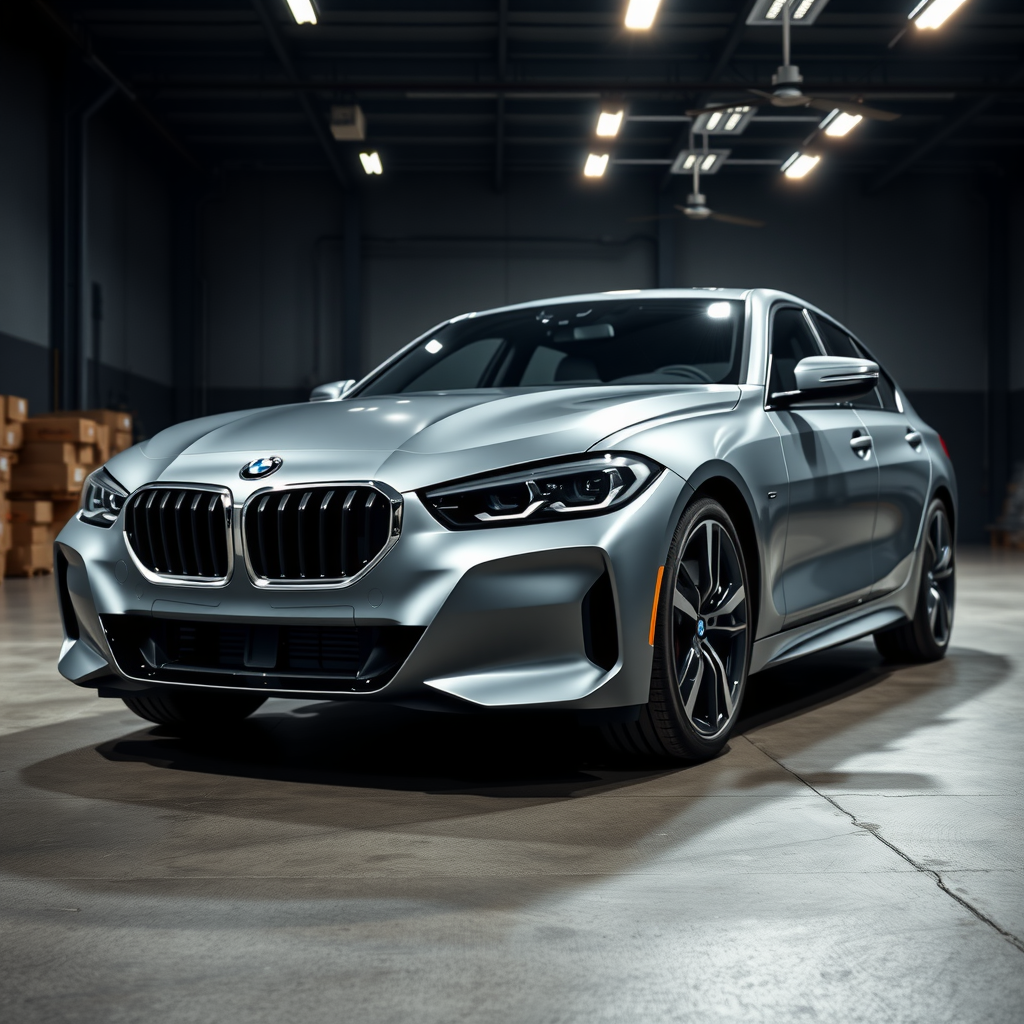
The BMW i4 (model code G26) is a battery electric compact executive car produced by BMW since October 2021. It features a five-door liftback body style and is marketed as a four-door coupé. The initial concept version, named BMW i Vision Dynamics, debuted at the 2017 Frankfurt Motor Show. Built on the modular CLAR platform to keep costs low and volume-production attainable, it uses the bodyshell design of the G26 4 Series Gran Coupé. It has a MacPherson strut front suspension and multi-link rear suspension with rear air suspension as standard (the M50 adds adaptive M dampers). The i4 was revealed fully production-ready in March 2021, three months ahead of schedule, and went on sale in November 2021.
BMW i4 wheel fitment
BMW i4 wheel fitment for the BMW i4 G26 Facelift (2024–2026): the factory PCD, centre bore and bolt spec, then the aftermarket width and offset window we fit to.
| Bolt pattern (PCD) | 5x112 |
| Centre bore | 66.6 mm |
| Bolt / thread | M14 x 1.25 (bolts) |
| Wheel-bolt torque | 140 Nm |
| Seat type | tapered |
| Factory setup | staggered |
| TPMS | direct |
| Run-flat | Yes |
Aftermarket wheel sizes — read per position:
| Position | Width | Offset |
|---|---|---|
| Front | 7.5J–8.5J | ET30–ET45 |
| Rear (staggered) | 9J–10J | ET36–ET45 |
As a rule, each extra 1J of width wants roughly +8–10 ET to keep the wheel tucked. The exact offset and any spacer are confirmed by the fit-check.
UK popularity & demand
Based on DfT VEH0124 vehicle-parc data (2025), there are approximately 39,484 BMW i4 on UK roads, placing it in the top 7% of car models by volume across our fitment database.
That makes BMW i4 wheel fitment a high-demand spec to keep in stock. It is one reason we track it here.
Source: DfT/DVLA licensed-vehicle statistics (VEH0124), matched to the AIWheelTech fitment database.
Engines & drivetrain
| Variant | Engine | Fuel | Power | Drive |
|---|---|---|---|---|
| M50 | Dual electric motors, all-wheel drive | electric | 544 hp | xDrive |
| xDrive40 | Dual electric motors, all-wheel drive | electric | 390 hp | xDrive |
| eDrive40 | Electric motor, rear-wheel drive | electric | 335 hp | RWD |
| eDrive35 | Electric motor, rear-wheel drive | electric | 281 hp | RWD |
Performance
| Variant | Power | 0–62 mph | Top speed |
|---|---|---|---|
| eDrive35 | 281 hp | 5.8 s | 118 mph |
| eDrive40 | 335 hp | 5.7 s | 118 mph |
| xDrive40 | 390 hp | 4.9 s | |
| M50 | 544 hp | 3.9 s | 140 mph |
Dimensions
| Length | 4785 mm |
| Width | 1852 mm |
| Height | 1448 mm |
| Wheelbase | 2856 mm |
| Kerb weight | 2125 kg |
Body styles & production
| Body styles | Liftback |
| Produced | 2024–2026 |
Trim levels
Factory colours
History & notable variants
Development began with an investment of about €200 million in the Munich plant to prepare for series production. This included converting over 1000 robots in the body shop and assembly area during a six-week closure in summer 2020. The electric motor is assembled at BMW Group Plant Dingolfing. Over an ownership period of 200,000 km (125,000 mi), the eDrive40 has a 45 percent lower global warming potential than comparable diesel models and uses recycled materials to cut production emissions by 18 percent.
Reliability & owner notes
- Pros: High performance, long range, advanced technology and sustainability features
- Cons: Limited availability of fast charging stations, high initial cost
- Common issues: No well-documented reliability issues noted