
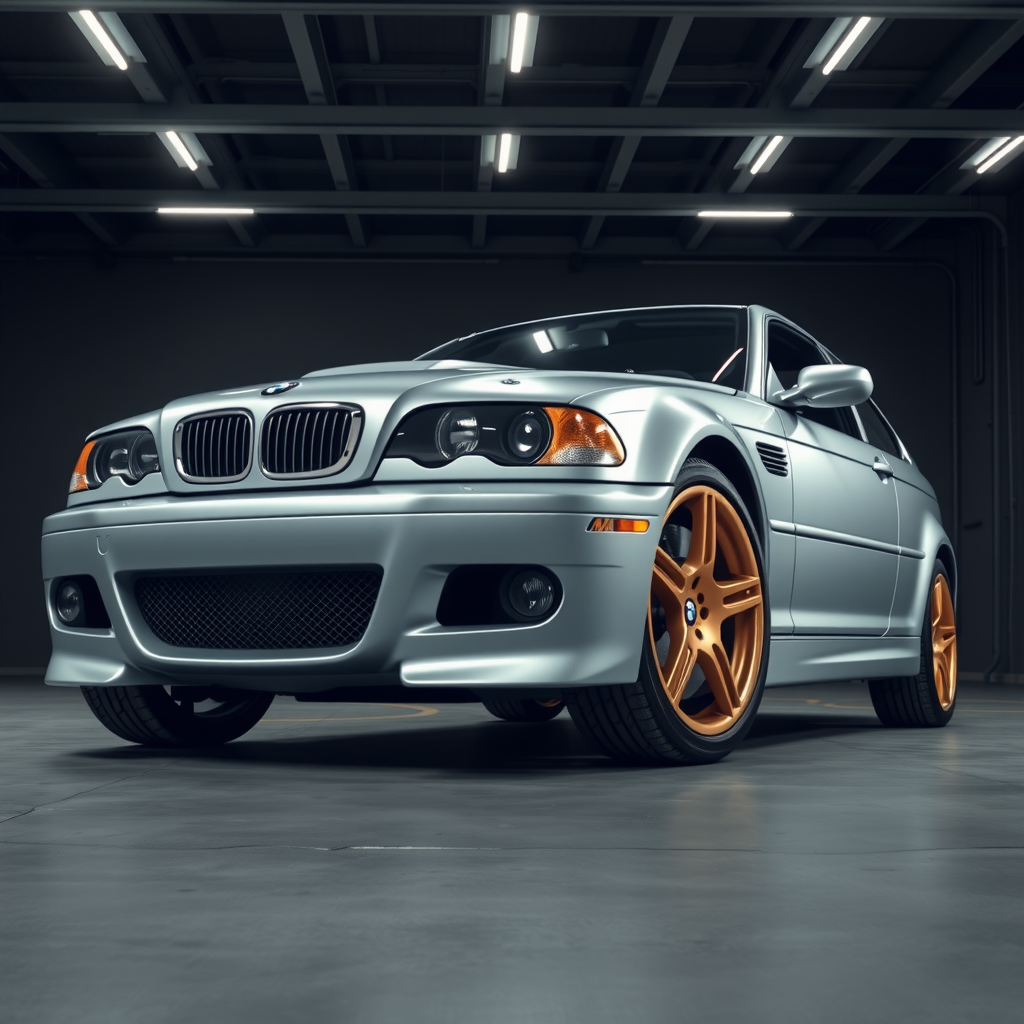
BMW M3 wheel fitment — E46
Overview
The BMW M3 E46 was produced from 2000 to 2006 as part of the fourth generation of the BMW 3 Series. It was manufactured by BMW's in-house motorsport division, BMW M GmbH, at the Dingolfing plant in Germany. The E46 M3 continued the tradition of high-performance variants for the 3 Series and featured a front-engine, rear-wheel-drive layout. This model marked a significant shift from its predecessor, the E36 M3, by offering both coupé and saloon body styles, expanding its market reach to include more practical options while maintaining its sporty essence.
BMW M3 wheel fitment
BMW M3 wheel fitment for the BMW M3 E46 (2000–2006): the factory PCD, centre bore and bolt spec, then the aftermarket width and offset window we fit to.
| Bolt pattern (PCD) | 5x120 |
| Centre bore | 72.6 mm |
| Bolt / thread | M12 x 1.5 (bolts) |
| Wheel-bolt torque | 115 Nm |
| Seat type | tapered |
| Factory setup | staggered |
| TPMS | direct |
Aftermarket wheel sizes — read per position:
| Position | Width | Offset |
|---|---|---|
| Front | 7.5J–8.5J | ET12–ET25 |
| Rear (staggered) | 9J–10J | ET31–ET45 |
As a rule, each extra 1J of width wants roughly +8–10 ET to keep the wheel tucked. The exact offset and any spacer are confirmed by the fit-check.
UK popularity & demand
Based on DfT VEH0124 vehicle-parc data (2025), there are approximately 27,392 BMW M3 on UK roads, placing it in the top 9% of car models by volume across our fitment database.
That makes BMW M3 wheel fitment a high-demand spec to keep in stock. It is one reason we track it here.
Source: DfT/DVLA licensed-vehicle statistics (VEH0124), matched to the AIWheelTech fitment database.
Engines & drivetrain
| Variant | Engine | Fuel | Power | Drive |
|---|---|---|---|---|
| S50 (facelift) | 3.2L I6 | petrol | 286 hp | RWD |
| S52 (US facelift) | 3.2L I6 | petrol | 240 hp | RWD |
| S50 | 3.0L I6 | petrol | 210 hp | RWD |
| S50B30US | 3.0L I6 | petrol | 204 hp | RWD |
Dimensions
| Length | 4345 mm |
| Width | 1680 mm |
| Height | 1370 mm |
| Wheelbase | 2562 mm |
| Kerb weight | 1165 kg |
Body styles & production
| Body styles | Coupé, Saloon |
| Produced | 2000–2006 |
Trim levels
Factory colours
History & notable variants
The BMW M3 E46 was introduced in 2000 as an evolution of the previous generation. It underwent a mid-cycle facelift (LCI) in 2005, enhancing its aerodynamics and performance characteristics. Notable special/performance variants included the Sport Evolution model with increased power and lighter weight. The E46 M3 received positive reception and accolades for its balanced driving dynamics and high-performance capabilities.
Reliability & owner notes
- Pros: Balanced driving dynamics; high-performance capabilities
- Cons: No specific weaknesses mentioned in the reference
- Common issues: None documented for this generation