
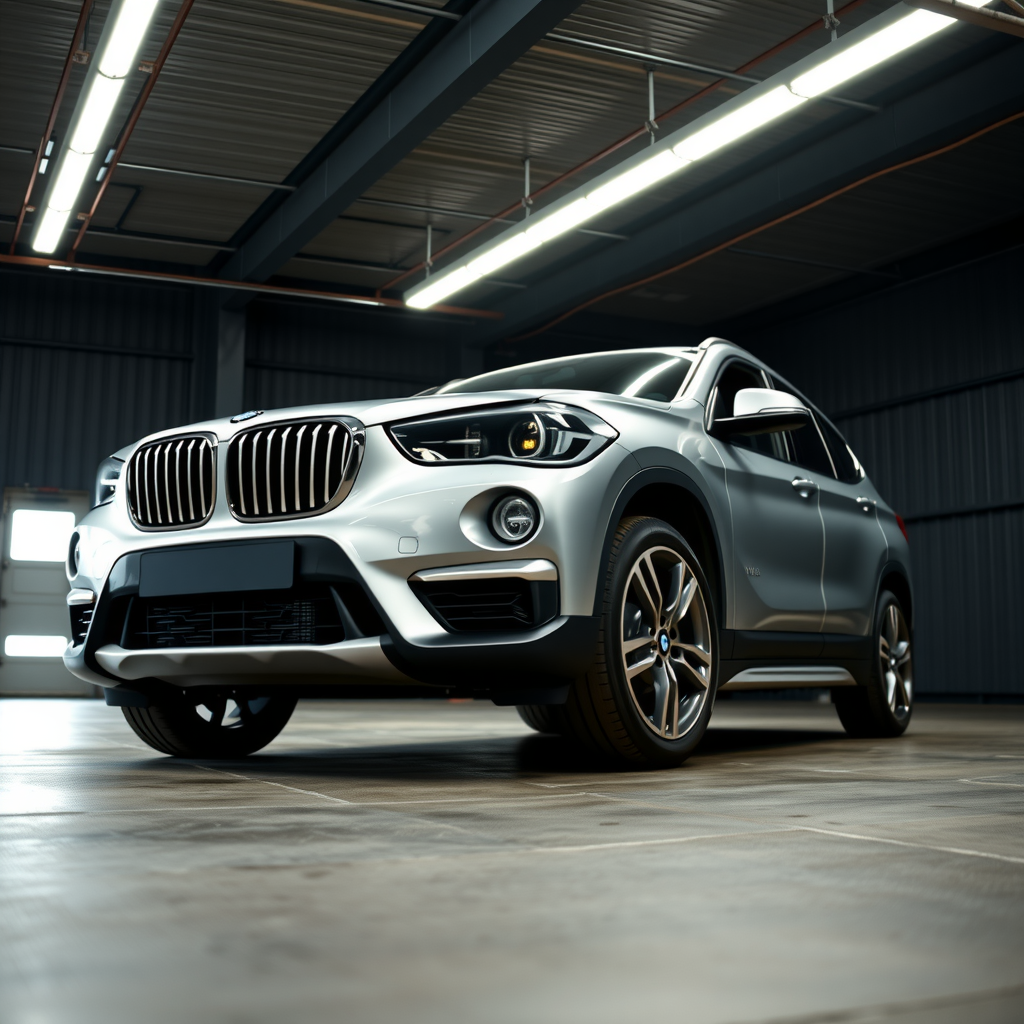
BMW X1 wheel fitment — III U11/U12
Overview
The third generation of the BMW X1 (U11/U12) is a subcompact luxury crossover SUV produced from October 2022 to present, based on the modular UKL2 platform. It offers petrol, diesel, plug-in hybrid, and battery electric models with mild hybrid technology for enhanced efficiency. The U11 has a short wheelbase while the U12 features a long wheelbase primarily sold in China. Compared to its predecessor, it is longer by 61mm (U11) and 51mm (LWB version).
BMW X1 wheel fitment
BMW X1 wheel fitment for the BMW X1 III (U11/U12) (2022–2026): the factory PCD, centre bore and bolt spec, then the aftermarket width and offset window we fit to.
| Bolt pattern (PCD) | 5x112 |
| Centre bore | 66.6 mm |
| Bolt / thread | M14 x 1.25 (bolts) |
| Wheel-bolt torque | 140 Nm |
| Seat type | tapered |
| Factory setup | square |
| TPMS | direct |
| Run-flat | Yes |
Aftermarket wheel sizes — read per position:
| Position | Width | Offset |
|---|---|---|
| Front | 8J–9J | ET25–ET45 |
As a rule, each extra 1J of width wants roughly +8–10 ET to keep the wheel tucked. The exact offset and any spacer are confirmed by the fit-check.
UK popularity & demand
Based on DfT VEH0124 vehicle-parc data (2025), there are approximately 129,378 BMW X1 on UK roads, placing it in the top 3% of car models by volume across our fitment database.
That makes BMW X1 wheel fitment a high-demand spec to keep in stock. It is one reason we track it here.
Source: DfT/DVLA licensed-vehicle statistics (VEH0124), matched to the AIWheelTech fitment database.
Engines & drivetrain
| Variant | Engine | Fuel | Power | Drive |
|---|---|---|---|---|
| xDrive30 (standard) | dual electric motors | electric | 417 hp | AWD |
| xDrive30e (standard) | 1.5L B38A15M0 turbo I3 plug-in hybrid | 326 hp | xDrive | |
| M35i (selected countries) | 2.0L B48 turbo I4 | petrol | 309 hp | xDrive |
| M35i (standard) | 2.0L B48 turbo I4 | petrol | 297 hp | xDrive |
| xDrive25e (selected countries) | 1.5L B38A15M0 turbo I3 plug-in hybrid | 249 hp | xDrive | |
| xDrive25e (standard) | 1.5L B38A15M0 turbo I3 plug-in hybrid | 245 hp | xDrive | |
| xDrive28i | 2.0L B48 turbo I4 | petrol | 241 hp | xDrive |
| xDrive23i | 2.0L B48 turbo I4 mild hybrid | petrol | 218 hp | xDrive |
| xDrive23d | 2.0L B47 turbo I4 mild hybrid | diesel | 211 hp | xDrive |
| eDrive20 (standard) | electric motor | electric | 201 hp | FWD |
| sDrive20i | 1.5L B38 turbo I3 mild hybrid | petrol | 170 hp | FWD |
| xDrive20d | 2.0L B47 turbo I4 mild hybrid | diesel | 163 hp | xDrive |
| sDrive18i (Brazil) | 1.5L B38 turbo I3 | petrol | 156 hp | FWD |
| sDrive18d | 2.0L B47 turbo I4 | diesel | 150 hp | FWD |
| sDrive18i (standard) | 1.5L B38 turbo I3 | petrol | 136 hp | FWD |
| sDrive16i | 1.5L B38 turbo I3 | petrol | 122 hp | FWD |
Performance
| Variant | Power | 0–62 mph | Top speed |
|---|---|---|---|
| sDrive16i | 122 hp | 10.5 s | 124 mph |
| sDrive18i (standard) | 136 hp | 9.2 s | 130 mph |
| sDrive18i (Brazil) | 156 hp | 9 s | 147 mph |
| sDrive20i | 170 hp | 8.3 s | 134 mph |
| xDrive23i | 218 hp | 7.1 s | 145 mph |
| xDrive28i | 241 hp | 6.2 s | 155 mph |
| M35i (standard) | 297 hp | 5.4 s | 155 mph |
| M35i (selected countries) | 309 hp | 5.4 s | 155 mph |
| sDrive18d | 150 hp | 8.9 s | 131 mph |
| xDrive20d | 163 hp | 8.6 s | 135 mph |
| xDrive23d | 211 hp | 7.4 s | 140 mph |
| xDrive25e (standard) | 245 hp | 6.8 s | 125 mph |
| xDrive25e (selected countries) | 249 hp | 6.7 s | 125 mph |
| xDrive30e (standard) | 326 hp | 5.4 s | 127 mph |
| eDrive20 (standard) | 201 hp | 8.6 s | 106 mph |
| xDrive30 (standard) | 417 hp | 5.6 s | 112 mph |
Dimensions
| Length | 4500 mm |
| Width | 1845 mm |
| Height | 1642 mm |
| Wheelbase | 2692 mm |
| Kerb weight | 1500 kg |
Body styles & production
| Body styles | SUV |
| Produced | 2022–2026 |
Trim levels
Factory colours
History & notable variants
The third-generation X1 was unveiled on June 1, 2022, and launched in October 2022 for select markets. In June 2023, BMW introduced the M35i xDrive variant with a powerful 2.0L turbocharged engine delivering up to 318 hp (selected countries) and 495 Nm of torque. It accelerates from 0-60 mph in 5.4 seconds.
Reliability & owner notes
- Pros: Enhanced efficiency with mild hybrid technology; available in various powertrains including petrol, diesel, plug-in hybrid, and battery electric models; improved interior space and comfort features.
- Cons: Limited availability of certain variants outside North America and China; higher cost for premium packages and performance options.