
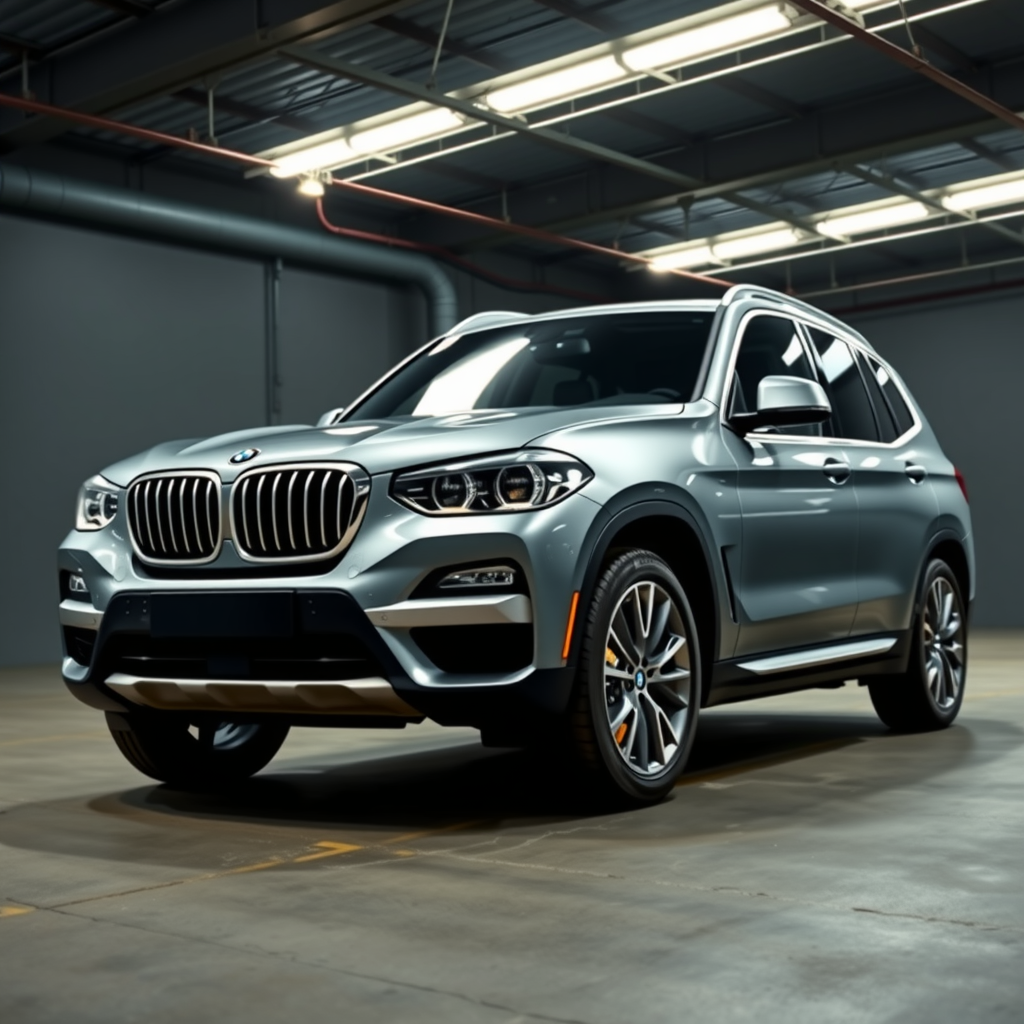
BMW X3 wheel fitment — I E83 Facelift
Overview
The first-generation BMW X3 E83 was produced from 2003 to 2010 and based on the BMW 3 Series platform. Designed by BMW in conjunction with Magna Steyr of Graz, Austria, who also manufactured all first-generation X3s under contract to BMW. The car introduced BMW's xDrive system and featured an upright seating configuration marketed as 'command seating'. It was designed to combine the agility of a compact model with the driving experience of larger SUVs like the X5.
BMW X3 wheel fitment
BMW X3 wheel fitment for the BMW X3 I (E83) Facelift (2006–2010): the factory PCD, centre bore and bolt spec, then the aftermarket width and offset window we fit to.
| Bolt pattern (PCD) | 5x120 |
| Centre bore | 72.6 mm |
| Bolt / thread | M14 x 1.5 (bolts) |
| Wheel-bolt torque | 140 Nm |
| Seat type | tapered |
| Factory setup | staggered |
| TPMS | none |
| Run-flat | Yes |
Aftermarket wheel sizes — read per position:
| Position | Width | Offset |
|---|---|---|
| Front | 8J–9J | ET24–ET45 |
| Rear (staggered) | 9J–9.5J | ET32–ET50 |
As a rule, each extra 1J of width wants roughly +8–10 ET to keep the wheel tucked. The exact offset and any spacer are confirmed by the fit-check.
UK popularity & demand
Based on DfT VEH0124 vehicle-parc data (2025), there are approximately 123,411 BMW X3 on UK roads, placing it in the top 3% of car models by volume across our fitment database.
That makes BMW X3 wheel fitment a high-demand spec to keep in stock. It is one reason we track it here.
Source: DfT/DVLA licensed-vehicle statistics (VEH0124), matched to the AIWheelTech fitment database.
Engines & drivetrain
| Variant | Engine | Fuel | Power | Drive |
|---|---|---|---|---|
| 3.0sd/xDrive35d | 3.0L M57TU2D30 straight-6 | diesel | 210 hp | xDrive |
| 3.0si/xDrive30i | 3.0L N52B30 straight-6 | petrol | 200 hp | xDrive |
| 3.0i | 3.0L M54B30 straight-6 | petrol | 170 hp | xDrive |
| 2.5si/xDrive25i | 2.5L N52B25 straight-6 | petrol | 160 hp | xDrive |
| 3.0d/xDrive30d | 3.0L M57TU2D30 straight-6 | diesel | 160 hp | xDrive |
| 2.5i | 2.5L M54B25 straight-6 | petrol | 141 hp | xDrive |
| xDrive18d | 2.0L N47D20 straight-4 | diesel | 130 hp | xDrive |
| 2.0i/xDrive20i | 2.0L N46B20 straight-4 | petrol | 110 hp | xDrive |
| 2.0d/xDrive20d | 2.0L M47TUD20 straight-4 | diesel | 110 hp | xDrive |
Performance
| Variant | Power | 0–62 mph | Top speed |
|---|---|---|---|
| 2.0i/xDrive20i | 110 hp | 7.3 s | 123 mph |
| 2.5i | 141 hp | 8.9 s | 130 mph |
| 2.5si/xDrive25i | 160 hp | 8.7 s | 137 mph |
| 3.0i | 170 hp | 8 s | 134 mph |
| 3.0si/xDrive30i | 200 hp | 7.5 s | 142 mph |
| xDrive18d | 130 hp | 9.2 s | 128 mph |
| 2.0d/xDrive20d | 110 hp | 10.2 s | 123 mph |
| 3.0d/xDrive30d | 160 hp | 7.7 s | 131 mph |
| 3.0sd/xDrive35d | 210 hp | 6.4 s | 149 mph |
Dimensions
| Length | 4564 mm |
| Width | 1855 mm |
| Height | 1673 mm |
| Wheelbase | 2795 mm |
Body styles & production
| Body styles | SUV |
| Produced | 2006–2010 |
Trim levels
Factory colours
History & notable variants
The E83 received upgrades in 2005 and underwent a facelift in 2007, featuring revised body bumpers, engine, interior trim, and suspension. The X3 won the Canadian Car of the Year Best Sports Utility Vehicle award for 2005 but was initially criticized for its harsh ride, austere interior, lack of off-road capability, and high price.
Reliability & owner notes
- Pros: Introduced BMW's xDrive system; upright seating configuration marketed as 'command seating'; combined agility of a compact model with the driving experience of larger SUVs like the X5
- Cons: Harsh ride, austere interior, lack of off-road capability, high price