
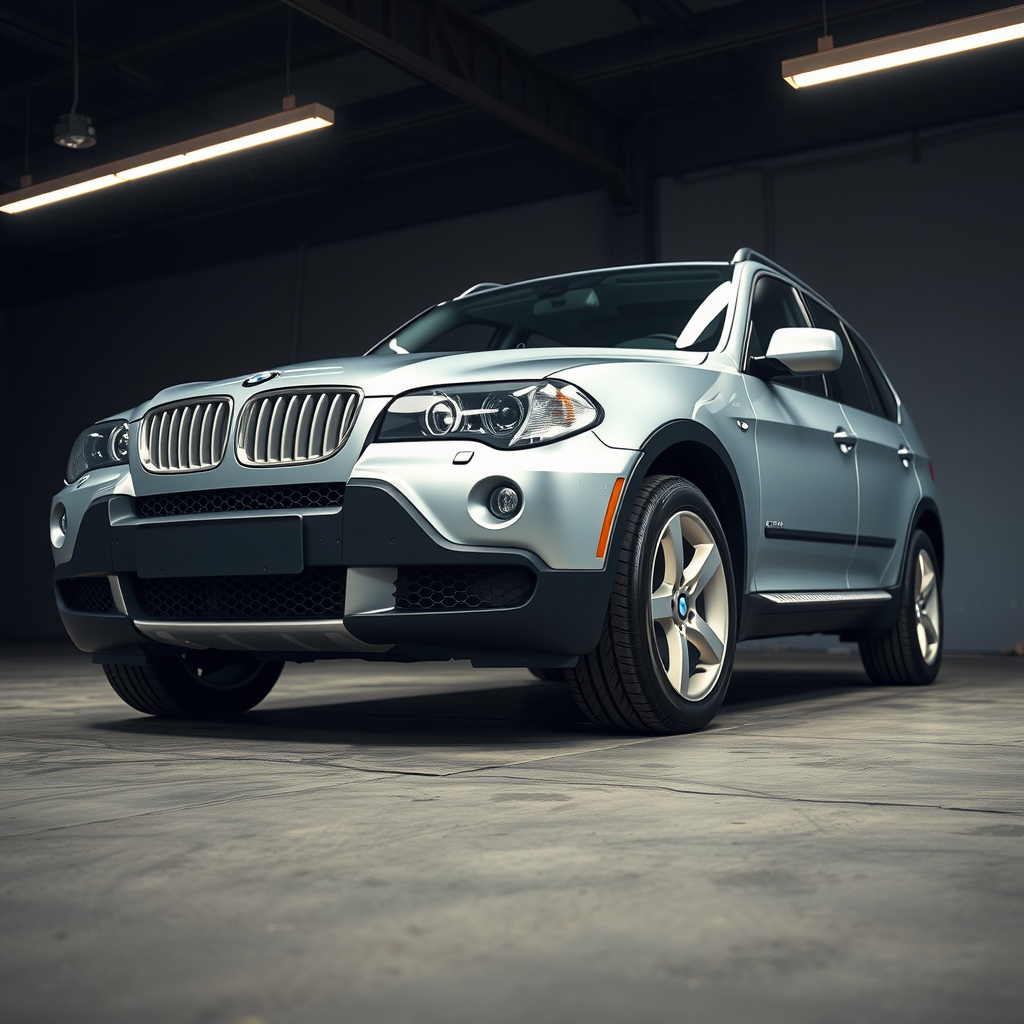
BMW X5 wheel fitment — II E70
BMW X5 wheel fitment
BMW X5 wheel fitment for the BMW X5 II (E70) (2005–2010): the factory PCD, centre bore and bolt spec, then the aftermarket width and offset window we fit to.
| Bolt pattern (PCD) | 5x120 |
| Centre bore | 72.6 mm |
| Bolt / thread | M14 x 1.5 (bolts) |
| Wheel-bolt torque | 140 Nm |
| Seat type | tapered |
| Factory setup | staggered |
| TPMS | direct |
| Run-flat | Yes |
Aftermarket wheel sizes — read per position:
| Position | Width | Offset |
|---|---|---|
| Front | 8.5J–10J | ET9–ET45 |
| Rear (staggered) | 10J–11.5J | ET27–ET50 |
Go wider and the offset has to rise with it, about 8 to 10 ET per extra 1J, or the wheel pokes past the arch. The fit-check settles the exact offset and any spacer.
UK popularity & demand
Based on DfT VEH0124 vehicle-parc data (2025), there are approximately 105,319 BMW X5 on UK roads, placing it in the top 4% of car models by volume across our fitment database.
That makes BMW X5 wheel fitment a high-demand spec to keep in stock. It is one reason we track it here.
Source: DfT/DVLA licensed-vehicle statistics (VEH0124), matched to the AIWheelTech fitment database.
Overview
The BMW E70 is the second-generation mid-size luxury crossover SUV, replacing the first generation X5 (E53) in July 2006. It was manufactured alongside the BMW X6 at BMW's Greer, South Carolina plant and Toluca facility in Mexico. The E70 features a wider body by 60 mm, longer by 165 mm, with an extended wheelbase of 110 mm compared to its predecessor while maintaining the same height. It introduces advanced technology such as BMW's iDrive system, LED taillamps, and FlexRay bus system for chassis damping control.
Dimensions
| Length | 4,854 mm |
| Width | 1,933 mm |
| Height | 1,739 mm |
| Wheelbase | 2,933 mm |
| Kerb weight | 2,125 to 2,380 kg |
Source: BMW E70, de.wikipedia.org.
Body styles & production
| Body styles | 5-door SUV |
| Produced | 2005–2010 |
Engines & drivetrain
| Variant | Engine | Fuel | Power | Drive, years |
|---|---|---|---|---|
| 3.0si/xDrive30i | 2,996 cc | 200 kW (272 PS) | xDrive, 2006 to 2010 | |
| xDrive35i | 2,979 cc | 225 kW (306 PS) | xDrive, 2010 to 2013 | |
| 4.8i/xDrive48i | 4,799 cc | 261 kW (355 PS) | xDrive, 2006 to 2010 | |
| xDrive50i | 4,395 cc | 300 kW (408 PS) | xDrive, 2010 to 2013 | |
| X5 M | 4,395 cc | 408 kW (555 PS) | 2009 to 2013 | |
| 3.0d/xDrive30d | 2,993 cc | 173 kW (235 PS) | xDrive, 2007 to 2010 | |
| xDrive30d | 2,993 cc | 180 kW (245 PS) | xDrive, 2010 to 2013 | |
| 3.0sd/xDrive35d | 2,993 cc | 210 kW (286 PS) | xDrive, 2007 to 2010 | |
| xDrive40d | 2,993 cc | 225 kW (306 PS) | xDrive, 2010 to 2013 | |
| M50d | 2,993 cc | 280 kW (381 PS) | 2012 to 2013 |
Source: BMW E70, de.wikipedia.org.
Performance
| Variant | Power | 0 to 62 mph (0 to 100 km/h) | Top speed |
|---|---|---|---|
| 3.0si/xDrive30i | 200 kW (272 PS) | 8.1 s | 210 km/h (130 mph) |
| xDrive35i | 225 kW (306 PS) | 6.8 s | 240 km/h (149 mph) |
| 4.8i/xDrive48i | 261 kW (355 PS) | 6.5 s | 240 km/h (149 mph) |
| xDrive50i | 300 kW (408 PS) | 5.5 s | 250 km/h (155 mph) |
| X5 M | 408 kW (555 PS) | 4.7 s | 250 km/h (155 mph) |
| 3.0d/xDrive30d | 173 kW (235 PS) | 8.1 s | 210 km/h (130 mph) |
| xDrive30d | 180 kW (245 PS) | 7.6 s | 222 km/h (138 mph) |
| 3.0sd/xDrive35d | 210 kW (286 PS) | 7 s | 235 km/h (146 mph) |
| xDrive40d | 225 kW (306 PS) | 6.6 s | 236 km/h (147 mph) |
| M50d | 280 kW (381 PS) | 5.4 s | 250 km/h (155 mph) |
Source: BMW E70, de.wikipedia.org.
Trim levels
Factory colours
History & notable variants
The E70 underwent a 'Life Cycle Impulse' (LCI) update in 2010, featuring revised styling and new engine options including turbocharged petrol engines with direct injection. The BMW X5 M was introduced as a high-performance variant in September 2009 for the 2010 model year.
Reliability & owner notes
- Pros: Advanced technology, improved dimensions, high-performance variants
- Cons: Manual transmission discontinued, complex infotainment system
- Common issues: None specified