
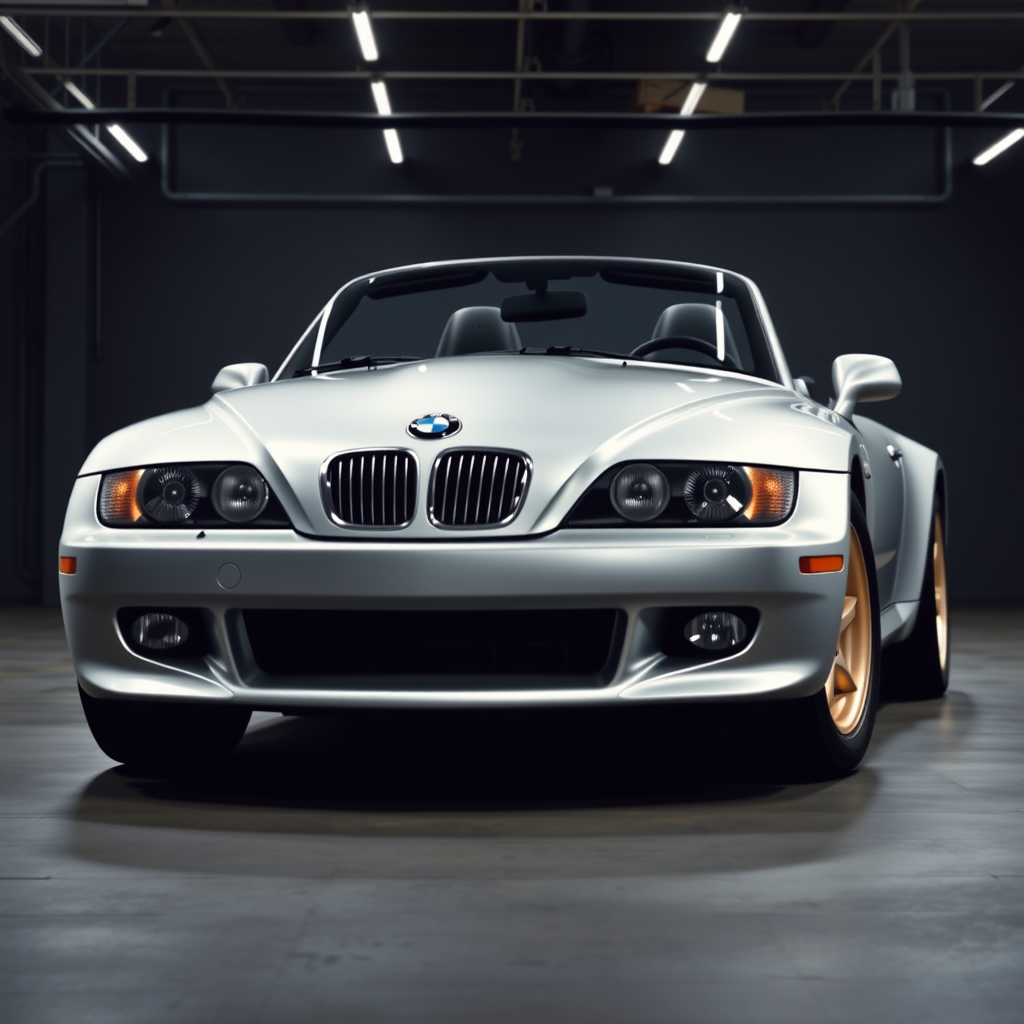
BMW Z3 wheel fitment — E36
BMW Z3 wheel fitment
BMW Z3 wheel fitment comes down to two things: the factory hub spec, and how far the aftermarket width and offset can move from it. Both are here for the BMW Z3 E36 (1995–2002).
| Bolt pattern (PCD) | 5x120 |
| Centre bore | 72.6 mm |
| Bolt / thread | M12 x 1.5 (bolts) |
| Wheel-bolt torque | 115 Nm |
| Seat type | tapered |
| Factory setup | staggered |
| TPMS | direct |
Aftermarket wheel sizes — read per position:
| Position | Width | Offset |
|---|---|---|
| Front | 7J–8.5J | ET33–ET45 |
| Rear (staggered) | 8.5J–9.5J | ET34–ET45 |
Go wider and the offset has to rise with it, about 8 to 10 ET per extra 1J, or the wheel pokes past the arch. The fit-check settles the exact offset and any spacer.
Overview
The BMW Z3 is a range of two-seater sports cars produced from 1995 to 2002. The body styles include the E36/7 roadster and the E36/8 coupé, both based on the compact E36 platform. It was manufactured in Greer, South Carolina, making it BMW's first model solely made outside of Germany. The Z3 featured a rear-engine, rear-wheel-drive layout with various engine options including inline-four and straight-six configurations.
Engines & drivetrain
| Variant | Engine | Fuel | Power | Drive, years |
|---|---|---|---|---|
| 316i | 1,596 cc, M40-B16 | petrol | 73 kW (99 PS) | 1990 to 1993 |
| 316i | 1,596 cc, M43-B16 | petrol | 75 kW (102 PS) | 1993 to 1999 |
| 316g | 1,596 cc, M43-B16 | petrol | 60 kW (82 PS) | 1995 to 2000 |
| 316i | 1,895 cc, M43TÜ -B19 | petrol | 77 kW (105 PS) | 1999 to 2000 |
| 318i | 1,796 cc, M40-B18 | petrol | 83 kW (113 PS) | 1990 to 1993 |
| 318i | 1,796 cc, M43-B18 | petrol | 85 kW (115 PS) | 1993 to 1999 |
| 318is/ti | 1,796 cc, M42-B18 | petrol | 103 kW (140 PS) | 1991 to 1996 |
| 318is/ti | 1,895 cc, M44-B19 | petrol | 103 kW (140 PS) | 1996 to 1999 |
| 320i | 1,991 cc, M50-B20 | petrol | 110 kW (150 PS) | 1990 to 1995 |
| 320i | 1,991 cc, M52-B20 | petrol | 110 kW (150 PS) | 1994 to 1999 |
| 323i/ti | 2,494 cc, M52-B25 | petrol | 125 kW (170 PS) | 1995 to 2000 |
| 325i | 2,494 cc, M50-B25 | petrol | 141 kW (192 PS) | 1990 to 1995 |
| 328i | 2,793 cc, M52-B28 | petrol | 142 kW (193 PS) | 1995 to 1999 |
| M3 | 2,990 cc, S50-B30 | petrol | 210 kW (286 PS) | 1992 to 1995 |
| M3 GT | 2,990 cc, S50-B30 | petrol | 217 kW (295 PS) | 1994 to 1995 |
| M3 | 3,201 cc, S50-B32 | petrol | 236 kW (321 PS) | 1995 to 1999 |
| 318tds | 1,665 cc, M41-D17 | diesel | 66 kW (90 PS) | 1995 to 2000 |
| 325td | 2,498 cc, M51-D25 | diesel | 85 kW (115 PS) | 1991 to 1998 |
| 325tds | 2,498 cc, M51-D25 | diesel | 105 kW (143 PS) | 1993 to 1999 |
| B6 2.8 | 2,752 cc | diesel | 177 kW (240 PS) | 1992 to 1993 |
| B3 3.0 | 2,997 cc | diesel | 184 kW (250 PS) | 1993 to 1996 |
| B3 3.2 | 3,152 cc | diesel | 195 kW (265 PS) | 1996 to 1999 |
| B8 4.6 | 4,619 cc | diesel | 245 kW (333 PS) | 1995 to 1998 |
Source: BMW E36, de.wikipedia.org.
UK popularity & demand
Based on DfT VEH0124 vehicle-parc data (2025), there are approximately 6,244 BMW Z3 on UK roads, placing it in the top 17% of car models by volume across our fitment database.
A parc that size is why BMW Z3 wheel fitment is worth getting exactly right: a lot of owners are shopping for these numbers.
Source: DfT/DVLA licensed-vehicle statistics (VEH0124), matched to the AIWheelTech fitment database.
History & notable variants
Development began in 1991 under Burkhard Göschel, with the exterior designed by Joji Nagashima. The roadster was introduced via video press release on June 12, 1995, followed by production starting September 20, 1995. A coupé model was unveiled at the Frankfurt Motor Show in 1997 and entered production in January 1998. M models were introduced in 1998 with enhanced performance features.
Dimensions
| Length | 4,210 to 4,433 mm |
| Width | 1,698 to 1,710 mm |
| Height | 1,335 to 1,393 mm |
| Wheelbase | 2,700 mm |
| Kerb weight | 1,140 to 1,535 kg |
Source: BMW E36, de.wikipedia.org.
Body styles & production
| Body styles | 2-door roadster |
| Produced | 1995–2002 |
Trim levels
Factory colours
Reliability & owner notes
- Pros: Stylish design, rear-wheel drive performance, wide range of engine options
- Cons: Limited production numbers for some models, high maintenance costs
- Common issues: Electrical problems, rust in body panels