
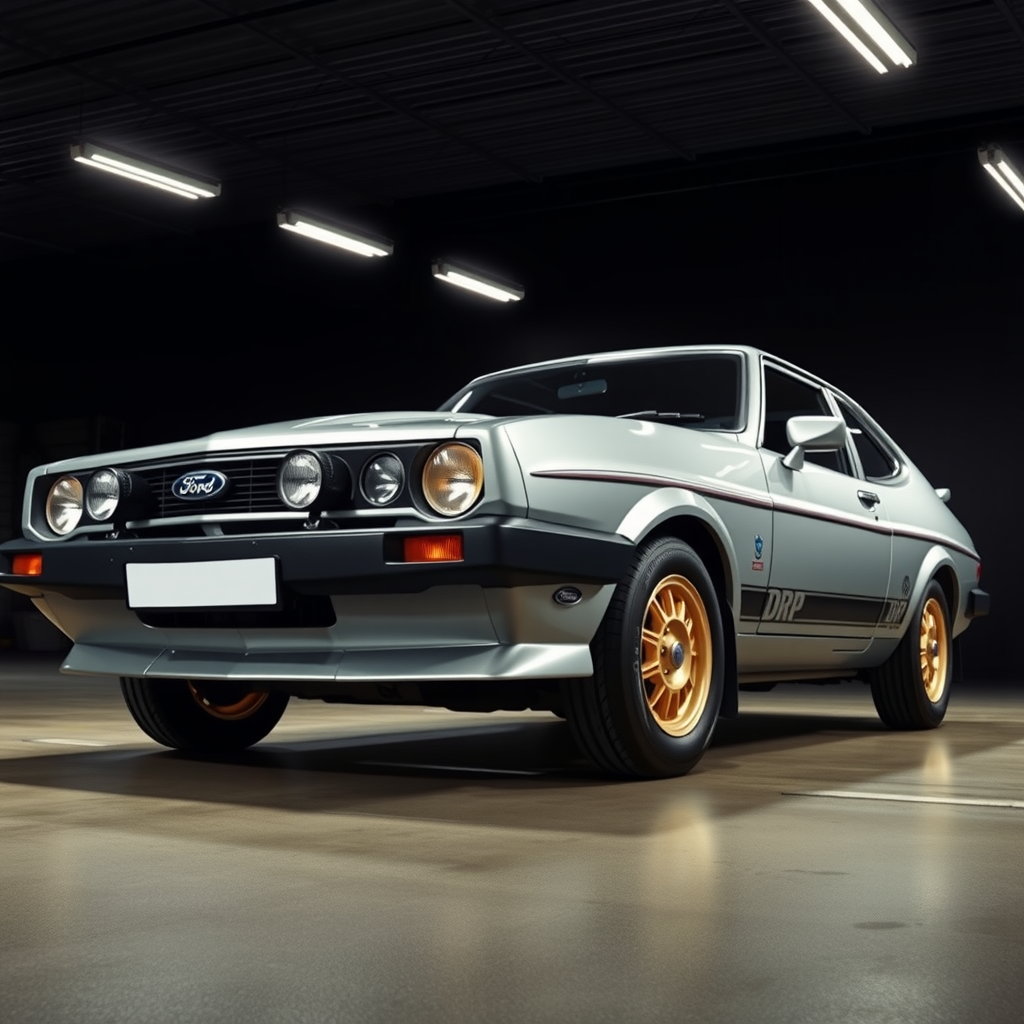
Ford Capri wheel fitment — DRP
Ford Capri wheel fitment
Ford Capri wheel fitment for the Ford Capri DRP (2024–2026): the factory PCD, centre bore and bolt spec, then the aftermarket width and offset window we fit to.
| Bolt pattern (PCD) | 5x112 |
| Centre bore | 57.1 mm |
| Bolt / thread | M14x1.5 (bolts) |
| Wheel-bolt torque | 120 Nm |
| Seat type | radius |
| Factory setup | staggered |
| TPMS | direct |
Aftermarket wheel sizes — read per position:
| Position | Width | Offset |
|---|---|---|
| Front | 8J–9.5J | ET30–ET45 |
| Rear (staggered) | 8.5J–10.5J | ET25–ET42 |
Go wider and the offset has to rise with it, about 8 to 10 ET per extra 1J, or the wheel pokes past the arch. The fit-check settles the exact offset and any spacer.
UK popularity & demand
Based on DfT VEH0124 vehicle-parc data (2025), there are approximately 3,740 Ford Capri on UK roads, placing it in the top 20% of car models by volume across our fitment database.
That makes Ford Capri wheel fitment a high-demand spec to keep in stock. It is one reason we track it here.
Source: DfT/DVLA licensed-vehicle statistics (VEH0124), matched to the AIWheelTech fitment database.
Overview
The Ford Capri is a car built by Ford of Europe from 1968 to 1986. It is a fastback coupé designed by Philip T. Clark, who also worked on the Ford Mustang. The Capri used mechanical components from the Mk2 Ford Cortina and was intended as the European equivalent of the American Ford Mustang. This car became highly successful for Ford, selling nearly 1.9 million units in its lifetime. A wide variety of engines were available throughout production, including V6 engines named Essex and Cologne at the top end, while straight-four (Kent) and V4 (Taunus) engines were used in lower-specification models.
Body styles & production
| Produced | 2024–2026 |
Trim levels
History & notable variants
Production began in November 1968 with the unveiling at the Brussels Motor Show in January 1969. The Capri was designed to replicate the success of the Mustang in Europe as a pony car. It underwent several changes and facelifts over its lifespan, including the introduction of new engines and performance variants like the RS2600 and RS3100. Despite not being officially replaced, it paved the way for later models such as the Ford Probe.
Reliability & owner notes
- Pros: Highly successful in Europe; Wide variety of engine options
- Cons: No official replacement model