
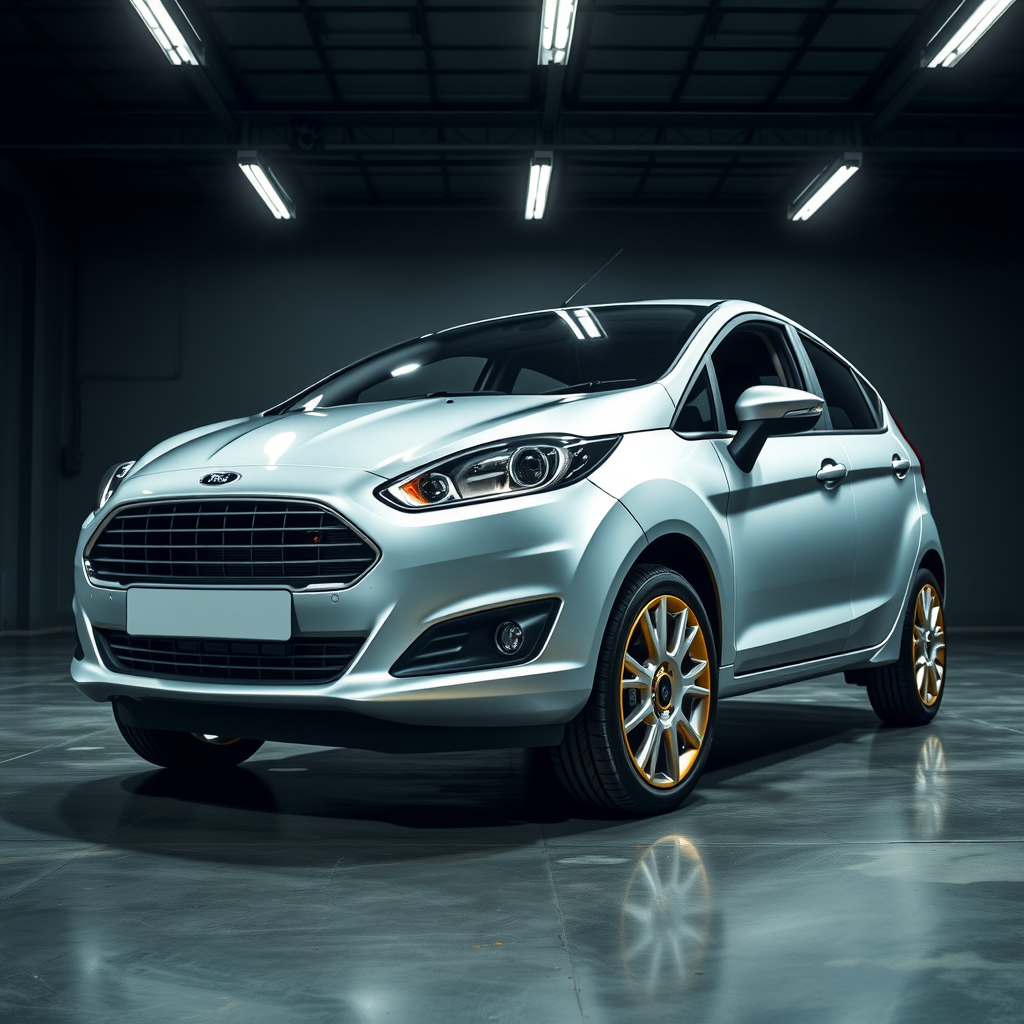
Ford Fiesta wheel fitment — Vi JH1, JD3
Overview
The Ford Fiesta (Vi) JH1, JD3 is part of the seventh generation of the Ford Fiesta series, marketed by Ford from 2008 to July 2023. This generation was primarily developed and manufactured in Europe, with production taking place at various plants including Valencia, Spain, and Saarlouis, Germany. The JH1 and JD3 refer to specific platform codes for this generation of the Fiesta. It succeeded the fifth-generation model (BE256) and was positioned as a subcompact car in the B-segment market. This generation saw significant changes from its predecessor, including an updated design language, improved interior quality, and enhanced technology features.
Ford Fiesta wheel fitment
Ford Fiesta wheel fitment for the Ford Fiesta (Vi) JH1, JD3 (2008–2016): the factory PCD, centre bore and bolt spec, then the aftermarket width and offset window we fit to.
| Bolt pattern (PCD) | 4x10⁸ |
| Centre bore | 63.4 mm |
| Bolt / thread | M12x1.5 (nuts) |
| Seat type | tapered |
| Factory setup | square |
| TPMS | direct |
Aftermarket wheel sizes — read per position:
| Position | Width | Offset |
|---|---|---|
| Front | 5.5J–8J | ET33–ET52 |
As a rule, each extra 1J of width wants roughly +8–10 ET to keep the wheel tucked. The exact offset and any spacer are confirmed by the fit-check.
UK popularity & demand
Based on DfT VEH0124 vehicle-parc data (2025), there are approximately 1,275,096 Ford Fiesta on UK roads, placing it in the top 1% of car models by volume across our fitment database.
That makes Ford Fiesta wheel fitment a high-demand spec to keep in stock. It is one reason we track it here.
Source: DfT/DVLA licensed-vehicle statistics (VEH0124), matched to the AIWheelTech fitment database.
Engines & drivetrain
| Variant | Engine | Fuel | Power | Drive |
|---|---|---|---|---|
| RS1800 | Ford Zetec engine (16-valve) | petrol | 130 hp | FWD |
| Supercharged 1.0L | Ford Duratec engine (supercharged) | petrol | 125 hp | FWD |
| XR2i | Zetec 16-valve engine | petrol | 104 hp | FWD |
| Duratorq TDCi 1.6L 16v | Ford Duratorq engine (common-rail diesel) | diesel | 95 hp | FWD |
| 1.3L Supersport | Kent Crossflow 1.3L OHV | petrol | 90 hp | FWD |
| 1.6S CVH 90BHP | CVH engine (8-valve) | petrol | 90 hp | FWD |
| 1.4L PTE | CVH engine (8-valve) | petrol | 75 hp | FWD |
| Duratorq TDCi 1.4L 8v | Ford Duratorq engine (common-rail diesel) | diesel | 75 hp | FWD |
| Duratec 8v | Rocam 1.3L or Duratec 1.4L (8-valve) | petrol | 70 hp | FWD |
| 957 cc | Straight-four engine (I4) | petrol | FWD | |
| 1117 cc | Straight-four engine (I4) | petrol | FWD |
Performance
| Variant | Power | 0–62 mph | Top speed |
|---|---|---|---|
| XR2i | 104 hp | 8.3 s | 115 mph |
| RS1800 | 130 hp | 7.4 s | 125 mph |
| Duratorq TDCi 1.4L 8v | 75 hp | 13.9 s | 100 mph |
| Duratorq TDCi 1.6L 16v | 95 hp | 11.7 s | 104 mph |
| Supercharged 1.0L | 125 hp | 8.3 s | 117 mph |
Dimensions
| Length | 3565 mm |
| Width | 1567 mm |
| Height | 1484 mm |
| Kerb weight | 715 kg |
Body styles & production
| Body styles | Hatchback |
| Produced | 2008–2016 |
Trim levels
Factory colours
History & notable variants
The sixth generation Ford Fiesta (Vi) JH1, JD3 underwent several notable developments during its production run. It received a mid-cycle refresh or facelift in 2014 to maintain market relevance. Special/performance variants included the ST (Sport Tourer), which offered enhanced performance and sporty features. The Fiesta also garnered awards for its design and efficiency, reflecting well on Ford's efforts to modernize and improve upon previous models.
Reliability & owner notes
- Pros: Improved interior quality, enhanced technology features, efficient engines
- Cons: Limited trunk space compared to competitors