
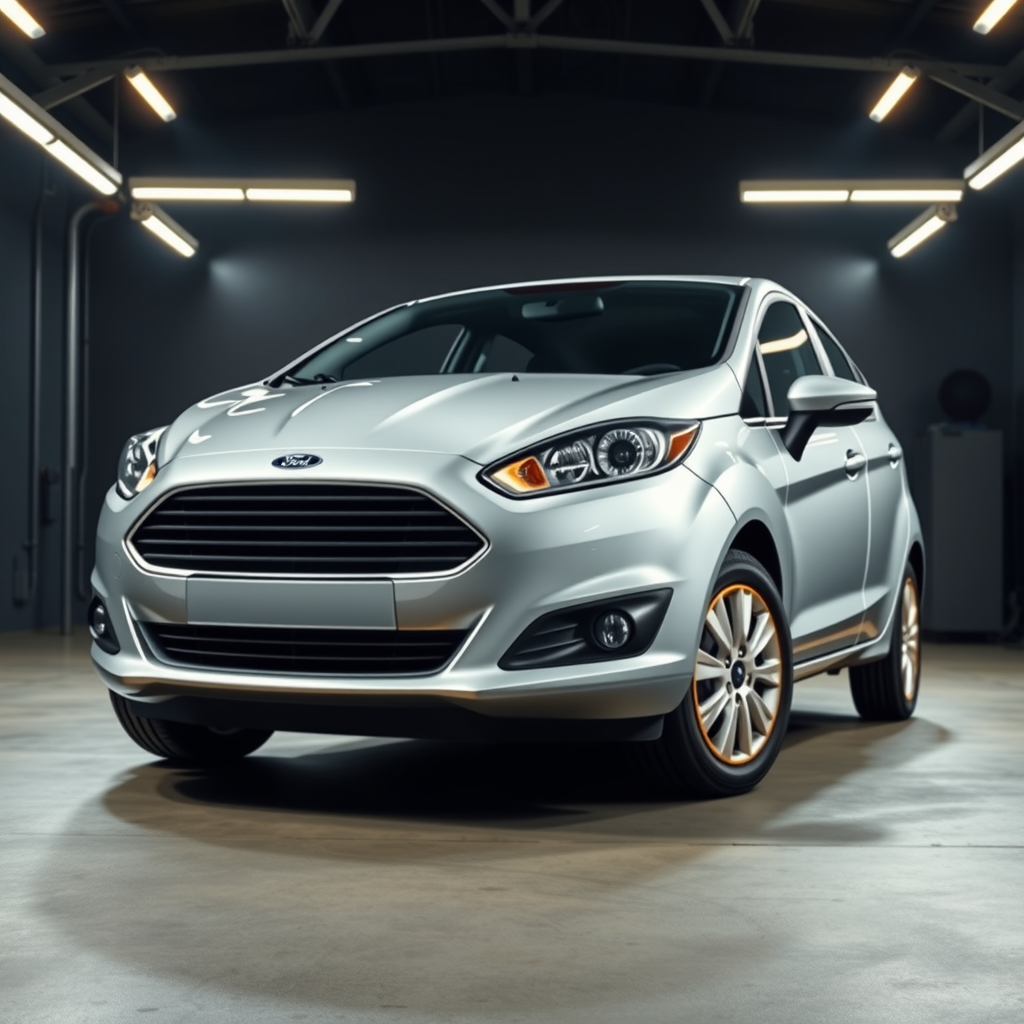
Ford Fiesta wheel fitment — Viii JHH, JGH
Overview
The Ford Fiesta (VIII) JHH, JGH is a subcompact car developed by Ford of Europe. It succeeded the VII generation in 2017 and was manufactured until July 2023 when production ceased. The vehicle was built on the C1 platform, known for its compact dimensions and efficient performance. Compared to its predecessor, it featured an updated design with improved aerodynamics and a range of new engines including petrol and diesel options. It also introduced advanced safety features such as lane departure warning and adaptive cruise control.
Ford Fiesta wheel fitment
Ford Fiesta wheel fitment for the Ford Ford Fiesta (Viii) JHH, JGH (2008–2016): the factory PCD, centre bore and bolt spec, then the aftermarket width and offset window we fit to.
| Bolt pattern (PCD) | 4x10⁸ |
| Centre bore | 63.4 mm |
| Bolt / thread | M12x1.5 (nuts) |
| Wheel-bolt torque | 100 Nm |
| Seat type | tapered |
| Factory setup | square |
| TPMS | direct |
Aftermarket wheel sizes — read per position:
| Position | Width | Offset |
|---|---|---|
| Front | 6J–8.5J | ET30–ET48 |
As a rule, each extra 1J of width wants roughly +8–10 ET to keep the wheel tucked. The exact offset and any spacer are confirmed by the fit-check.
UK popularity & demand
Based on DfT VEH0124 vehicle-parc data (2025), there are approximately 1,275,096 Ford Fiesta on UK roads, placing it in the top 1% of car models by volume across our fitment database.
That makes Ford Fiesta wheel fitment a high-demand spec to keep in stock. It is one reason we track it here.
Source: DfT/DVLA licensed-vehicle statistics (VEH0124), matched to the AIWheelTech fitment database.
Engines & drivetrain
| Variant | Engine | Fuel | Power | Drive |
|---|---|---|---|---|
| 1.6L Ti-VCT | 1.6L Duratec I4 petrol with Ti-VCT technology | petrol | 125 hp | FWD |
| 1.0L EcoBoost (Brazilian market) | 1.0L EcoBoost I3 petrol with supercharger | petrol | 125 hp | FWD |
| 1.6L Duratec | 1.6L Duratec I4 petrol | petrol | 100 hp | FWD |
| 1.6L Duratorq TDCi | 1.6L Duratorq I4 diesel | diesel | 95 hp | FWD |
| 1.4L Duratec | 1.4L Duratec I4 petrol | petrol | 75 hp | FWD |
| 1.4L Duratorq TDCi | 1.4L Duratorq I4 diesel | diesel | 75 hp | FWD |
Performance
| Variant | Power | 0–62 mph | Top speed |
|---|---|---|---|
| 1.4L Duratec | 75 hp | 98 mph | |
| 1.6L Duratec | 100 hp | 109 mph | |
| 1.4L Duratorq TDCi | 75 hp | 103 mph | |
| 1.6L Duratorq TDCi | 95 hp | 108 mph | |
| 1.6L Ti-VCT | 125 hp | 119 mph | |
| 1.0L EcoBoost (Brazilian market) | 125 hp | 7.8 s | 119 mph |
Dimensions
| Length | 3565 mm |
| Width | 1567 mm |
| Height | 1484 mm |
| Kerb weight | 715 kg |
Body styles & production
| Body styles | Hatchback |
| Produced | 2008–2016 |
Trim levels
Factory colours
History & notable variants
The VIII generation Fiesta underwent several updates during its production run, including minor facelifts in 2019 and 2023 to keep it competitive with rivals like the Volkswagen Polo and Renault Clio. Notable variants included the ST-Line for sportier styling and performance enhancements, while the RS variant offered a more aggressive look and improved handling characteristics.
Reliability & owner notes
- Pros: Improved fuel efficiency; Advanced safety features; Stylish design
- Cons: Limited cargo space compared to larger competitors; Some complaints about ride quality
- Common issues: Reports of electrical gremlins and infotainment system malfunctions