
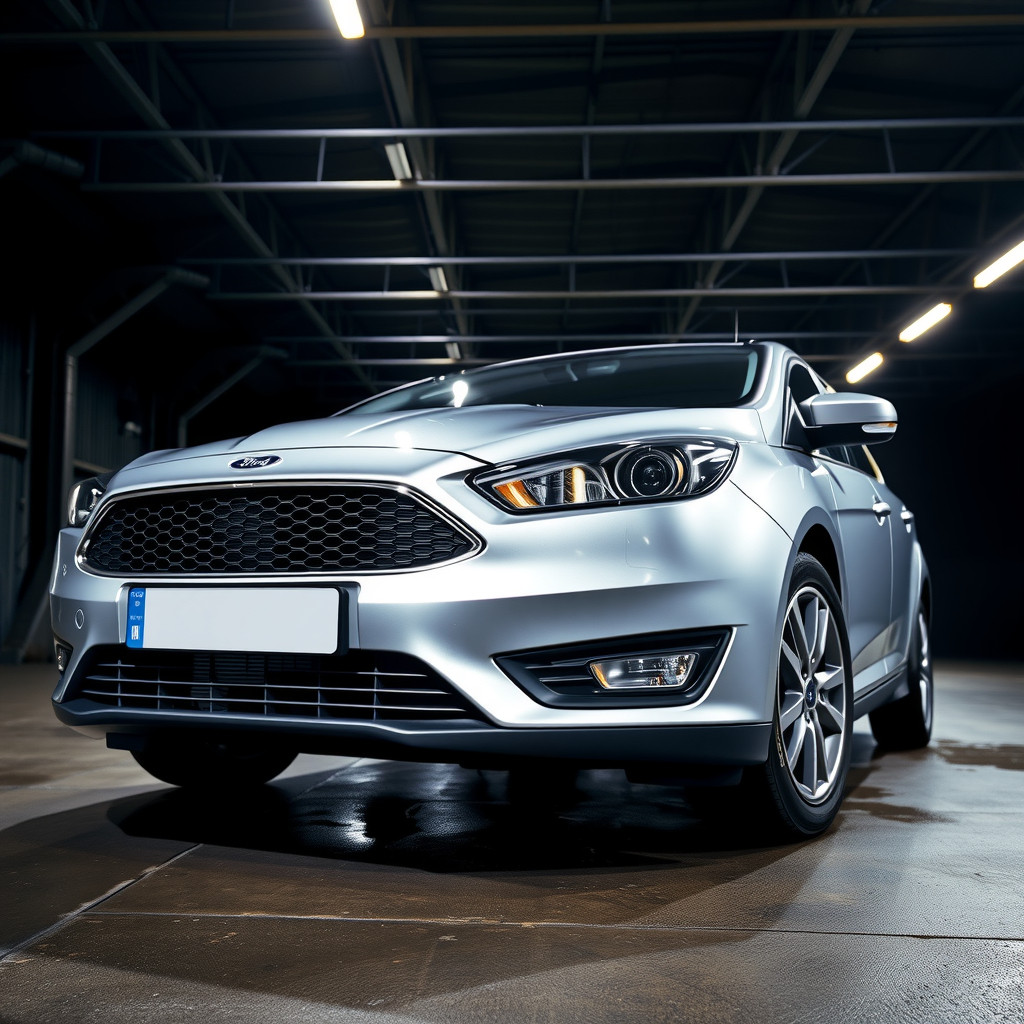
Ford Focus wheel fitment — I D . W, D . X
Overview
The Ford Focus is a compact car (Small family car, or C-segment in Europe) manufactured by Ford from 1998 until 2025. It was created under Alexander Trotman's Ford 2000 plan to globalize model development and sell one compact vehicle worldwide. The original Focus was primarily designed by Ford of Europe's German and British teams. Production of the fourth generation Focus began in 2018 in Germany and China. In 2025, Ford announced that the Focus will no longer be built, in line with an announcement made in 2022.
Ford Focus wheel fitment
Ford Focus wheel fitment for the Ford Focus (I) D . W, D . X (1998–2025): the factory PCD, centre bore and bolt spec, then the aftermarket width and offset window we fit to.
| Bolt pattern (PCD) | 4x10⁸ |
| Centre bore | 63.4 mm |
| Bolt / thread | M12x1.5 (nuts) |
| Seat type | tapered |
| Factory setup | square |
| TPMS | direct |
Aftermarket wheel sizes — read per position:
| Position | Width | Offset |
|---|---|---|
| Front | 5.5J–8.5J | ET30–ET52 |
As a rule, each extra 1J of width wants roughly +8–10 ET to keep the wheel tucked. The exact offset and any spacer are confirmed by the fit-check.
UK popularity & demand
Based on DfT VEH0124 vehicle-parc data (2025), there are approximately 886,255 Ford Focus on UK roads, placing it in the top 1% of car models by volume across our fitment database.
That makes Ford Focus wheel fitment a high-demand spec to keep in stock. It is one reason we track it here.
Source: DfT/DVLA licensed-vehicle statistics (VEH0124), matched to the AIWheelTech fitment database.
Engines & drivetrain
| Variant | Engine | Fuel | Power | Drive |
|---|---|---|---|---|
| 2.0L Duratec RS | 2.0L Duratec inline-4 turbocharged petrol engine | petrol | 215 hp | FWD |
| 1.8T EcoBoost | 1.8L EcoBoost inline-4 turbocharged petrol engine | petrol | 170 hp | FWD |
| 1.6T EcoBoost | 1.6L EcoBoost inline-4 turbocharged petrol engine | petrol | 150 hp | FWD |
| 1.0 EcoBoost Hybrid | 1.0L EcoBoost inline-3 turbocharged petrol engine with hybrid sy | hybrid | 148 hp | FWD |
| 1.5 EcoBoost Hybrid | 1.5L EcoBoost inline-3 turbocharged petrol engine with hybrid sy | hybrid | 148 hp | FWD |
| 2.0 Duratorq TDCi | 2.0L Duratorq TDCi inline-4 diesel engine | diesel | 136 hp | FWD |
| 2.0 Duratorq TDCi Powershift | 2.0L Duratorq TDCi inline-4 diesel engine with 6-speed Powershif | diesel | 136 hp | FWD |
| 1.0T EcoBoost | 1.0L EcoBoost inline-3 turbocharged petrol engine | petrol | 125 hp | FWD |
| 1.8L Duratec | 1.8L Duratec inline-4 petrol engine | petrol | 120 hp | FWD |
| 1.8 Duratorq TDCi | 1.8L Duratorq TDCi inline-4 diesel engine | diesel | 115 hp | FWD |
| 1.8 Duratorq TDCi Powershift | 1.8L Duratorq TDCi inline-4 diesel engine with 6-speed Powershif | diesel | 115 hp | FWD |
| 1.6L Duratec | 1.6L Duratec inline-4 petrol engine | petrol | 100 hp | FWD |
| 1.6 Duratorq TDCi | 1.6L Duratorq TDCi inline-4 diesel engine | diesel | 90 hp | FWD |
| 1.6 Duratorq TDCi Powershift | 1.6L Duratorq TDCi inline-4 diesel engine with 6-speed Powershif | diesel | 90 hp | FWD |
Performance
| Variant | Power | 0–62 mph | Top speed |
|---|---|---|---|
| 1.6L Duratec | 100 hp | 8.5 s | 113 mph |
| 1.8L Duratec | 120 hp | 7.9 s | 123 mph |
| 2.0L Duratec RS | 215 hp | 6.4 s | 152 mph |
| 1.8T EcoBoost | 170 hp | 7.3 s | 135 mph |
| 1.6T EcoBoost | 150 hp | 8.7 s | 130 mph |
| 1.0T EcoBoost | 125 hp | 9.8 s | 127 mph |
| 1.6 Duratorq TDCi | 90 hp | 13.5 s | 108 mph |
| 1.8 Duratorq TDCi | 115 hp | 11.3 s | 120 mph |
| 2.0 Duratorq TDCi | 136 hp | 9.8 s | 125 mph |
| 1.6 Duratorq TDCi Powershift | 90 hp | 13.5 s | 108 mph |
| 1.8 Duratorq TDCi Powershift | 115 hp | 11.3 s | 120 mph |
| 2.0 Duratorq TDCi Powershift | 136 hp | 9.8 s | 125 mph |
| 1.0 EcoBoost Hybrid | 148 hp | 7.9 s | 125 mph |
| 1.5 EcoBoost Hybrid | 148 hp | 7.9 s | 125 mph |
Body styles & production
| Body styles | hatchback, sedan/saloon, estate (station wagon), coupé-cabriolet |
| Produced | 1998–2025 |
| Units produced | 12,000,000 |
Trim levels
Factory colours
History & notable variants
The first generation Focus was introduced to replace the Ford Escort in Europe in 1998 and won the European Car of the Year award for 1999. In North America, it debuted in September 1999 for the 2000 model year with some changes from the European version. The second generation Focus was launched at the Paris Motor Show on September 25, 2004, as a three and five-door hatchback and an estate. In 2007, Ford released a MK.II version of the sports division of Focus, the Focus ST, which produced 225 bhp (168 kW) and could achieve a 0–60 mph time of 6.4 seconds. The third generation was launched simultaneously in North America and Europe in early 2011 with production starting late in 2010. In April 2018, Ford unveiled the European and Asian-market versions of the fourth-generation Focus.
Reliability & owner notes
- Pros: Award-winning design, strong performance variants (RS), global success
- Cons: Some models criticized for lacking the precise handling of earlier generations