
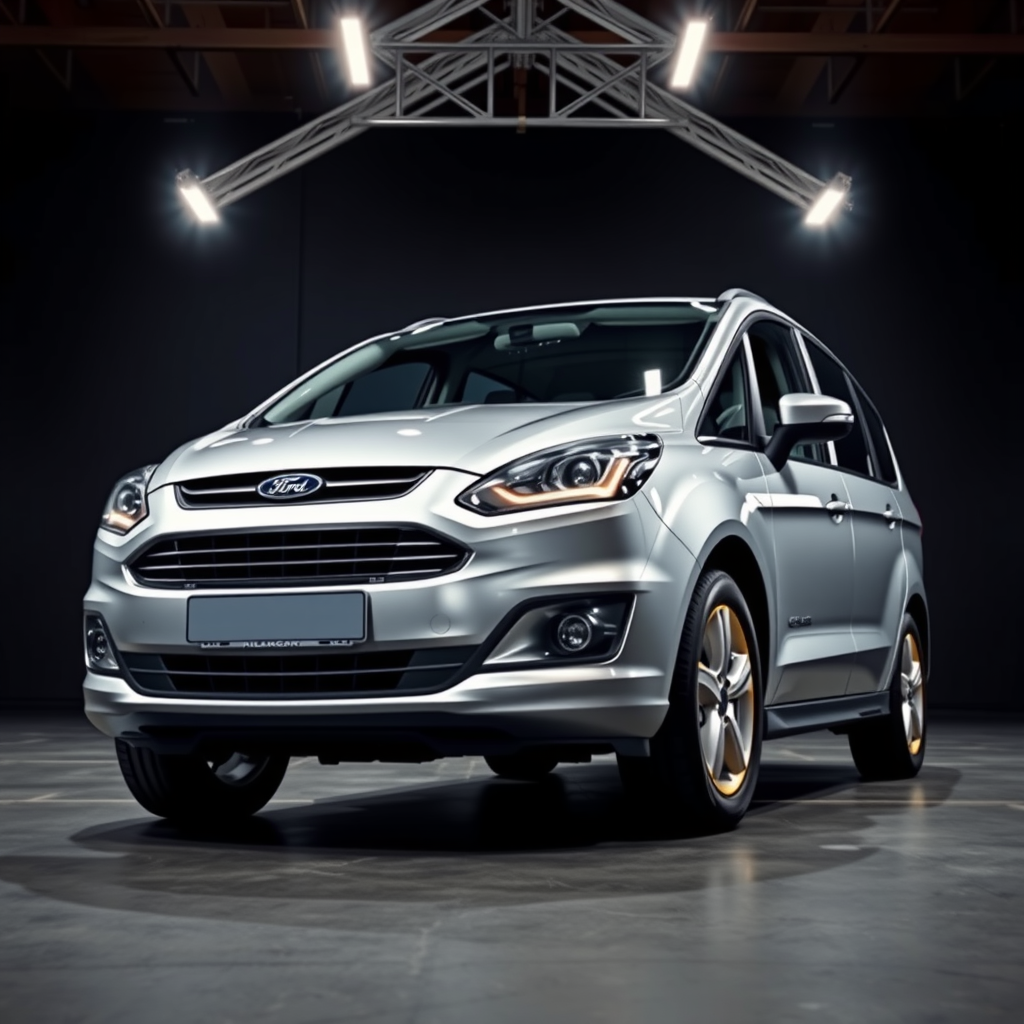
Ford Galaxy wheel fitment — II
Overview
The Ford Galaxy is a seven-seater car produced by Ford of Europe from June 1995 to April 2023. Considered in the motor industry to be a large multi-purpose vehicle (MPV), it was the first Ford-brand MPV produced and marketed outside of North America, the model line is currently in its third generation. Sharing its platform architecture with the Ford Mondeo, the Galaxy was developed alongside the Ford S-Max; the model line is slotted between the Connect and Custom variants of the Ford Tourneo/Transit model family.
Ford Galaxy wheel fitment
Ford Galaxy wheel fitment for the Ford Galaxy (II) (2006–2015): the factory PCD, centre bore and bolt spec, then the aftermarket width and offset window we fit to.
| Bolt pattern (PCD) | 5x10⁸ |
| Centre bore | 63.4 mm |
| Bolt / thread | M14x1.5 (bolts) |
| Wheel-bolt torque | 130 Nm |
| Seat type | tapered |
| Factory setup | staggered |
| TPMS | direct |
Aftermarket wheel sizes — read per position:
| Position | Width | Offset |
|---|---|---|
| Front | 6.5J–7.5J | ET35–ET55 |
| Rear (staggered) | 8.5J–9J | ET35–ET53 |
As a rule, each extra 1J of width wants roughly +8–10 ET to keep the wheel tucked. The exact offset and any spacer are confirmed by the fit-check.
UK popularity & demand
Based on DfT VEH0124 vehicle-parc data (2025), there are approximately 49,234 Ford Galaxy on UK roads, placing it in the top 6% of car models by volume across our fitment database.
That makes Ford Galaxy wheel fitment a high-demand spec to keep in stock. It is one reason we track it here.
Source: DfT/DVLA licensed-vehicle statistics (VEH0124), matched to the AIWheelTech fitment database.
Engines & drivetrain
| Variant | Engine | Fuel | Power | Drive |
|---|---|---|---|---|
| 2.2 TDCi 210 PS | 2.2L Duratorq TDCi I4 (Bi-Turbo) | diesel | 210 hp | FWD |
| 2.0 EcoBoost | 2.0L Turbocharged EcoBoost I4 | petrol | 203 hp | FWD |
| 2.3 Duratec | 2.3L Duratec I4 | petrol | 185 hp | FWD |
| 2.2 TDCi 180 PS | 2.2L Duratorq TDCi I4 | diesel | 180 hp | FWD |
| 2.2 TDCi 175 PS | 2.2L Duratorq TDCi I4 | diesel | 175 hp | FWD |
| 1.6 EcoBoost | 1.6L Turbocharged I4 | petrol | 160 hp | FWD |
| 2.0 TDCi 140 PS | 2.0L Duratorq TDCi I4 | diesel | 140 hp | FWD |
| 2.0 TDCi 130 PS | 2.0L Duratorq TDCi I4 | diesel | 130 hp | FWD |
| 1.8 TDCi | 1.8L Duratorq TDCi I4 | diesel | 100 hp | FWD |
| 2.0 Duratec | 2.0L Duratec I4 | petrol | FWD |
Performance
| Variant | Power | 0–62 mph | Top speed |
|---|---|---|---|
| 2.2 TDCi 210 PS | 210 hp | 8.9 s | 135 mph |
Body styles & production
| Body styles | MPV |
| Produced | 2006–2015 |
Trim levels
History & notable variants
The first Galaxy was designed as a joint venture product between Ford and the Volkswagen Group. Produced at the AutoEuropa plant in Palmela, Portugal, it was badge-engineered to create three vehicles: the Ford Galaxy; by Volkswagen as the Sharan; and by SEAT as the Alhambra. The second generation introduced in 2006 saw a shift away from VW Group content with production moving to Genk, Belgium. In 2015, the third generation was launched, featuring updated engines and design elements.
Reliability & owner notes
- Pros: Large interior space, versatile seating configurations
- Cons: Public reaction was initially negative in the UK; some engines criticized for lack of power
- Common issues: None specified