
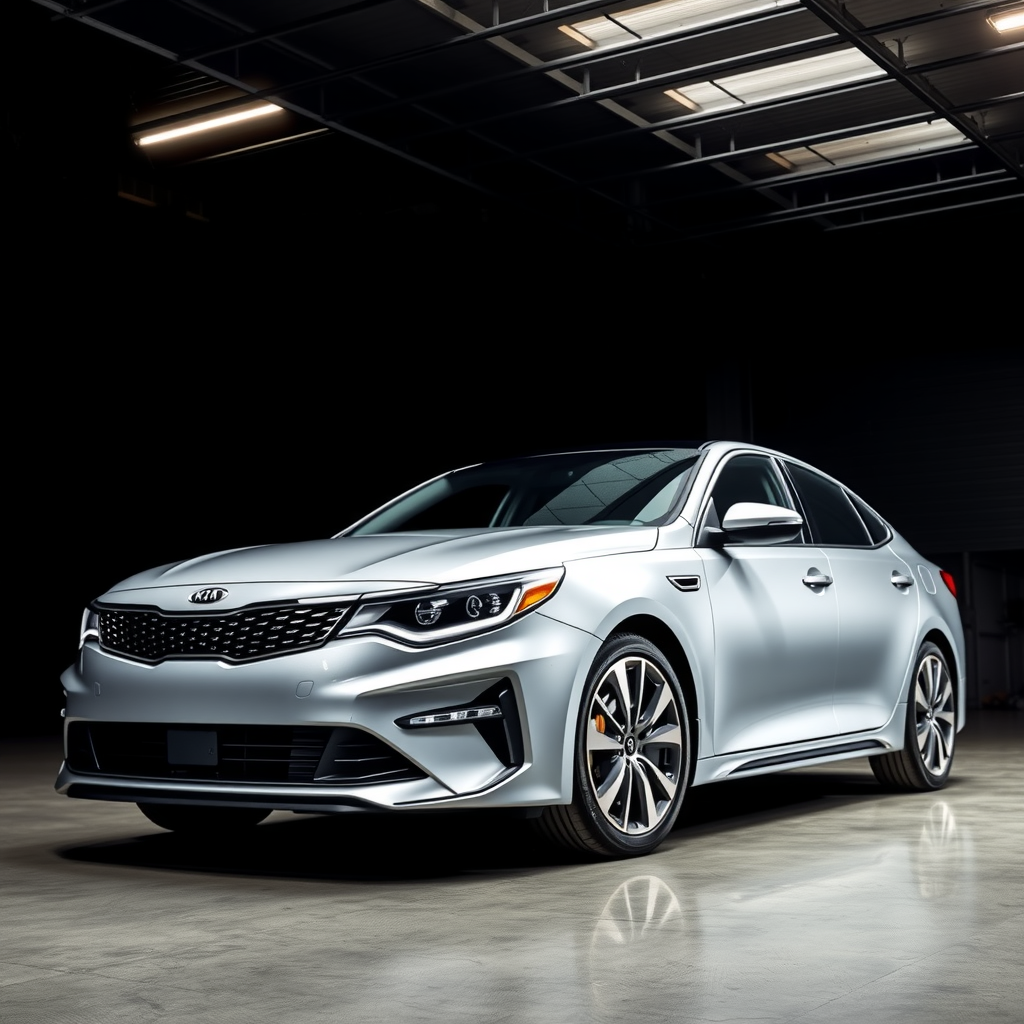
Kia Optima wheel fitment — JF
Kia Optima wheel fitment
Kia Optima wheel fitment comes down to two things: the factory hub spec, and how far the aftermarket width and offset can move from it. Both are here for the Kia Optima JF (2016–2020).
| Bolt pattern (PCD) | 5x114.3 |
| Centre bore | 67.1 mm |
| Bolt / thread | M12x1.5 (nuts) |
| Wheel-bolt torque | 101 Nm |
| Seat type | tapered |
| Factory setup | square |
| TPMS | direct |
Aftermarket wheel sizes — read per position:
| Position | Width | Offset |
|---|---|---|
| Front | 6.5J–9J | ET35–ET53 |
As a rule, each extra 1J of width wants roughly +8 to 10 ET to keep the wheel tucked. The exact offset and any spacer are confirmed by the fit-check.
Overview
The fourth generation Kia Optima (K5), introduced in South Korea on July 15, 2015 and globally thereafter, is a mid-size sedan sharing its platform with the Hyundai Sonata. It features an updated design language under Peter Schreyer's leadership, emphasizing sleek lines and modern styling elements like the 'tiger nose' grille. The Optima offers several trim levels including LX, EX, SX, and SXL, each equipped with advanced safety features such as electronic stability control and ABS brakes. Powertrain options include a 2.4-liter GDI engine paired with either a six-speed manual or automatic transmission, alongside a turbocharged 1.6-liter four-cylinder engine for enhanced performance.
Engines & drivetrain
| Variant | Engine | Fuel | Power | Drive, years |
|---|---|---|---|---|
| 1.6L Gamma II T-GDi | petrol | 132 kW (180 PS) | 2015 to 2019 | |
| 2.0L Nu GDi HEV | petrol | 151 kW (205 PS) | 2015 to 2019 | |
| 2.0L Nu MPi | petrol | 120 kW (163 PS) | 2015 to 2019 | |
| 2.0L Theta II T-GDi | petrol | 180 kW (245 PS) | 2015 to 2019 | |
| 2.4L Theta II GDi | petrol | 138 kW (188 PS) | 2015 to 2019 | |
| 2.0L Nu LPi | 113 kW (153 PS) | 2015 to 2021 | ||
| 1.6L U II CRDi | diesel | 100 kW (136 PS) | 2018 to 2019 | |
| 1.7L U II CRDi | diesel | 104 kW (141 PS) | 2015 to 2018 |
Source: Kia K5, en.wikipedia.org.
Performance
| Variant | Power | 0 to 62 mph (0 to 100 km/h) | Top speed |
|---|---|---|---|
| 1.6L Gamma II T-GDi | 132 kW (180 PS) | 8.9 s | 210 km/h (130 mph) |
| 2.0L Nu GDi HEV | 151 kW (205 PS) | 9.4 s | 192 km/h (119 mph) |
| 2.0L Nu MPi | 120 kW (163 PS) | 9.4 s | 208 to 210 km/h (129 to 130 mph) |
| 2.0L Theta II T-GDi | 180 kW (245 PS) | 7.6 s | 232 to 240 km/h (144 to 149 mph) |
| 2.4L Theta II GDi | 138 kW (188 PS) | 9.1 s | 210 km/h (130 mph) |
| 1.6L U II CRDi | 100 kW (136 PS) | 11.2 s | 195 to 196 km/h (121 to 122 mph) |
| 1.7L U II CRDi | 104 kW (141 PS) | 10.2 s | 200 km/h (124 mph) |
Source: Kia K5, en.wikipedia.org.
UK popularity & demand
Based on DfT VEH0124 vehicle-parc data (2025), there are approximately 10,610 Kia Optima on UK roads, placing it in the top 14% of car models by volume across our fitment database.
A parc that size is why Kia Optima wheel fitment is worth getting exactly right: a lot of owners are shopping for these numbers.
Source: DfT/DVLA licensed-vehicle statistics (VEH0124), matched to the AIWheelTech fitment database.
History & notable variants
The fourth generation Optima was unveiled at the Seoul Motor Show in April 2015 and went on sale towards the end of that year. It received positive reception for its design and technology advancements. A Sportswagon variant was also showcased at the Geneva Motor Show, though it did not enter production.
Dimensions
| Length | 4,855 mm |
| Width | 1,860 mm |
| Height | 1,465 mm |
| Wheelbase | 2,805 mm |
| Kerb weight | 1,530 to 1,848 kg |
Source: Kia K5, en.wikipedia.org; EU type-approval data (EEA).
Body styles & production
| Body styles | 4-door sedan, 5-door station wagon |
| Produced | 2016–2020 |
Trim levels
Factory colours
Reliability & owner notes
- Pros: Advanced safety features, sleek design, improved fuel efficiency
- Cons: Limited availability of the Sportswagon variant, high pricing for top-tier trims
- Common issues: None reported