
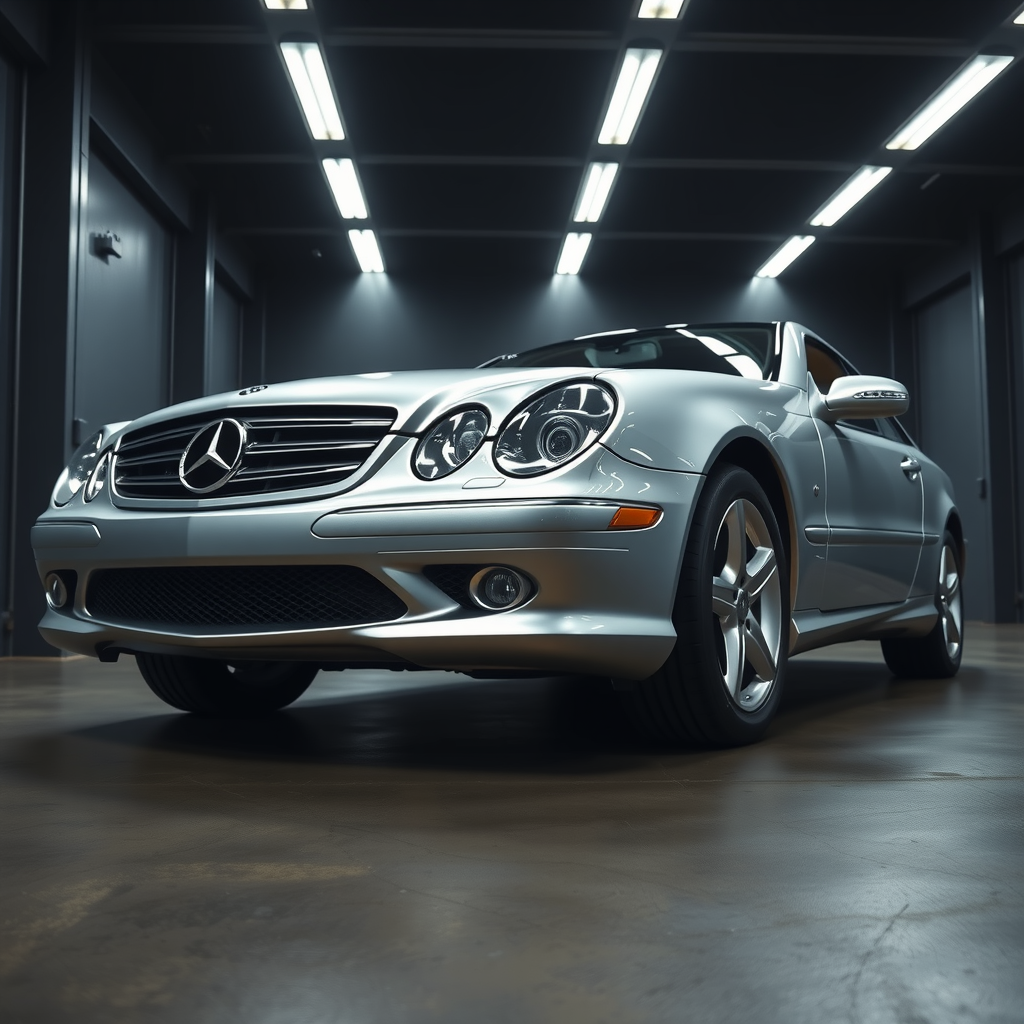
Mercedes CL-Class wheel fitment — Cl-Klasse 215
Overview
The second generation CL-Class (C215) was a grand tourer produced by Mercedes-Benz from 1998 to 2006. It was based on the W220 S-Class platform but featured a shorter wheelbase and no B-pillar, making it a four-passenger coupé. The C215 introduced advanced features such as Active Body Control suspension and Bi-Xenon HID lights. Variants included naturally aspirated V8 and V12 engines, supercharged versions, and high-performance AMG models like the CL 63 AMG and CL 65 AMG.
Mercedes CL-Class wheel fitment
Start with the hub. The Mercedes Cl-Klasse 215 spec table gives the bolt pattern and bore; the second table is the aftermarket window for Mercedes CL-Class wheel fitment.
| Bolt pattern (PCD) | 5x112 |
| Centre bore | 66.6 mm |
| Bolt / thread | M14x1.5 (bolts) |
| Seat type | radius |
| Factory setup | staggered |
| TPMS | direct |
| Run-flat | Yes |
Aftermarket wheel sizes — read per position:
| Position | Width | Offset |
|---|---|---|
| Front | 7.5J–9J | ET29–ET51 |
| Rear (staggered) | 8J–11J | ET29–ET48 |
As a rule, each extra 1J of width wants roughly +8 to 10 ET to keep the wheel tucked. The exact offset and any spacer are confirmed by the fit-check.
Body styles & production
| Produced | 2006–2014 |
Trim levels
Factory colours
History & notable variants
The C215 generation was developed from 1993 to 1999 with final design approval in 1996. It marked a significant evolution over its predecessor, offering enhanced performance and luxury features. Notable variants included the limited-production CL 600 Bi-Turbo V12 (about 200 units annually) and the exclusive CL 63 AMG (only 26 examples). The generation saw updates in 2003 with supercharged engines and a new 7-speed automatic transmission for improved performance.
Reliability & owner notes
- Pros: Advanced suspension systems (ABC), Bi-Xenon HID lights, extensive luxury features
- Cons: Limited engine choices compared to S-Class, no diesel or V6 petrol engines available