
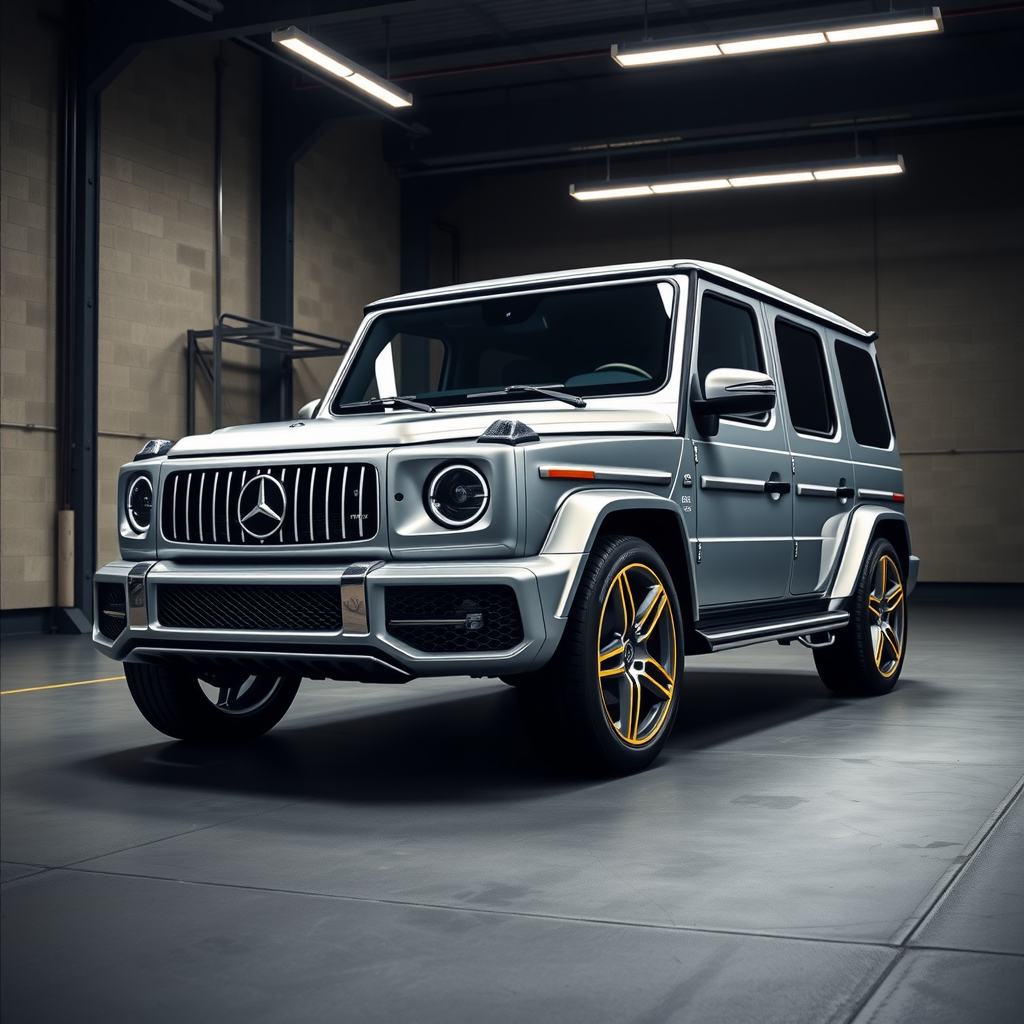
Mercedes G-Class AMG wheel fitment — G 63 465
Overview
The Mercedes-Benz G-Class, colloquially known as the G-Wagon or G-Wagen (as an abbreviation of Geländewagen), is a four-wheel drive luxury SUV sold by Mercedes-Benz. Originally developed as a military off-roader in 1972 and later offered as a civilian vehicle in 1979, it has evolved into one of Daimler's longest-produced vehicles with boxy styling and body-on-frame construction featuring three fully locking differentials. The second-generation W463 introduced in 2018 saw significant revisions to the chassis, powertrain, body, and interior.
Mercedes G-Class AMG wheel fitment
Mercedes G-Class AMG wheel fitment for the Mercedes Amg G 63 465 (1979–present): the factory PCD, centre bore and bolt spec, then the aftermarket width and offset window we fit to.
| Bolt pattern (PCD) | 5x130 |
| Centre bore | 84.1 mm |
| Bolt / thread | M14x1.5 (bolts) |
| Wheel-bolt torque | 180 Nm |
| Seat type | radius |
| Factory setup | square |
| TPMS | direct |
| Run-flat | Yes |
Aftermarket wheel sizes — read per position:
| Position | Width | Offset |
|---|---|---|
| Front | 9.5J–11.5J | ET-8–ET52 |
As a rule, each extra 1J of width wants roughly +8–10 ET to keep the wheel tucked. The exact offset and any spacer are confirmed by the fit-check.
Dimensions
| Height | 3913 mm |
| Wheelbase | 2400 mm |
| Kerb weight | 3913 kg |
Body styles & production
| Produced | 1979–present |
Trim levels
Factory colours
History & notable variants
Developed from a suggestion by the Shah of Iran Mohammad Reza Pahlavi, the G-Class was initially produced as a military vehicle before transitioning into civilian use. Over its lifespan, it has seen numerous updates including facelifts in 1981 and 1990, with significant changes arriving in 2018 for the second generation W463.
Reliability & owner notes
- Pros: Boxy styling; body-on-frame construction; three fully locking differentials; luxury SUV status
- Cons: High fuel consumption; expensive maintenance costs
- Common issues: None specified