
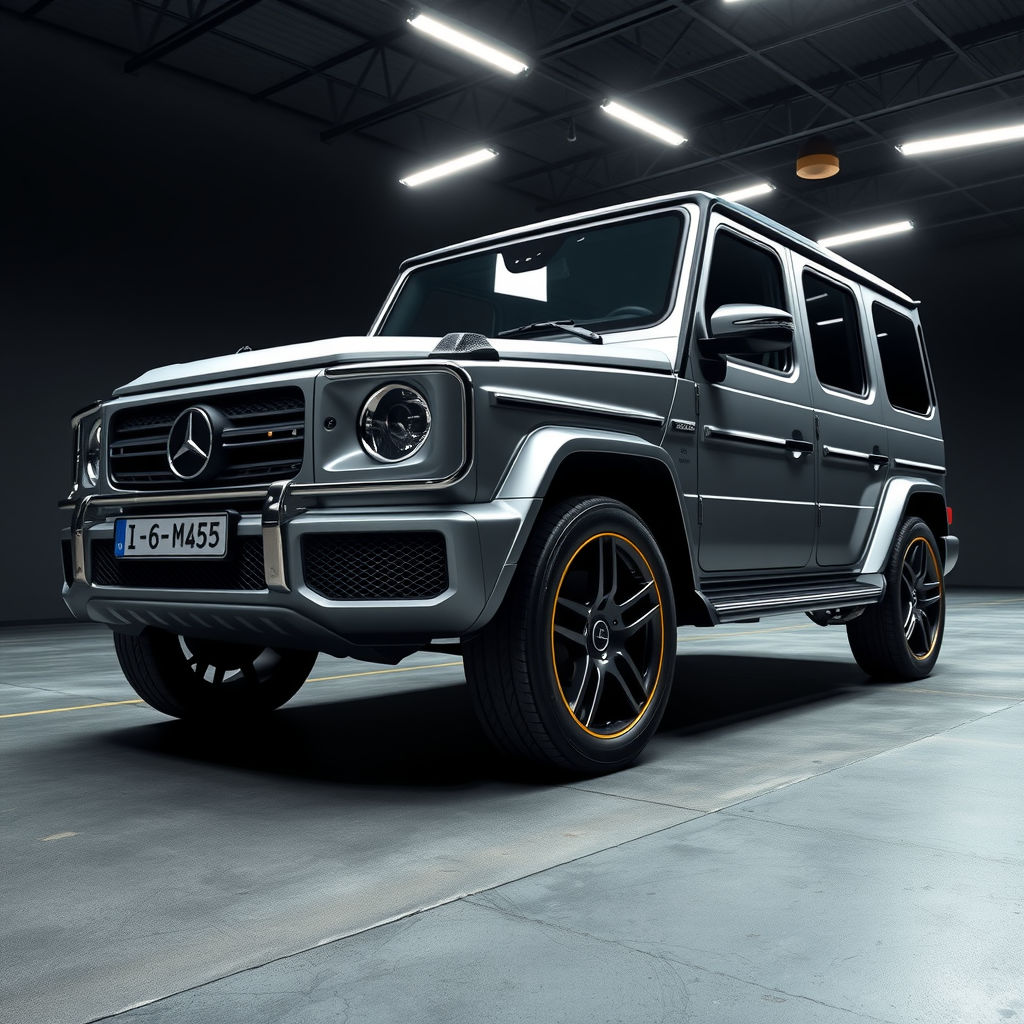
Mercedes G Class wheel fitment — G-Class 465
Overview
The Mercedes-Benz G-Class, also known colloquially as the G-Wagon or G-Wagen (abbreviation of Geländewagen), is a luxury SUV with military origins. It features boxy styling and body-on-frame construction, equipped with three fully locking differentials, making it one of the few passenger vehicles to have such capability. Despite the introduction of an intended replacement in 2006, the G-Class remains in production as one of Daimler's longest-running models. The second-generation W463 was introduced in 2018 with significant updates including a revised chassis, powertrain, body, and interior.
Mercedes G Class wheel fitment
Start with the hub. The Mercedes G-Class 465 spec table gives the bolt pattern and bore; the second table is the aftermarket window for Mercedes G Class wheel fitment.
| Bolt pattern (PCD) | 5x130 |
| Centre bore | 84.1 mm |
| Bolt / thread | M14x1.5 (bolts) |
| Wheel-bolt torque | 180 Nm |
| Seat type | radius |
| Factory setup | square |
| TPMS | direct |
| Run-flat | Yes |
Aftermarket wheel sizes — read per position:
| Position | Width | Offset |
|---|---|---|
| Front | 7.5J–10J | ET14–ET50 |
As a rule, each extra 1J of width wants roughly +8 to 10 ET to keep the wheel tucked. The exact offset and any spacer are confirmed by the fit-check.
UK popularity & demand
Based on DfT VEH0124 vehicle-parc data (2025), there are approximately 1,469 Mercedes G Class on UK roads, placing it in the top 27% of car models by volume across our fitment database.
That makes Mercedes G Class wheel fitment a high-demand spec to keep in stock. It is one reason we track it here.
Source: DfT/DVLA licensed-vehicle statistics (VEH0124), matched to the AIWheelTech fitment database.
Dimensions
| Kerb weight | 2,675 kg |
Source: EU type-approval data (EEA).
Body styles & production
| Produced | 1979–present |
| Units produced | 500,000 |
Trim levels
Factory colours
History & notable variants
In 2018, Mercedes-Benz launched the second generation of the G-Class (W463) with substantial changes to its chassis, powertrain, exterior design, and cabin. This iteration marked a shift towards luxury features while retaining its off-road capabilities. The model has been well-received for its blend of ruggedness and opulence.
Reliability & owner notes
- Pros: Boxy styling, body-on-frame construction, three fully locking differentials
- Cons: High fuel consumption, limited passenger space
- Common issues: None specified