
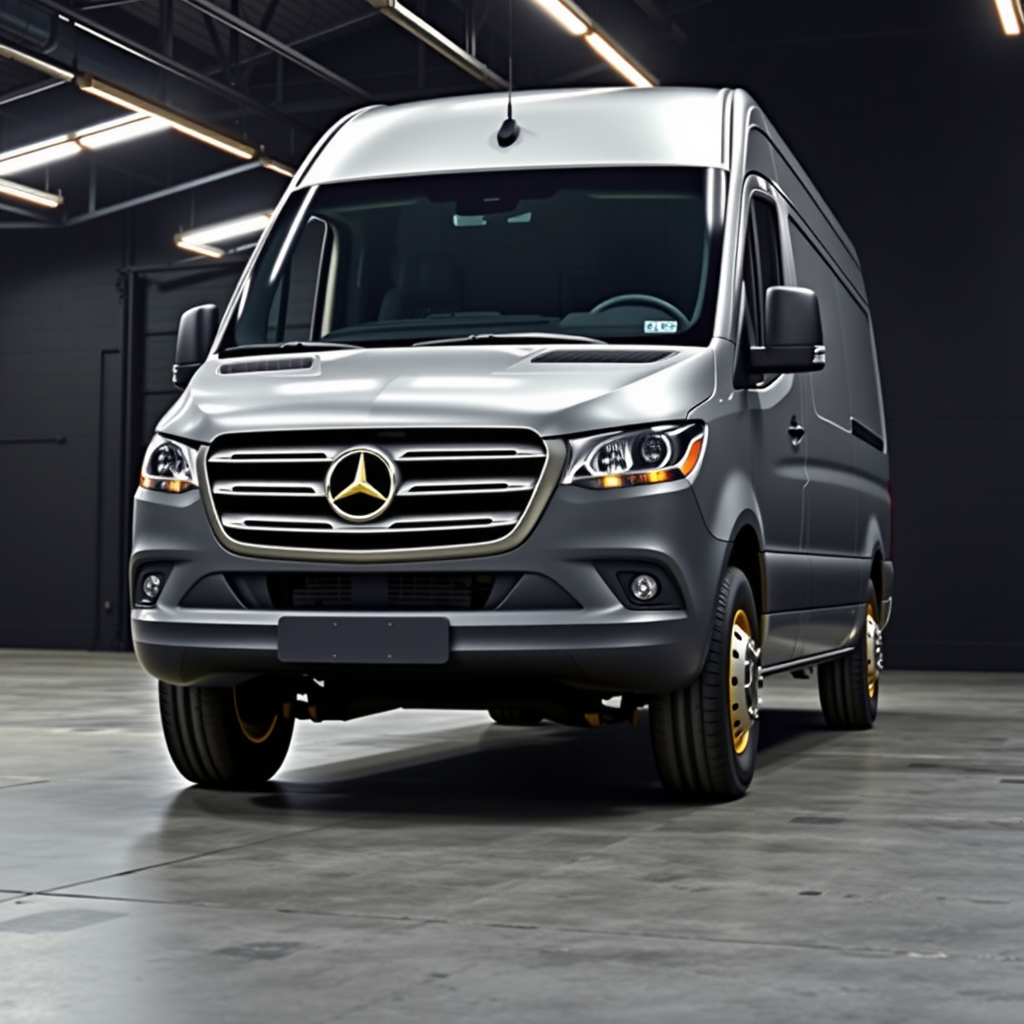
Mercedes Sprinter wheel fitment — 2 Inc Facelift
Mercedes Sprinter wheel fitment
Mercedes Sprinter wheel fitment comes down to two things: the factory hub spec, and how far the aftermarket width and offset can move from it. Both are here for the Mercedes Sprinter (2) Inc Facelift (1995–present).
| Bolt pattern (PCD) | 6x130 |
| Centre bore | 84.1 mm |
| Bolt / thread | M14x1.5 (bolts) |
| Wheel-bolt torque | 160 Nm |
| Seat type | radius |
| Factory setup | square |
| TPMS | direct |
Aftermarket wheel sizes — read per position:
| Position | Width | Offset |
|---|---|---|
| Front | 6.5J–8.5J | ET16–ET62 |
As a rule, each extra 1J of width wants roughly +8 to 10 ET to keep the wheel tucked. The exact offset and any spacer are confirmed by the fit-check.
Overview
The Mercedes-Benz Sprinter, in its second generation (W906), was introduced in Europe in 2006 and later in North America for the 2007 model year. It is built on a platform designed to offer improved aerodynamics, increased interior space, and enhanced fuel efficiency compared to its predecessor. The vehicle comes with various body styles including cargo vans, chassis cabs, minibuses, and crew vans. In Europe, it was voted Van of the Year in 2007 and again in 2008 by Professional Van and Light Truck Magazine. It features a range of diesel engines, some equipped with BlueTEC technology for better emissions compliance.
UK popularity & demand
Based on DfT VEH0124 vehicle-parc data (2025), there are approximately 1,898 Mercedes Sprinter on UK roads, placing it in the top 25% of car models by volume across our fitment database.
A parc that size is why Mercedes Sprinter wheel fitment is worth getting exactly right: a lot of owners are shopping for these numbers.
Source: DfT/DVLA licensed-vehicle statistics (VEH0124), matched to the AIWheelTech fitment database.
History & notable variants
The second generation Sprinter underwent several updates including the addition of new assistance systems such as crosswind stabilization, collision avoidance system (optional), blind spot monitor (optional), adaptive highbeam, lane departure warning system. It also received Euro VI emissions compliance and a redesigned radiator grille in 2013. In North America, it was updated with an optional 7-speed automatic transmission and the 2.1L OM651 two-stage turbo diesel engine to improve fuel economy.
Body styles & production
| Produced | 1995–present |
Trim levels
Factory colours
Reliability & owner notes
- Pros: Improved aerodynamics; Enhanced interior space; Better fuel efficiency
- Cons: Complexity of engine options can be overwhelming for buyers
- Common issues: Leaking roof air conditioning unit