
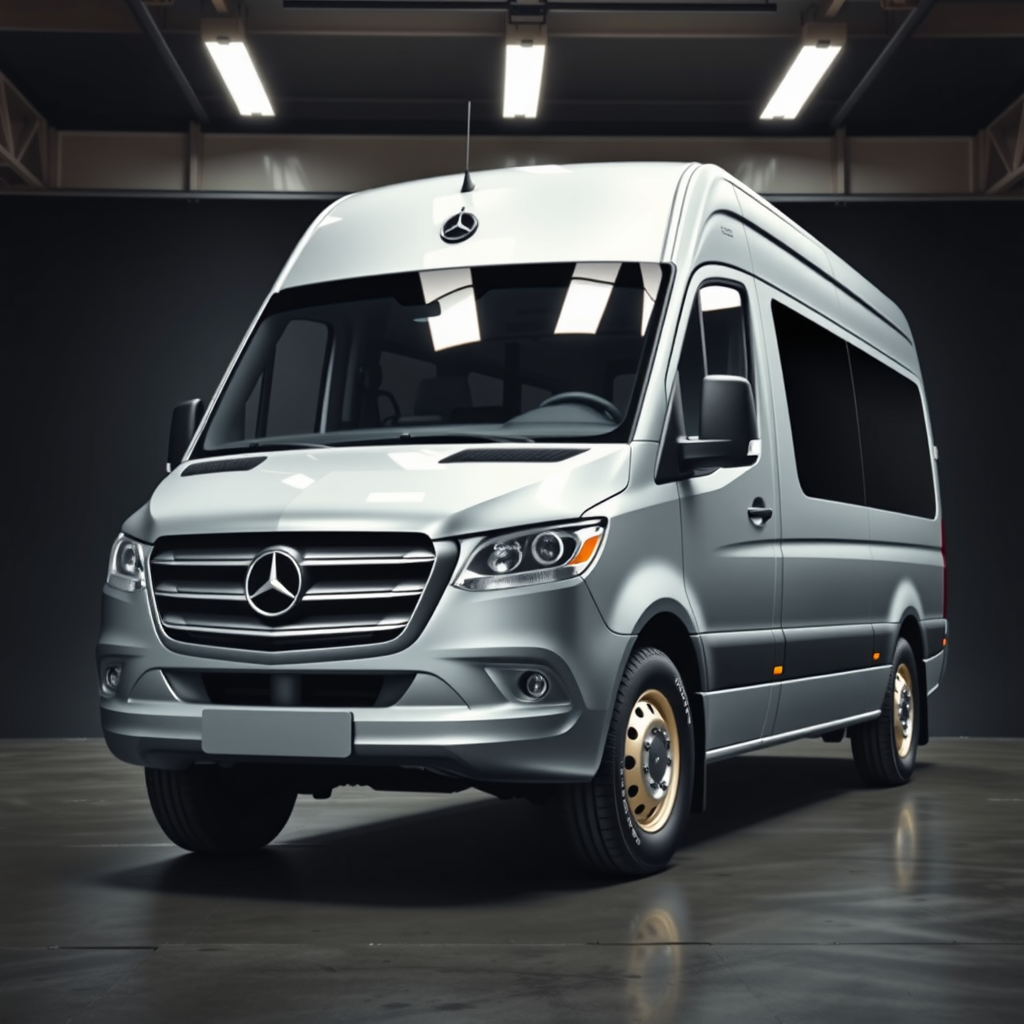
Mercedes Sprinter wheel fitment — 3 906BB35
Mercedes Sprinter wheel fitment
Mercedes Sprinter wheel fitment for the Mercedes Sprinter (3) 906BB35 (2018–2026): the factory PCD, centre bore and bolt spec, then the aftermarket width and offset window we fit to.
| Bolt pattern (PCD) | 6x130 |
| Centre bore | 84.1 mm |
| Bolt / thread | M14x1.5 (bolts) |
| Wheel-bolt torque | 160 Nm |
| Seat type | radius |
| Factory setup | square |
| TPMS | none |
Aftermarket wheel sizes — read per position:
| Position | Width | Offset |
|---|---|---|
| Front | 6.5J–8J | ET27–ET62 |
Go wider and the offset has to rise with it, about 8 to 10 ET per extra 1J, or the wheel pokes past the arch. The fit-check settles the exact offset and any spacer.
UK popularity & demand
Based on DfT VEH0124 vehicle-parc data (2025), there are approximately 1,898 Mercedes Sprinter on UK roads, placing it in the top 25% of car models by volume across our fitment database.
That makes Mercedes Sprinter wheel fitment a high-demand spec to keep in stock. It is one reason we track it here.
Source: DfT/DVLA licensed-vehicle statistics (VEH0124), matched to the AIWheelTech fitment database.
Overview
The Mercedes-Benz Sprinter (3rd generation, 2019 onwards) is a light commercial vehicle built by Mercedes-Benz Group AG in Stuttgart, Germany. It serves as the largest model in the Mercedes-Benz van lineup, following the mid-size Vito and small Citan. This generation features significant updates to its platform, design, and technology compared to its predecessor (W906). The Sprinter is available in various body styles including vans, chassis cabs, minibuses, and pickup trucks. It is assembled at multiple locations globally, with production tailored for specific markets such as the United States, Argentina, China, and Russia.
Dimensions
| Kerb weight | 2,082 to 2,730 kg |
Source: EU type-approval data (EEA).
Body styles & production
| Produced | 2018–2026 |
Trim levels
Factory colours
History & notable variants
The third generation of the Mercedes-Benz Sprinter was introduced to address market demands for enhanced fuel efficiency, improved connectivity features, and better driver assistance systems. Notable changes include a new FF layout (front-engine front-wheel drive) introduced in 2019, alongside updated styling with sharper lines and modernized interiors. The vehicle received several awards and positive reviews for its advanced technology and robust performance.
Reliability & owner notes
- Pros: advanced driver assistance systems, improved fuel efficiency, modernized interiors
- Cons: no specific cons mentioned in the reference
- Common issues: no reliability issues reported for this generation