By Torque, AIWheelTech vehicle & fitment specialist · 2017–2020
Mercedes X-Class Pickup wheel fitment at a glance — The Mercedes X-Class Pickup 4701 (2017–2020) uses a 6x114.3 bolt pattern, 66.1 mm centre bore, M12x1.25 nuts torqued to ~135 Nm. It accepts ~6J–9J wheels at ET-12–ET62.
Overview
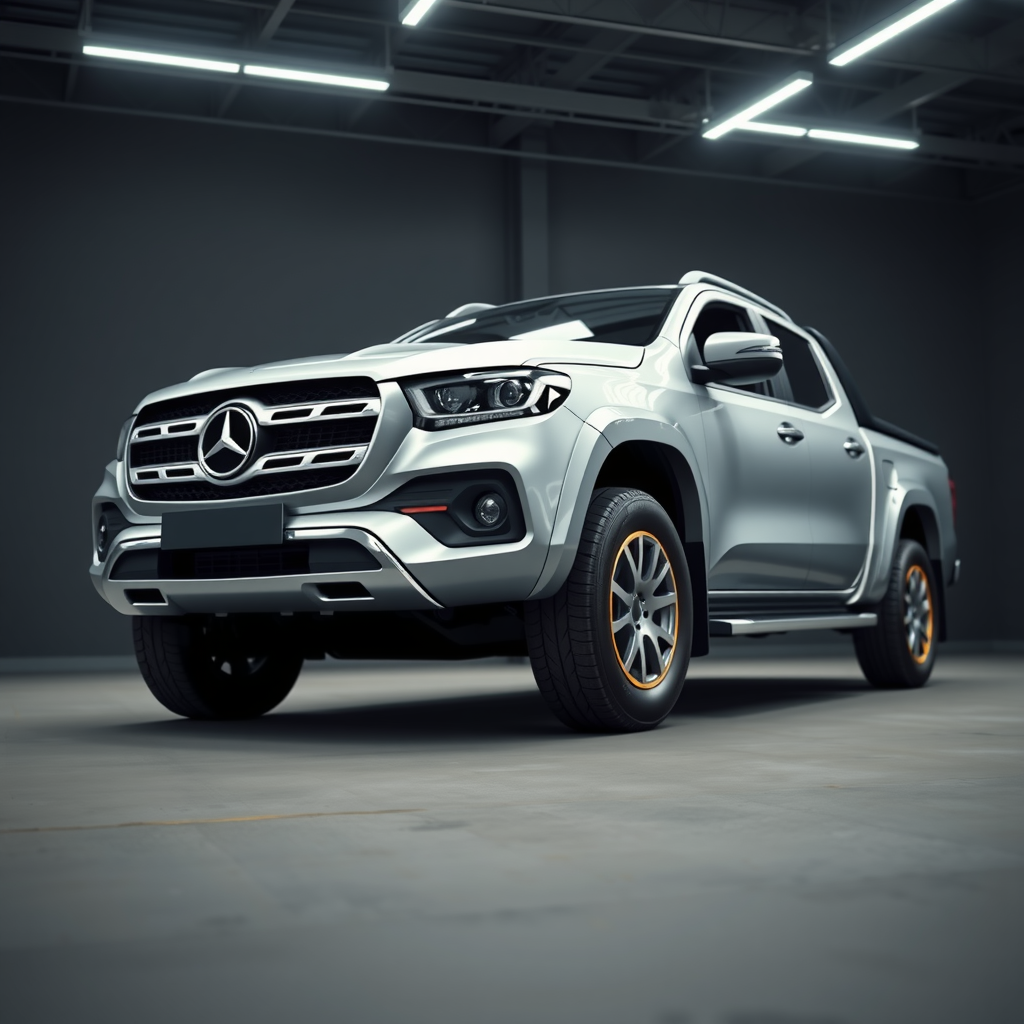
The Mercedes-Benz X-Class (W470) is a mid-size pickup truck sold by Mercedes-Benz from November 2017 to May 2020. It was based on the D23 Nissan Navara but featured Mercedes-specific features and technologies. Unveiled in Cape Town, South Africa, it first went on sale late 2017. The X-Class was developed with Renault-Nissan-Mitsubishi Alliance and assembled at Nissan's factory in Spain. Due to low sales attributed to public perception of being an expensive rebadge of a Nissan Navara, production ended in May 2020.
Mercedes X-Class Pickup wheel fitment
Mercedes X-Class Pickup wheel fitment for the Mercedes X-Class Pickup 4701 (2017–2020): the factory PCD, centre bore and bolt spec, then the aftermarket width and offset window we fit to.
Bolt pattern (PCD)
6x114.3
Centre bore
66.1 mm
Bolt / thread
M12x1.25 (nuts)
Wheel-bolt torque
135 Nm
Seat type
tapered
Factory setup
square
TPMS
direct
Aftermarket wheel sizes — read per position:
Position
Width
Offset
Front
6J–9J
ET-12–ET62
As a rule, each extra 1J of width wants roughly +8–10 ET to keep the wheel tucked. The exact offset and any spacer are confirmed by the fit-check.
Development began in 2015, and the X-Class Concept was announced on October 25, 2016. It was slated for markets including Australia, New Zealand, Europe, Latin America, and Africa. Despite featuring Mercedes-specific technologies and a top-of-the-range V6 diesel engine with all-wheel drive, sales were poor due to customer disappointment over the joint venture nature of the vehicle.
Reliability & owner notes
Pros: Mercedes-specific features and technologies; available in multiple markets
Cons: Perceived as an expensive rebadge of a Nissan Navara; poor sales due to customer disappointment over the joint venture nature of the vehicle
Common issues: Negative perception leading to low market acceptance