
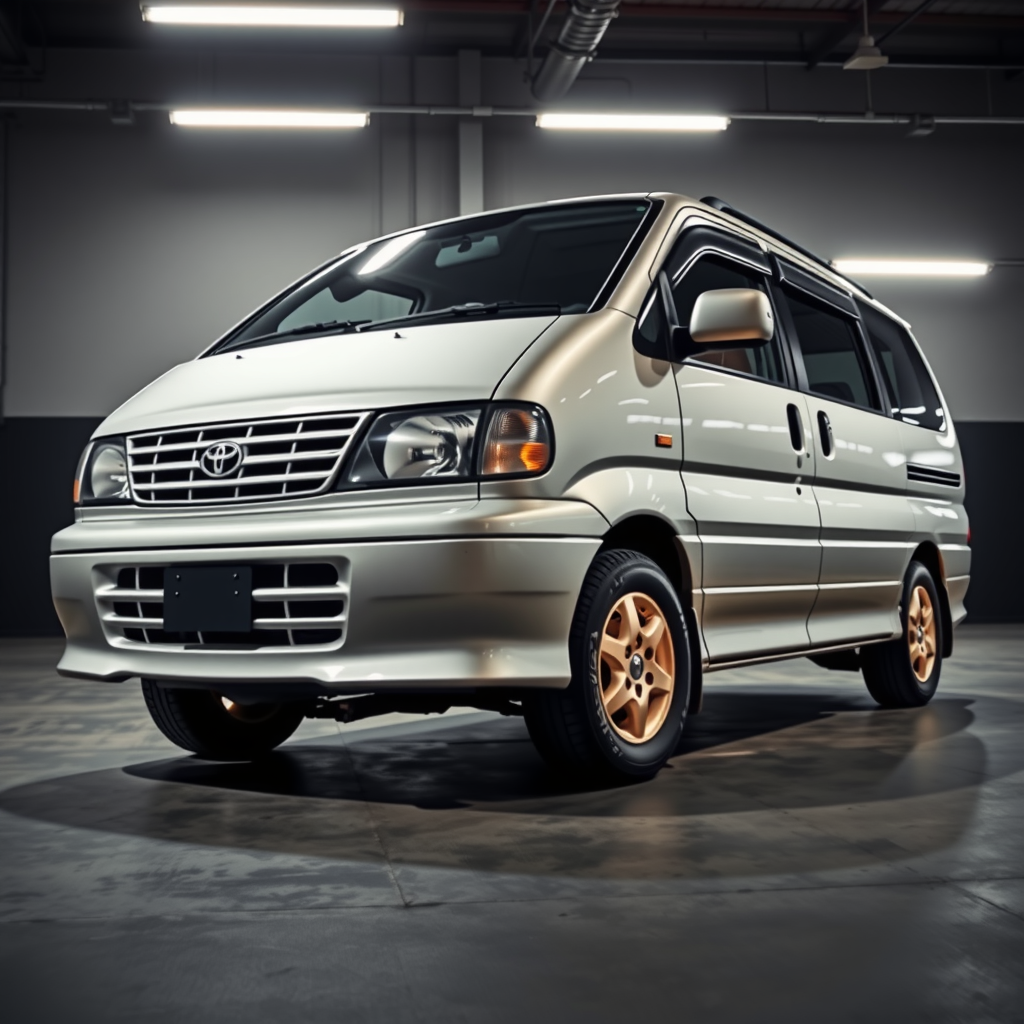
Toyota Previa wheel fitment — I
Toyota Previa wheel fitment
Toyota Previa wheel fitment for the Toyota Previa I (1990–2000): the factory PCD, centre bore and bolt spec, then the aftermarket width and offset window we fit to.
| Bolt pattern (PCD) | 5x114.3 |
| Centre bore | 60.1 mm |
| Bolt / thread | M12x1.5 (nuts) |
| Seat type | flat |
| Factory setup | square |
| Brakes | e6*98/14*0069*..,e6*2001/116*0069*.. |
| TPMS | none |
Aftermarket wheel sizes — read per position:
| Position | Width | Offset |
|---|---|---|
| Front | 6.5J–8.5J | ET35–ET50 |
As a rule, each extra 1J of width wants roughly +8 to 10 ET to keep the wheel tucked. The exact offset and any spacer are confirmed by the fit-check.
UK popularity & demand
Based on DfT VEH0124 vehicle-parc data (2025), there are approximately 2,807 Toyota Previa on UK roads, placing it in the top 22% of car models by volume across our fitment database.
With that many on the road, Toyota Previa wheel fitment is a spec fitters see constantly. We keep it current for that reason.
Source: DfT/DVLA licensed-vehicle statistics (VEH0124), matched to the AIWheelTech fitment database.
Overview
The Toyota Previa, also known as the Toyota Estima in Japan and Toyota Tarago in Australia, is a minivan produced by Toyota from January 1990 to December 1999. It was designed with a mid-engined platform featuring an inline-four cylinder engine installed beneath the front seats at a 75-degree angle to maximize interior space. Available in both rear-wheel and all-wheel drive configurations, it featured innovative design elements like a supplemental accessory drive system (SADS) for engine-driven accessories. The first generation was assembled in Kariya, Aichi, Japan, and offered various body styles including seven- or eight-passenger seating options.
Body styles & production
| Produced | 1990–2000 |
Trim levels
History & notable variants
The Previa's debut marked the introduction of a mid-engine layout in minivans, offering unique interior space advantages but also limitations such as restricted engine size. It underwent two facelifts during its production run: one in December 1994 and another in January 1998. In Japan, smaller variants like the Estima Lucida and Emina were produced to cater to local tax regulations.
Reliability & owner notes
- Pros: Innovative mid-engine layout; Maximized interior space
- Cons: Limited engine size due to design constraints; Higher price compared to competitors
- Common issues: Safety concerns in crash tests, particularly with the driver's side airbag and lap belt performance