
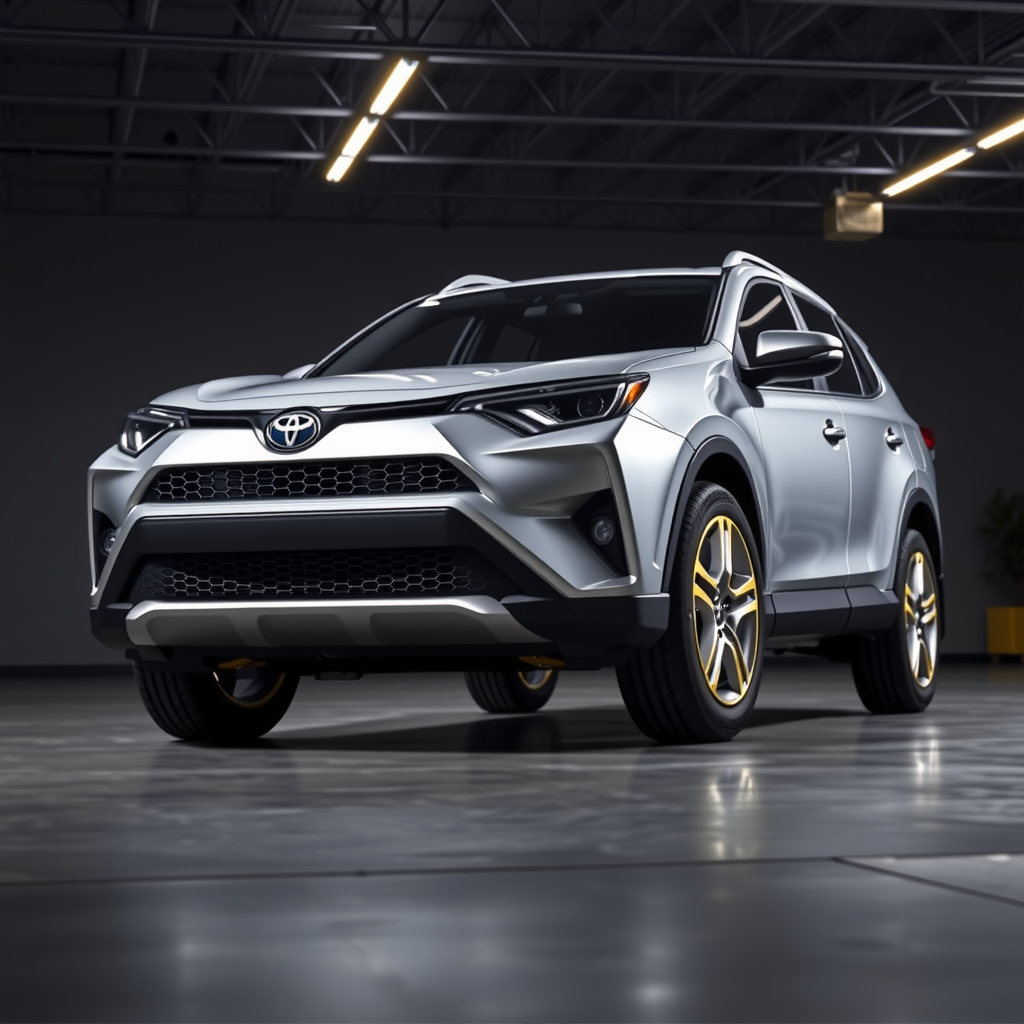
Toyota RAV4 wheel fitment — IV XA30
Toyota RAV4 wheel fitment
Toyota RAV4 wheel fitment for the Toyota RAV4 (IV) XA30 (1994–present): the factory PCD, centre bore and bolt spec, then the aftermarket width and offset window we fit to.
| Bolt pattern (PCD) | 5x114.3 |
| Centre bore | 60.1 mm |
| Bolt / thread | M12x1.5 (nuts) |
| Wheel-bolt torque | 105 Nm |
| Seat type | flat |
| Factory setup | square |
| Brakes | e6*2001/116*0105*14-..;e13*2007/46*1657*..- ab Facelift 2016 |
| TPMS | direct |
Aftermarket wheel sizes — read per position:
| Position | Width | Offset |
|---|---|---|
| Front | 7J–9.5J | ET0–ET45 |
As a rule, each extra 1J of width wants roughly +8 to 10 ET to keep the wheel tucked. The exact offset and any spacer are confirmed by the fit-check.
UK popularity & demand
Based on DfT VEH0124 vehicle-parc data (2025), there are approximately 144,894 Toyota RAV4 on UK roads, placing it in the top 3% of car models by volume across our fitment database.
A parc that size is why Toyota RAV4 wheel fitment is worth getting exactly right: a lot of owners are shopping for these numbers.
Source: DfT/DVLA licensed-vehicle statistics (VEH0124), matched to the AIWheelTech fitment database.
Overview
The Toyota RAV4 (XA30) is the third generation of this compact crossover SUV. It was redesigned for the 2006 model year, using an all-new platform and was first unveiled at the 2005 Frankfurt Motor Show. The XA30 series RAV4 went on sale in Japan in 2005 at Netz dealers. This generation offered two versions: a short-wheelbase model sold only in Japan, Europe, and New Zealand (diesel only in NZ), with the long-wheelbase version available in Australia, New Zealand, and North America. Compared to its predecessor, the wheelbase of the short-wheelbase model was increased by 70 mm, while exterior dimensions were larger. The extended-length RAV4 had an additional 21% in interior volume from the previous generation and offered a third-row for two additional passengers (North America and Japan only). In Japan, the long-wheelbase version was also sold as the Toyota Vanguard alongside its shorter counterpart.
Dimensions
| Width | 1695 mm |
| Kerb weight | 1150 kg |
Body styles & production
| Body styles | SUV |
| Produced | 1994–present |
Engines & drivetrain
| Variant | Engine | Fuel | Power | Drive |
|---|---|---|---|---|
| 2.4L 2AZ-FE VVT-i | 2.4 L Toyota 2AZ-FE VVT-i I4 | petrol | 170 hp | FWD|AWD |
| 2.0L 1AZ-FE VVT-i | 2.0 L Toyota 1AZ-FE VVT-i I4 | petrol | 158 hp | FWD|AWD |
| 2.0L 1AZ-FSE VVT-i D-4 | 2.0 L Toyota AZ engine#1AZ-FSE VVT-i D-4 I4 | petrol | 158 hp | FWD|AWD |
| 2.2L D-4D turbo diesel | 2.2 L Toyota CD engine#1CD-FTV D-4D I4-T | diesel | 150 hp | FWD|AWD |
| Hybrid | 1.8L petrol engine + electric motor | hybrid | 147 hp | FWD |
Performance
| Variant | Power | 0–62 mph | Top speed |
|---|---|---|---|
| 2.2L D-4D turbo diesel | 150 hp | 8.7 s | 123 mph |
| Hybrid | 147 hp | 9.5 s | 109 mph |
Trim levels
History & notable variants
The XA30 series RAV4 was not available with a 3-door option, leading to the discontinuation of the previous generation's 3-door model in early 2007. The third-generation RAV4 introduced electric power steering (EPS), an optional keyless entry system marketed as Smart Entry and Start System, and nine airbags for the first time. It was also equipped with a V6 engine in some markets, rated at 201 kW (273 PS; 270 hp). The vehicle was built in Toyota's Tahara plant and under contract by Toyota Industries in its Nagakusa plant. Production began in Canada in November 2008 for the North American market and in China from March 2009.
Reliability & owner notes
- Pros: Redesigned platform; increased interior volume; optional V6 engine; nine airbags; electric power steering
- Cons: No specific cons mentioned in the reference
- Common issues: No common reliability issues specified