
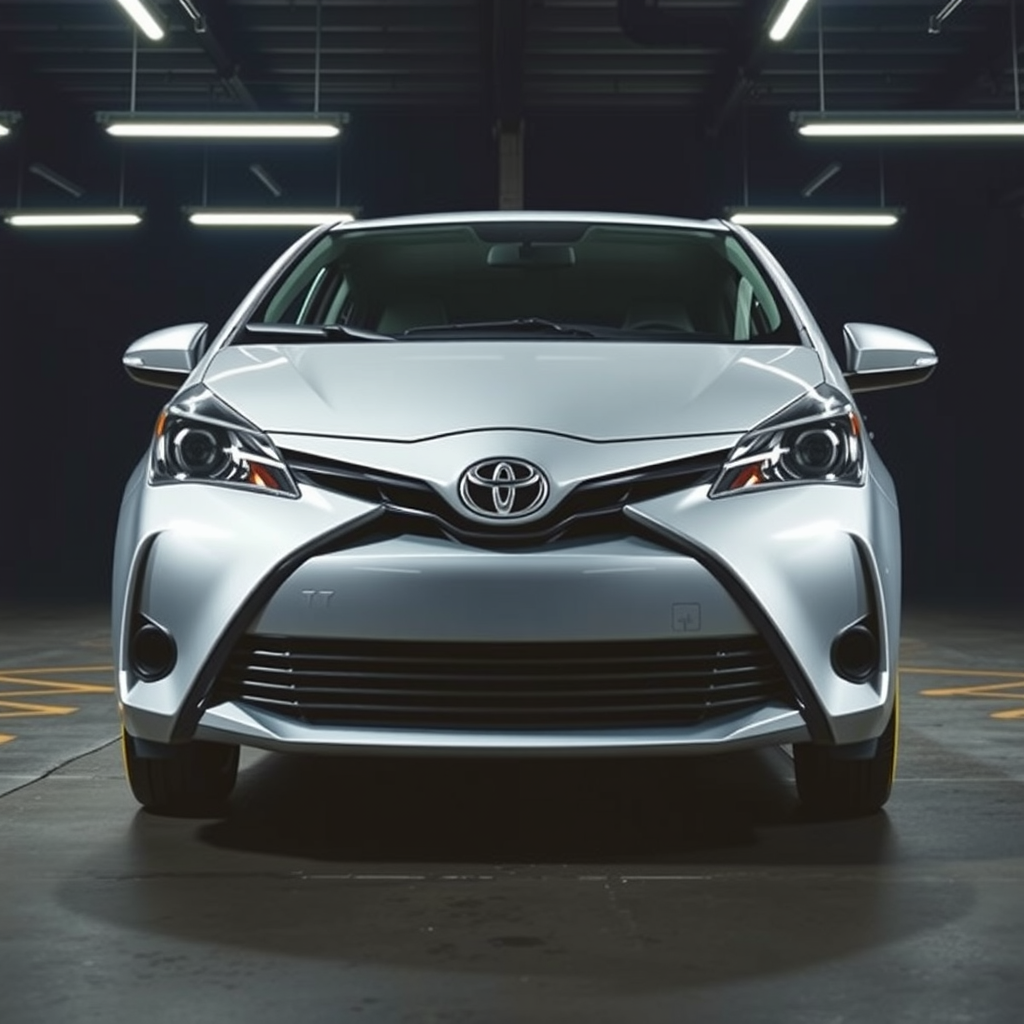
Toyota Yaris wheel fitment — II XP90, XP90 Facelift
Overview
The second generation of the Toyota Yaris, known as XP90, was marketed from 2005 to 2013. It featured both hatchback and sedan body styles globally under the 'Yaris' nameplate. The hatchback version targeted European markets and was developed by Toyota’s ED2 facility in France. In late 2013, the hatchback model was discontinued for Asian markets but continued elsewhere.
Toyota Yaris wheel fitment
Start with the hub. The Toyota Yaris (II) XP90, XP90 Facelift spec table gives the bolt pattern and bore; the second table is the aftermarket window for Toyota Yaris wheel fitment.
| Bolt pattern (PCD) | 4x100 |
| Centre bore | 54.1 mm |
| Bolt / thread | M12x1.5 (nuts) |
| Seat type | flat |
| Factory setup | square |
| Brakes | e11*2001/116*0248*,e11*2001/116*0249*. |
| TPMS | direct |
Aftermarket wheel sizes — read per position:
| Position | Width | Offset |
|---|---|---|
| Front | 5J–7.5J | ET30–ET45 |
Width and offset move together: roughly 8 to 10 ET more for every extra 1J keeps the wheel inside the arch. Final offset and any spacer come from the fit-check.
UK popularity & demand
Based on DfT VEH0124 vehicle-parc data (2025), there are approximately 583,070 Toyota Yaris on UK roads, placing it in the top 1% of car models by volume across our fitment database.
A parc that size is why Toyota Yaris wheel fitment is worth getting exactly right: a lot of owners are shopping for these numbers.
Source: DfT/DVLA licensed-vehicle statistics (VEH0124), matched to the AIWheelTech fitment database.
Body styles & production
| Produced | 2005–2016 |
Trim levels
Factory colours
History & notable variants
The XP90 generation saw notable changes from its predecessor with a refreshed design and improved features. It marked a significant period as it transitioned the Yaris nameplate to be used consistently across global markets, replacing earlier names like Vitz in Japan and Echo in North America up until 2005.
Reliability & owner notes
- Pros: Global consistency in nameplate usage; improved design and features
- Cons: Discontinued hatchback model for Asian markets by 2013
- Common issues: No specific reliability issues mentioned