
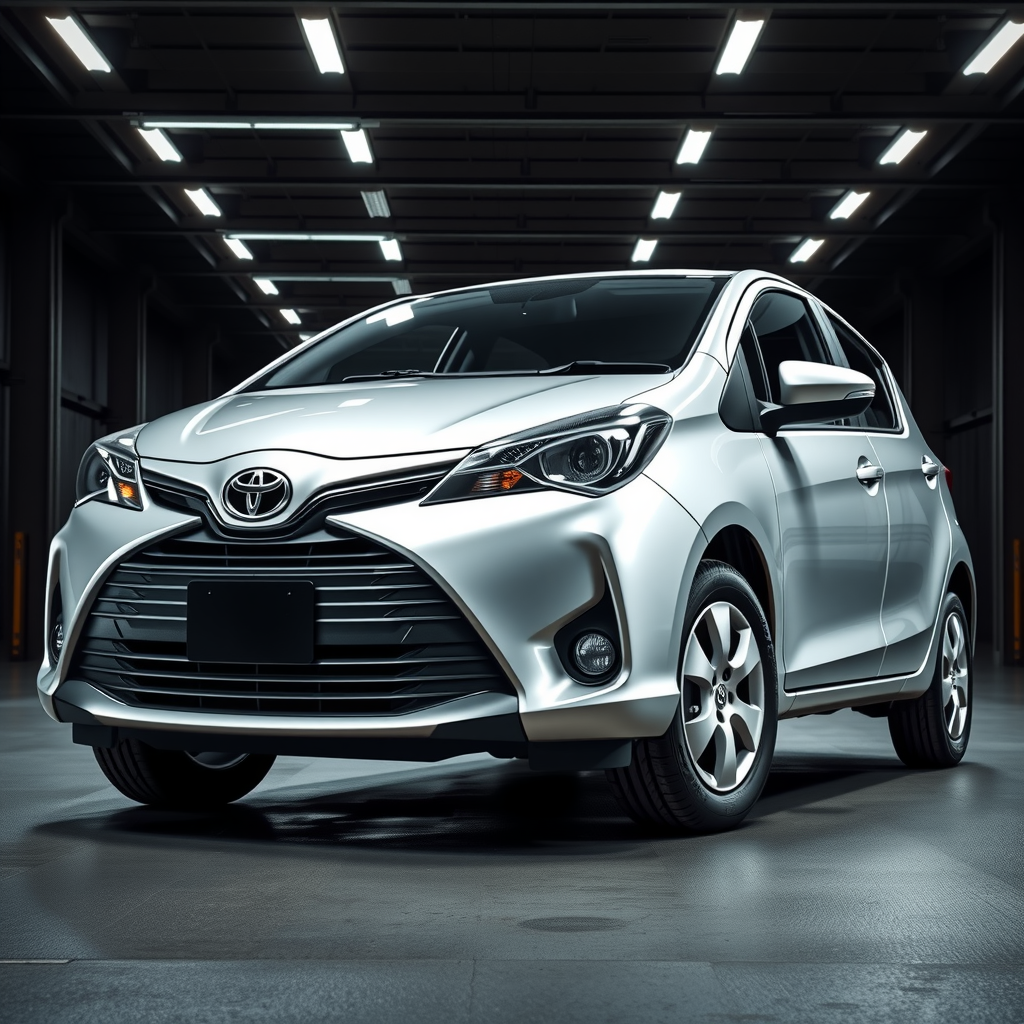
Toyota Yaris wheel fitment — III XP13M a , XP13N a
Toyota Yaris wheel fitment
Toyota Yaris wheel fitment comes down to two things: the factory hub spec, and how far the aftermarket width and offset can move from it. Both are here for the Toyota Yaris (III) XP13M(a), XP13N(a) (2012–2017).
| Bolt pattern (PCD) | 4x100 |
| Centre bore | 54.1 mm |
| Bolt / thread | M12x1.5 (nuts) |
| Seat type | flat |
| Factory setup | square |
| Brakes | e11*2007/46*0152*..;e11*2007/46*0153*..;e13*2007/46*1722*..;e6*2007/46*0344*..- incl. Facelift 2017 |
| TPMS | direct |
Aftermarket wheel sizes — read per position:
| Position | Width | Offset |
|---|---|---|
| Front | 5J–7.5J | ET25–ET52 |
Go wider and the offset has to rise with it, about 8 to 10 ET per extra 1J, or the wheel pokes past the arch. The fit-check settles the exact offset and any spacer.
Overview
The Toyota Yaris XP13M(a) and XP13N(a), part of the third generation (2011-2018), is a subcompact car available in hatchback form. It was marketed globally under the 'Yaris' name, with sedan variants introduced later. The European, Australasian, South African, and most North American versions derive from the Japanese market Toyota Vitz XP130, while Asian versions from 2013 onwards use the Asian-market Toyota Yaris XP150 platform.
UK popularity & demand
Based on DfT VEH0124 vehicle-parc data (2025), there are approximately 583,070 Toyota Yaris on UK roads, placing it in the top 1% of car models by volume across our fitment database.
With that many on the road, Toyota Yaris wheel fitment is a spec fitters see constantly. We keep it current for that reason.
Source: DfT/DVLA licensed-vehicle statistics (VEH0124), matched to the AIWheelTech fitment database.
History & notable variants
The third generation of the Yaris saw significant changes in its design and features. Notable for being available initially only as a hatchback, it later introduced sedan variants. In North America, however, production shifted to the Mazda2-based models from 2019 onwards, discontinuing the Toyota-produced versions.
Dimensions
| Kerb weight | 1,045 to 1,225 kg |
Source: EU type-approval data (EEA).
Body styles & production
| Produced | 2012–2017 |
Trim levels
Factory colours
Reliability & owner notes
- Pros: Compact size, fuel efficiency
- Cons: Limited trunk space compared to competitors
- Common issues: None reported