
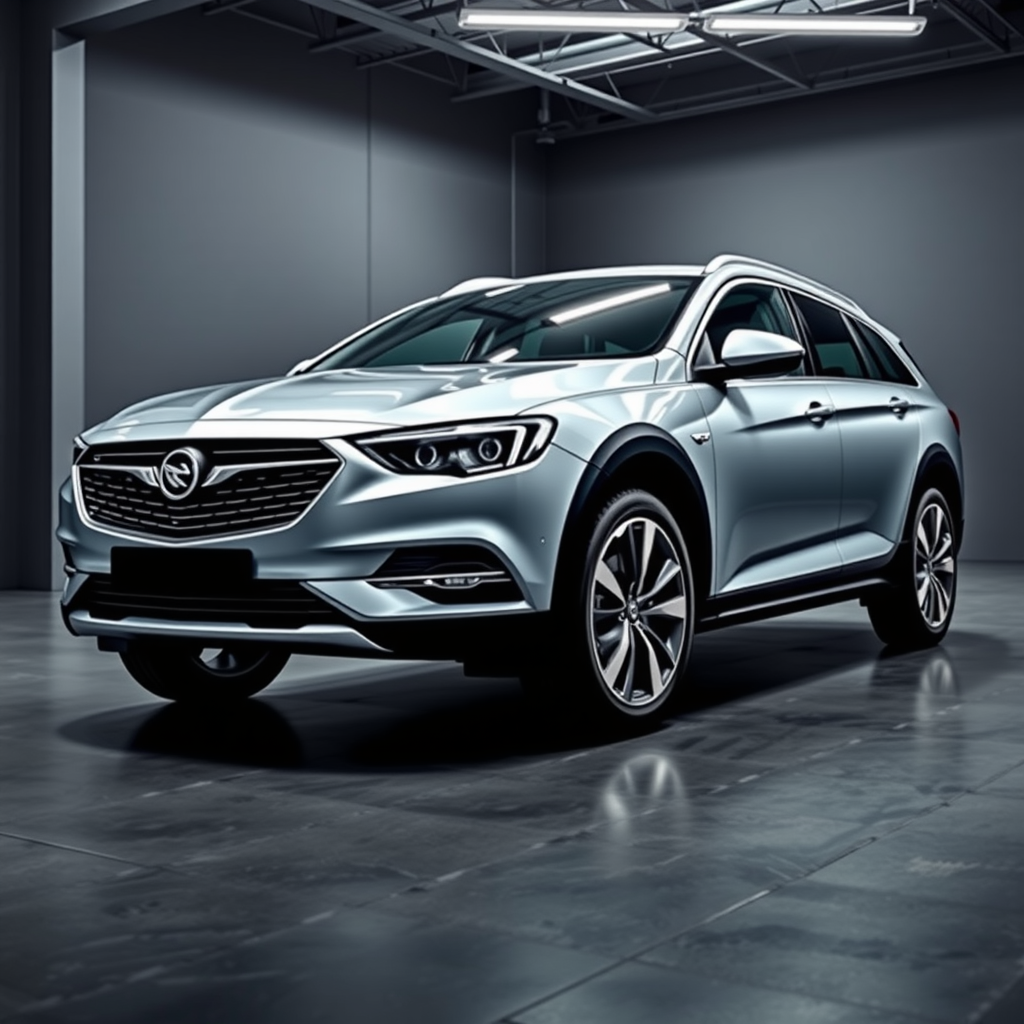
Vauxhall Insignia wheel fitment — Insignia-B Country Tourer Z-B
Overview
The second generation Vauxhall Insignia-B Country Tourer Z-B is part of Opel's large family car line, developed on a moderately updated version of the GM Epsilon II platform. It succeeded the first-generation model and was introduced at the 2017 Geneva Motor Show. This generation marks the transition from traditional four-door saloon to more modern body styles like the Country Tourer variant. The Vauxhall Insignia is produced in Rüsselsheim, Germany, alongside its Opel counterpart. It represents a shift towards performance variants using the GSi nameplate instead of OPC.
History & notable variants
The second generation was revealed at the 2017 Geneva Motor Show and received a facelift in 2020. This model saw changes to engine offerings with only the 2-liter four-cylinder petrol engine remaining available in Europe, while new engines like a 1.5-liter three-cylinder and a 2.0-liter diesel were introduced.
Vauxhall Insignia wheel fitment
Everything below is what the fit-check uses for Vauxhall Insignia wheel fitment: the factory bolt spec first, then the width and offset window that clears the arches and the brakes on the Vauxhall Insignia-B Country Tourer Z-B.
| Bolt pattern (PCD) | 5x115 |
| Centre bore | 70.2 mm |
| Bolt / thread | M12x1.5 (nuts) |
| Seat type | tapered |
| Factory setup | square |
| TPMS | direct |
Aftermarket wheel sizes — read per position:
| Position | Width | Offset |
|---|---|---|
| Front | 8J–9.5J | ET25–ET41 |
As a rule, each extra 1J of width wants roughly +8 to 10 ET to keep the wheel tucked. The exact offset and any spacer are confirmed by the fit-check.
Engines & drivetrain
| Variant | Engine | Fuel | Power | Drive, years |
|---|---|---|---|---|
| 1.5 Turbo | 1,490 cc, B15XFL (LFV) | petrol | 103 kW (140 PS) | FWD, 2017 to 2020 |
| 1.5 Turbo EcoTEC | 1,490 cc, B15XFL (LFV) | petrol | 103 kW (140 PS) | FWD, 2017 to 2018 |
| 1.5 Turbo | 1,490 cc, B15XFT (LFV) | petrol | 121 kW (165 PS) | FWD, 2017 to 2020 |
| 1.5 Turbo EcoTEC | 1,490 cc, B15XFT (LFV) | petrol | 121 kW (165 PS) | FWD, 2017 to 2018 |
| 1.6 Turbo | 1,598 cc, D16SHT (LWC) | petrol | 147 kW (200 PS) | FWD, 2018 to 2019 |
| 2.0 Turbo | 1,998 cc, F20SHT (LSY) | petrol | 125 kW (170 PS) | FWD, 2020 to 2022 |
| 2.0 Turbo | 1,998 cc, F20SHT (LSY) | petrol | 147 kW (200 PS) | FWD, 2020 to 2022 |
| 2.0 Turbo 4x4 GSi | 1,998 cc, F20SHT (LSY) | petrol | 169 kW (230 PS) | AWD, 2020 to 2022 |
| 2.0 Turbo 4×4 | 1,998 cc, B20NFT (LTG) | petrol | 191 kW (260 PS) | AWD, 2017 to 2018 |
| 1.5 Turbo D | 1,496 cc, F15DVH (LXD) | diesel | 90 kW (122 PS) | FWD, 2020 to 2022 |
| 1.6 Turbo D | 1,598 cc, D16DTE (LWQ/LXO) | diesel | 81 kW (110 PS) | FWD, 2017 to 2018 |
| 1.6 EcoTEC D | 1,598 cc, D16DTE (LWQ/LXO) | diesel | 81 kW (110 PS) | FWD, 2017 to 2020 |
| 1.6 Turbo D | 1,598 cc, D16DTH (LVL) | diesel | 100 kW (136 PS) | FWD, 2017 to 2020 |
| 2.0 Turbo D | 1,956 cc, B/D20DTH (LFS) | diesel | 125 kW (170 PS) | FWD, 2017 to 2020 |
| 2.0 Turbo D 4x4 | 1,956 cc, B/D20DTH (LFS) | diesel | 125 kW (170 PS) | AWD, 2017 to 2020 |
| 2.0 Turbo D | 1,995 cc, F20DVH (LSQ) | diesel | 128 kW (174 PS) | FWD, 2020 to 2022 |
| 2.0 Turbo D 4x4 | 1,995 cc, F20DVH (LSQ) | diesel | 128 kW (174 PS) | AWD, 2020 to 2022 |
| 2.0 Turbo D 4x4 GSi | 1,956 cc, D20DTR (LFO) | diesel | 154 kW (210 PS) | AWD, 2017 to 2020 |
Source: Opel Insignia B, de.wikipedia.org.
Performance
| Variant | Power | 0 to 62 mph (0 to 100 km/h) | Top speed |
|---|---|---|---|
| 1.5 Turbo | 103 kW (140 PS) | 9.9 s | 210 km/h (130 mph) |
| 1.5 Turbo EcoTEC | 103 kW (140 PS) | 9.9 s | 213 km/h (132 mph) |
| 1.5 Turbo | 121 kW (165 PS) | 8.9 to 9.4 s | 218 to 222 km/h (135 to 138 mph) |
| 1.5 Turbo EcoTEC | 121 kW (165 PS) | 8.9 s | 225 km/h (140 mph) |
| 1.6 Turbo | 147 kW (200 PS) | 7.7 to 8 s | 232 to 235 km/h (144 to 146 mph) |
| 2.0 Turbo | 125 kW (170 PS) | 8.7 s | 228 km/h (142 mph) |
| 2.0 Turbo | 147 kW (200 PS) | 7.7 s | 235 km/h (146 mph) |
| 2.0 Turbo 4x4 GSi | 169 kW (230 PS) | 7.4 s | 237 km/h (147 mph) |
| 2.0 Turbo 4×4 | 191 kW (260 PS) | 7.3 s | 250 km/h (155 mph) |
| 1.5 Turbo D | 90 kW (122 PS) | 11.4 to 12.2 s | 200 to 205 km/h (124 to 127 mph) |
| 1.6 Turbo D | 81 kW (110 PS) | 11.6 s | 201 km/h (125 mph) |
| 1.6 EcoTEC D | 81 kW (110 PS) | 11.6 to 11.8 s | 205 km/h (127 mph) |
| 1.6 Turbo D | 100 kW (136 PS) | 10.5 to 10.9 s | 203 to 211 km/h (126 to 131 mph) |
| 2.0 Turbo D | 125 kW (170 PS) | 8.7 to 8.9 s | 223 to 226 km/h (139 to 140 mph) |
| 2.0 Turbo D 4x4 | 125 kW (170 PS) | 9.7 s | 223 km/h (139 mph) |
| 2.0 Turbo D | 128 kW (174 PS) | 8 s | 225 to 228 km/h (140 to 142 mph) |
| 2.0 Turbo D 4x4 | 128 kW (174 PS) | 8.9 s | 223 km/h (139 mph) |
| 2.0 Turbo D 4x4 GSi | 154 kW (210 PS) | 7.9 s | 233 km/h (145 mph) |
Source: Opel Insignia B, de.wikipedia.org.
UK popularity & demand
Based on DfT VEH0124 vehicle-parc data (2025), there are approximately 169,665 Vauxhall Insignia on UK roads, placing it in the top 2% of car models by volume across our fitment database.
A parc that size is why Vauxhall Insignia wheel fitment is worth getting exactly right: a lot of owners are shopping for these numbers.
Source: DfT/DVLA licensed-vehicle statistics (VEH0124), matched to the AIWheelTech fitment database.
Dimensions
| Length | 4,897 to 5,004 mm |
| Width | 1,863 to 1,871 mm |
| Height | 1,455 to 1,525 mm |
| Wheelbase | 2,829 mm |
| Kerb weight | 1,441 to 1,733 kg |
Source: Opel Insignia B, de.wikipedia.org; EU type-approval data (EEA).
Body styles & production
| Body styles | 5-door liftback/fastback, 5-door estate |
| Produced | 2017–2023 |
Factory colours
Trim levels
Reliability & owner notes
- Pros: Modern design, updated platform, performance variants
- Cons: Limited engine options in later years