
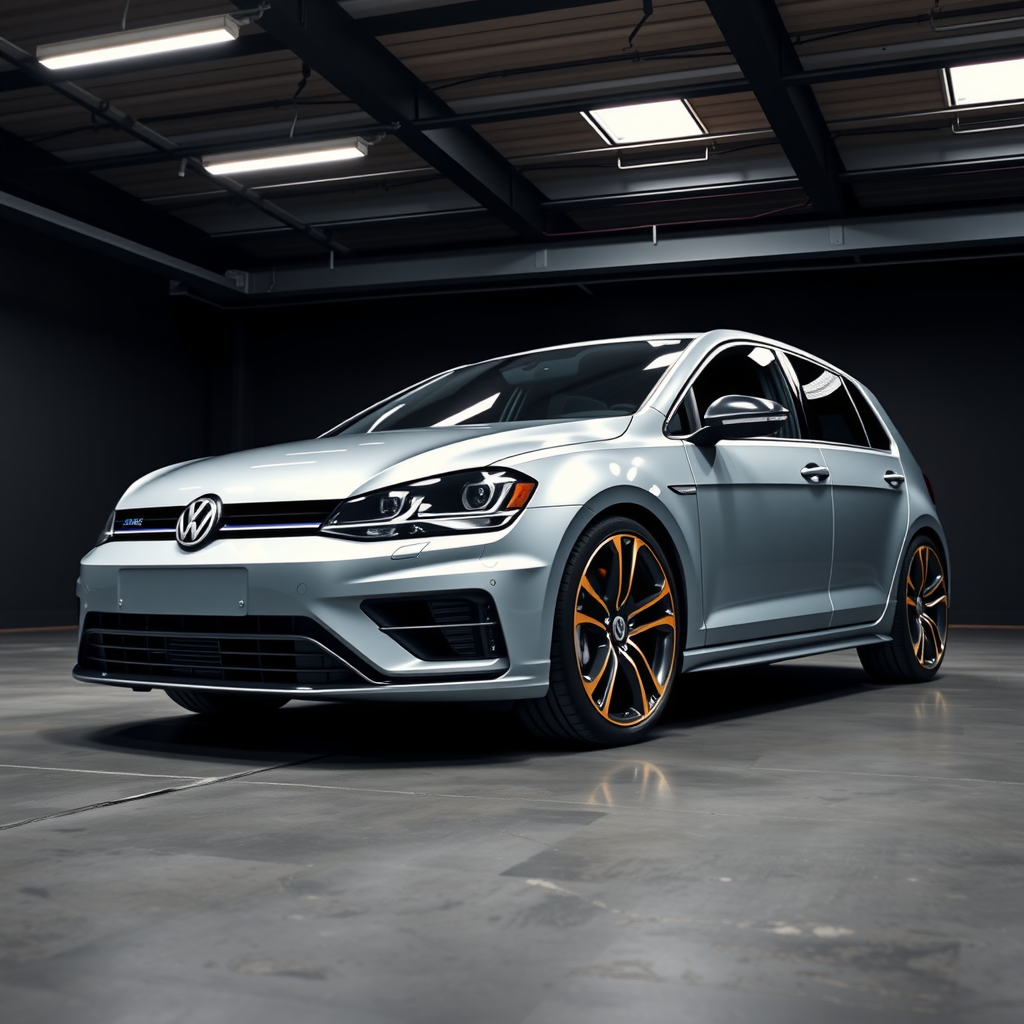
Volkswagen Golf wheel fitment — Vi R 1K
Overview
The Volkswagen Golf Mk5 (Vi) is a compact car produced from 2003 to 2012, marking the fifth generation of this iconic model. It was introduced in Europe in autumn 2003 and reached North America as the Rabbit nameplate starting in 2006. The Mk5 features an updated design with improved aerodynamics and a more refined interior compared to its predecessor. Available in various body styles, including hatchback and sedan (marketed as Jetta), it offers multiple engine options ranging from efficient diesel engines to high-performance variants like the R32 and GTI.
Volkswagen Golf wheel fitment
Volkswagen Golf wheel fitment for the Volkswagen Golf (Vi) R 1K (1974–present): the factory PCD, centre bore and bolt spec, then the aftermarket width and offset window we fit to.
| Bolt pattern (PCD) | 5x112 |
| Centre bore | 57.1 mm |
| Bolt / thread | M14x1.5 (bolts) |
| Wheel-bolt torque | 120 Nm |
| Seat type | radius |
| Factory setup | square |
| TPMS | indirect |
Aftermarket wheel sizes — read per position:
| Position | Width | Offset |
|---|---|---|
| Front | 6.5J–9J | ET35–ET53 |
As a rule, each extra 1J of width wants roughly +8–10 ET to keep the wheel tucked. The exact offset and any spacer are confirmed by the fit-check.
UK popularity & demand
Based on DfT VEH0124 vehicle-parc data (2025), there are approximately 944,531 Volkswagen Golf on UK roads, placing it in the top 1% of car models by volume across our fitment database.
That makes Volkswagen Golf wheel fitment a high-demand spec to keep in stock. It is one reason we track it here.
Source: DfT/DVLA licensed-vehicle statistics (VEH0124), matched to the AIWheelTech fitment database.
Engines & drivetrain
| Variant | Engine | Fuel | Power | Drive |
|---|---|---|---|---|
| Golf R 2.0 (standard) | 2.0L EA888 turbo petrol FSI | petrol | 272 hp | 4Motion |
| GTI 2.0 (performance pack) | 2.0L EA888 turbo petrol FSI | petrol | 221 hp | FWD |
| Golf R 2.0 (hot climate) | 2.0L EA888 turbo petrol FSI | petrol | 206 hp | 4Motion |
| GTI 2.0 (standard) | 2.0L EA888 turbo petrol FSI | petrol | 197 hp | FWD |
| 320d | 2.0L B47 turbo diesel | diesel | 150 hp | FWD |
| GTD 2.0 | 2.0L EA113 turbo diesel | diesel | 147 hp | FWD |
| GTD 2.0 (hot climate) | 2.0L EA113 turbo diesel | diesel | 140 hp | FWD |
| TSI 1.4 | 1.4L TSI petrol engine | petrol | 125 hp | FWD |
Performance
| Variant | Power | 0–62 mph | Top speed |
|---|---|---|---|
| 320d | 150 hp | 8.9 s | 130 mph |
| TSI 1.4 | 125 hp | 8.7 s | 129 mph |
| GTD 2.0 | 147 hp | 8.5 s | 130 mph |
| GTD 2.0 (hot climate) | 140 hp | 8.5 s | 129 mph |
| GTI 2.0 (standard) | 197 hp | 6.5 s | 149 mph |
| GTI 2.0 (performance pack) | 221 hp | 6.3 s | 154 mph |
| Golf R 2.0 (standard) | 272 hp | 4.9 s | 155 mph |
| Golf R 2.0 (hot climate) | 206 hp | 5.1 s | 130 mph |
Dimensions
| Length | 4269 mm |
| Width | 1780 mm |
| Height | 1453 mm |
| Wheelbase | 2578 mm |
Body styles & production
| Body styles | Hatchback, Sedan (Jetta) |
| Produced | 1974–present |
Trim levels
Factory colours
History & notable variants
The Mk5 saw notable performance upgrades with the introduction of the R32 featuring a 3.2-litre VR6 engine, and the GTI variant powered by a turbocharged 2.0-litre FSI engine. In North America, Volkswagen reintroduced the Rabbit nameplate for this generation before reverting to Golf in later years. The Mk5 was praised for its driving dynamics and interior quality but faced criticism regarding fuel economy.
Reliability & owner notes
- Pros: Improved aerodynamics, refined interior quality, high-performance variants
- Cons: Criticism for fuel economy in some models