Volkswagen ID.3 wheel fitment — Gtx, Pros, Pros Perf. E1
Overview
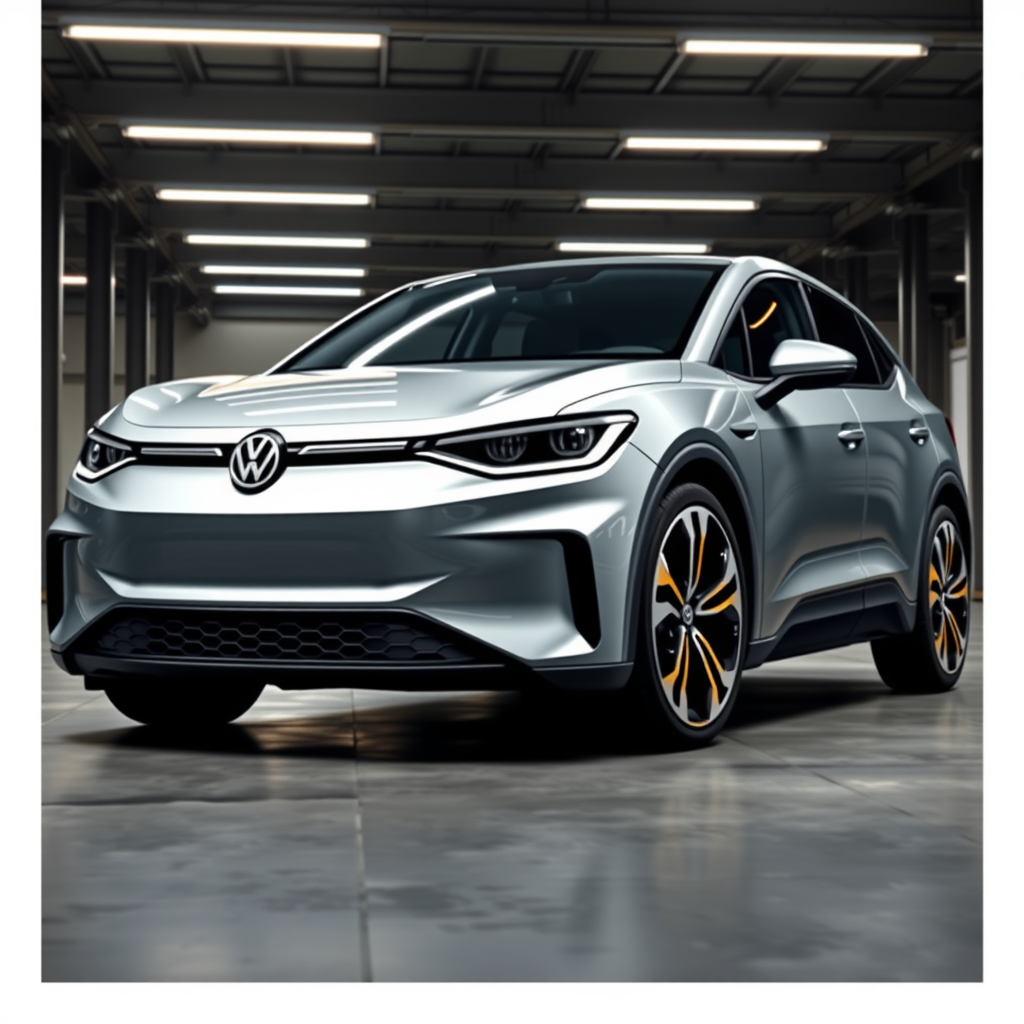
The Volkswagen ID.3 is a battery electric small family car (C-segment) produced by Volkswagen since November 2019. It is the first passenger vehicle of Volkswagen Group to utilise the MEB platform, and the first in what would become the long-running ID. series. The production version was unveiled on September 9, 2019, at the Frankfurt Motor Show (IAA). Assembled at Volkswagen's Zwickau factory and later at the Transparent Factory in Dresden until December 2025, it received notable demand with over 30,000 pre-orders before its unveiling. Deliveries to retail customers began in Germany in September 2020.
History & notable variants
The ID.3 was first shown as a concept car called I.D. at the 2016 Paris Motor Show and officially presented at the Frankfurt Motor Show in 2019. In March 2023, Volkswagen released a refreshed version of the ID.3 with minor exterior changes and improved interior quality. A substantially revised version under the name ID.3 Neo was announced for April 2026.
Volkswagen ID.3 wheel fitment
Everything below is what the fit-check uses for Volkswagen ID.3 wheel fitment: the factory bolt spec first, then the width and offset window that clears the arches and the brakes on the Volkswagen Id.3 Gtx, Pros, Pros Perf. E1.
| Bolt pattern (PCD) | 5x112 |
| Centre bore | 57.1 mm |
| Bolt / thread | M14x1.5 (bolts) |
| Wheel-bolt torque | 120 Nm |
| Seat type | radius |
| Factory setup | square |
| TPMS | indirect |
Aftermarket wheel sizes — read per position:
| Position | Width | Offset |
|---|---|---|
| Front | 7.5J–8.5J | ET35–ET51 |
As a rule, each extra 1J of width wants roughly +8 to 10 ET to keep the wheel tucked. The exact offset and any spacer are confirmed by the fit-check.
Dimensions
| Kerb weight | 1,772 to 1,936 kg |
Source: EU type-approval data (EEA).
Body styles & production
| Produced | 2019–2025 |
| Units produced | 57,000 |
Factory colours
Trim levels
Reliability & owner notes
- Pros: First MEB platform vehicle by Volkswagen Group; Highly efficient battery management system
- Cons: Initial software issues delayed deliveries; Limited range on smaller battery models