Volkswagen ID.3 wheel fitment — Pure, Pro, Pro Perf. E1
Volkswagen ID.3 wheel fitment
Volkswagen ID.3 wheel fitment comes down to two things: the factory hub spec, and how far the aftermarket width and offset can move from it. Both are here for the Volkswagen Id.3 Pure, Pro, Pro Perf. E1 (2019–2025).
| Bolt pattern (PCD) | 5x112 |
| Centre bore | 57.1 mm |
| Bolt / thread | M14x1.5 (bolts) |
| Wheel-bolt torque | 120 Nm |
| Seat type | radius |
| Factory setup | square |
| TPMS | indirect |
Aftermarket wheel sizes — read per position:
| Position | Width | Offset |
|---|---|---|
| Front | 7.5J–8.5J | ET35–ET51 |
As a rule, each extra 1J of width wants roughly +8 to 10 ET to keep the wheel tucked. The exact offset and any spacer are confirmed by the fit-check.
Overview
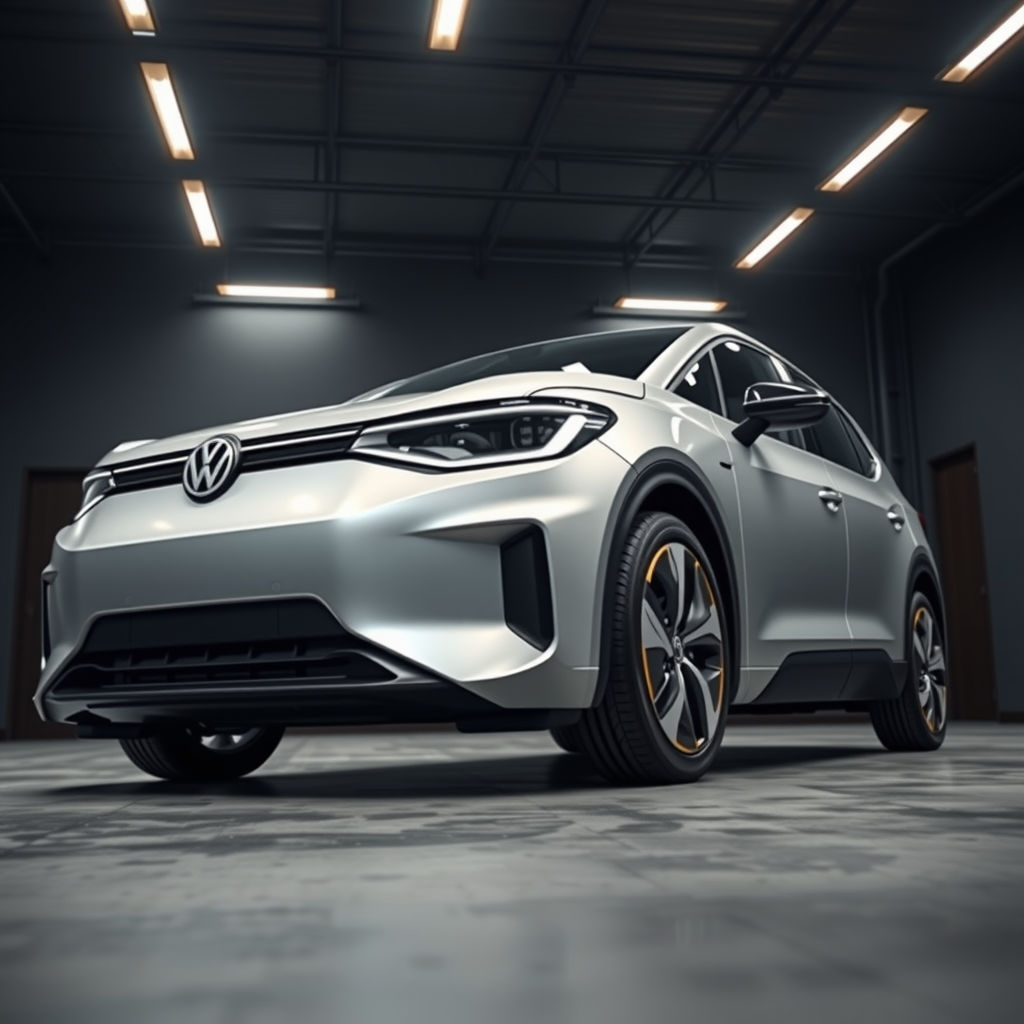
The Volkswagen ID.3 is a battery electric small family car (C-segment) produced by Volkswagen since November 2019. It is the first passenger vehicle of Volkswagen Group to utilise the MEB platform, and the first in what would become the long-running ID. series. The ID.3 was unveiled on September 9, 2019, at the Frankfurt Motor Show, after being first shown as the I.D. concept car at the 2016 Paris Motor Show. Deliveries to retail customers began in Germany in September 2020.
History & notable variants
The ID.3 was previewed as a concept car called the Volkswagen I.D., first shown at the 2016 Paris Motor Show, featuring innovations such as virtual wing mirrors and retractable LiDAR sensors for autonomous driving. In May 2019, Volkswagen confirmed the production model based on this prototype would be named ID.3 instead of the rumoured 'I.D. Neo' name. The car was officially presented at the Frankfurt Motor Show in September 2019. An entry-level variant called ID.3 Pure Performance and a high-performance GTX version were later introduced.
Dimensions
| Kerb weight | 1,772 to 1,936 kg |
Source: EU type-approval data (EEA).
Body styles & production
| Produced | 2019–2025 |
Trim levels
Factory colours
Reliability & owner notes
- Pros: First MEB platform vehicle; innovative design; strong electric range
- Cons: Initial software issues delayed production; limited battery options for entry-level models
- Common issues: Software glitches affected early deliveries