
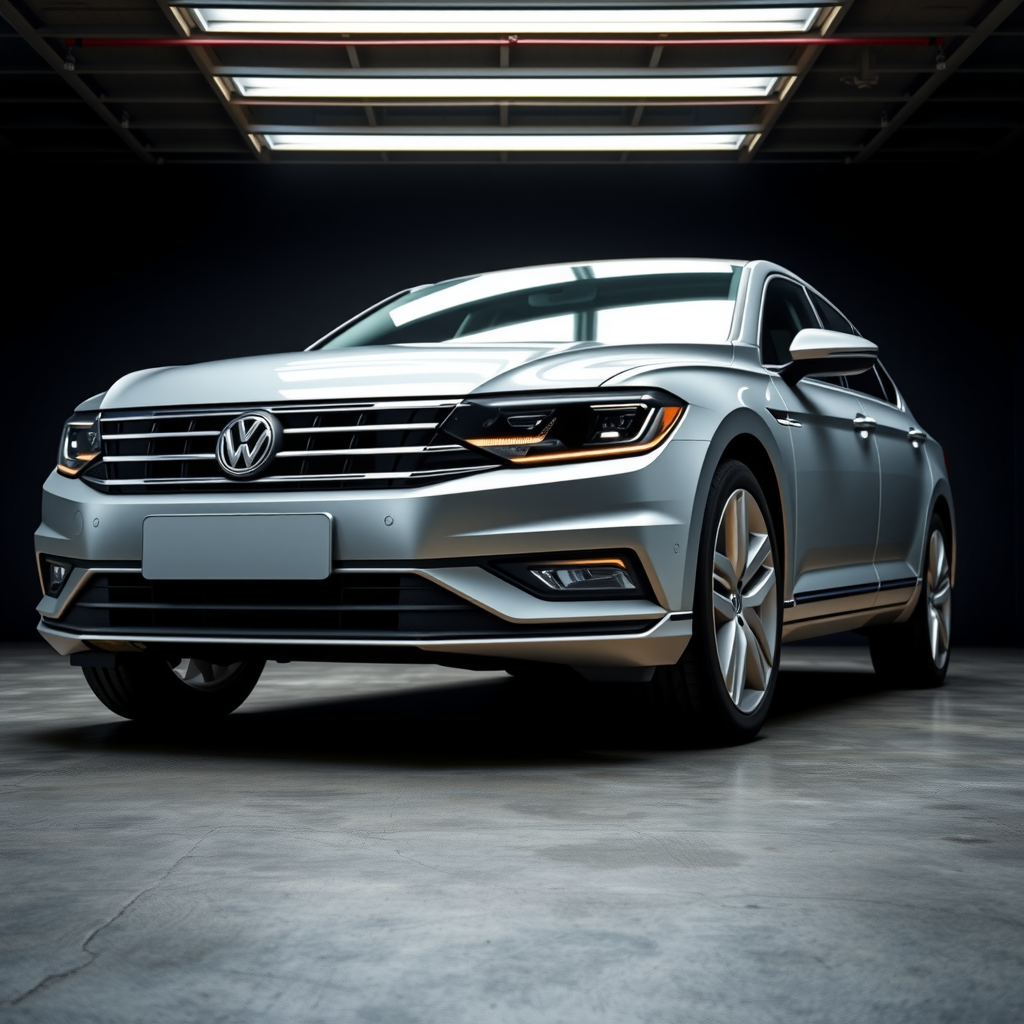
Volkswagen Passat wheel fitment — V 3BG
Volkswagen Passat wheel fitment
Volkswagen Passat wheel fitment comes down to two things: the factory hub spec, and how far the aftermarket width and offset can move from it. Both are here for the Volkswagen Passat (V) 3BG (1973–present).
| Bolt pattern (PCD) | 5x112 |
| Centre bore | 57.1 mm |
| Bolt / thread | M14x1.5 (bolts) |
| Wheel-bolt torque | 120 Nm |
| Seat type | radius |
| Factory setup | square |
| TPMS | indirect |
Aftermarket wheel sizes — read per position:
| Position | Width | Offset |
|---|---|---|
| Front | 6J–9.5J | ET25–ET45 |
As a rule, each extra 1J of width wants roughly +8 to 10 ET to keep the wheel tucked. The exact offset and any spacer are confirmed by the fit-check.
Overview
The Volkswagen Passat B5 generation was introduced in Germany in the summer of 1996 and later rolled out across Continental Europe, the UK, North America, and Australia by 1998. Built on the Volkswagen Group B5 platform shared with the first-generation Audi A4, this model marked a return to sharing its longitudinal engine layout platform with an Audi equivalent since the second generation Passat of 1981. The B5 Passat featured a new design language and aerodynamic improvements, achieving a coefficient of drag of 0.27 for the saloon model. It was available in front-wheel-drive or optional all-wheel-drive configurations using a Torsen-based system.
UK popularity & demand
Based on DfT VEH0124 vehicle-parc data (2025), there are approximately 175,564 Volkswagen Passat on UK roads, placing it in the top 2% of car models by volume across our fitment database.
With that many on the road, Volkswagen Passat wheel fitment is a spec fitters see constantly. We keep it current for that reason.
Source: DfT/DVLA licensed-vehicle statistics (VEH0124), matched to the AIWheelTech fitment database.
History & notable variants
The B5 generation saw significant changes from its predecessor with a fully independent four-link front suspension and semi-independent torsion beam rear suspension on FWD models, while 4Motion AWD models featured an independent rear setup. The Passat was offered in various engine options including petrol engines like the 1.8L and 2.8L V6, as well as diesel variants such as the 1.9L TDI and 2.5L V6 TDI. This generation also introduced a 4Motion all-wheel-drive system for select models.
Dimensions
| Kerb weight | 1,345 to 1,960 kg |
Source: EU type-approval data (EEA).
Body styles & production
| Produced | 1973–present |
Trim levels
Factory colours
Reliability & owner notes
- Pros: Improved aerodynamics with a drag coefficient of 0.27 for the saloon model; Available in both front-wheel-drive and all-wheel-drive configurations
- Cons: Potential oil sludge issues with the 1.8L petrol engine if not maintained properly