
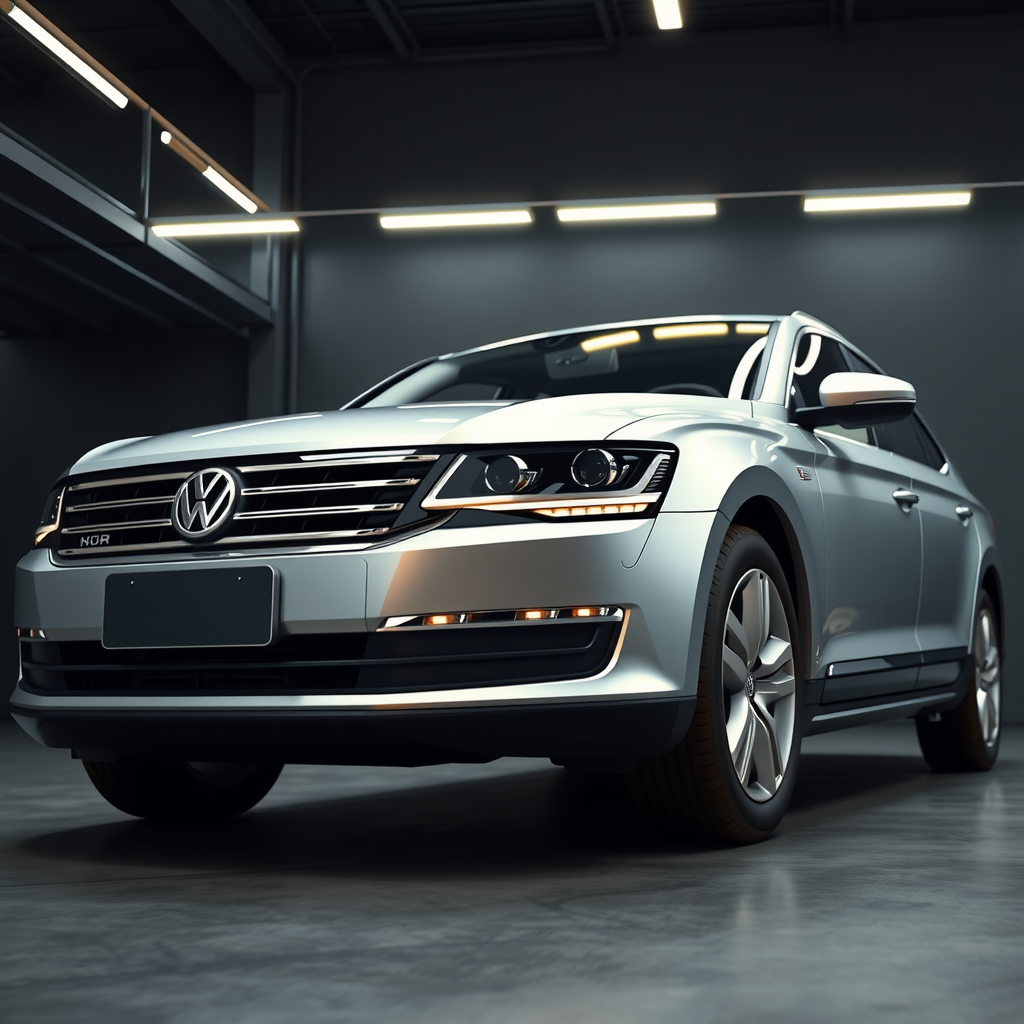
Volkswagen Phaeton wheel fitment — 3D
Overview
The Volkswagen Phaeton (Typ 3D) is a full-size luxury sedan/saloon, described by Volkswagen as their 'premium class' vehicle. Introduced at the 2002 Geneva Motor Show, it was marketed worldwide but sales in North America ended in 2006 and global production ceased in March 2016. The Phaeton used a special version of the Volkswagen D platform designated D1, shared with Bentley models, featuring all-steel construction for enhanced rigidity compared to Audi A8's aluminum chassis. It was hand-assembled at the Transparent Factory in Dresden, Germany.
Volkswagen Phaeton wheel fitment
Volkswagen Phaeton wheel fitment for the Volkswagen Phaeton 3D (2002–2016): the factory PCD, centre bore and bolt spec, then the aftermarket width and offset window we fit to.
| Bolt pattern (PCD) | 5x112 |
| Centre bore | 57.1 mm |
| Bolt / thread | M14x1.5 (bolts) |
| Wheel-bolt torque | 120 Nm |
| Seat type | radius |
| Factory setup | square |
| TPMS | indirect |
Aftermarket wheel sizes — read per position:
| Position | Width | Offset |
|---|---|---|
| Front | 7.5J–9.5J | ET25–ET46 |
As a rule, each extra 1J of width wants roughly +8–10 ET to keep the wheel tucked. The exact offset and any spacer are confirmed by the fit-check.
UK popularity & demand
Based on DfT VEH0124 vehicle-parc data (2025), there are approximately 636 Volkswagen Phaeton on UK roads, placing it in the top 35% of car models by volume across our fitment database.
That makes Volkswagen Phaeton wheel fitment a high-demand spec to keep in stock. It is one reason we track it here.
Source: DfT/DVLA licensed-vehicle statistics (VEH0124), matched to the AIWheelTech fitment database.
Engines & drivetrain
| Variant | Engine | Fuel | Power | Drive |
|---|---|---|---|---|
| 6.0L W12 (2004–2011) | 6.0L Volkswagen W12 engine | petrol | 380 hp | 4Motion |
| 4.2L V8 | 4.2L BGH, BGJ V8 | petrol | 335 hp | 4Motion |
| 5.0L V10 TDI (2003–2007) | 5.0L AJS V10 TDI | diesel | 310 hp | 4Motion |
| 3.6L VR6 FSI | 3.6L EA390 VR6 | petrol | 280 hp | 4Motion |
| 3.2L VR6 | 3.2L EA390 AYT / BKL / BRK VR6 | petrol | 258 hp | 4Motion |
| 3.0L VR6 | 3.0L EA390 VR6 | petrol | 201 hp | 4Motion |
| 3.0L V6 TDI | 3.0L TDI Common Rail (BMK / CARA / CEXA) V6 TDI | diesel | 184 hp | 4Motion |
Performance
| Variant | Power | 0–62 mph | Top speed |
|---|---|---|---|
| 3.6L VR6 FSI | 280 hp | 7.1 s | 155 mph |
| 4.2L V8 | 335 hp | 5.7 s | 155 mph |
| 6.0L W12 (2004–2011) | 380 hp | 5.1 s | 174 mph |
Dimensions
| Length | 5055 mm |
| Width | 1903 mm |
| Height | 1450 mm |
| Wheelbase | 3001 mm |
| Kerb weight | 2184 kg |
Body styles & production
| Body styles | Sedan |
| Produced | 2002–2016 |
| Units produced | 84,253 |
Trim levels
Factory colours
History & notable variants
Conceived by Ferdinand Piëch as a direct competitor to Mercedes-Benz and BMW’s luxury offerings, the Phaeton aimed to surpass these brands with unique features like draftless four-zone climate control and programmable auxiliary heating systems. Despite innovative technology and high-end specifications, sales fell short of expectations due to brand perception issues in key markets such as North America. The Phaeton received several updates over its production run, including a facelift in 2008 and another in 2011, but it never achieved the market success Volkswagen had hoped for.
Reliability & owner notes
- Pros: Innovative features like draftless four-zone climate control and programmable auxiliary heating systems; high-end specifications; unique in the Volkswagen lineup as a full-size luxury sedan.
- Cons: Failed to achieve expected market success, particularly in North America; expensive price point compared to established luxury brands.
- Common issues: Significant financial loss for Volkswagen due to low sales volume.