
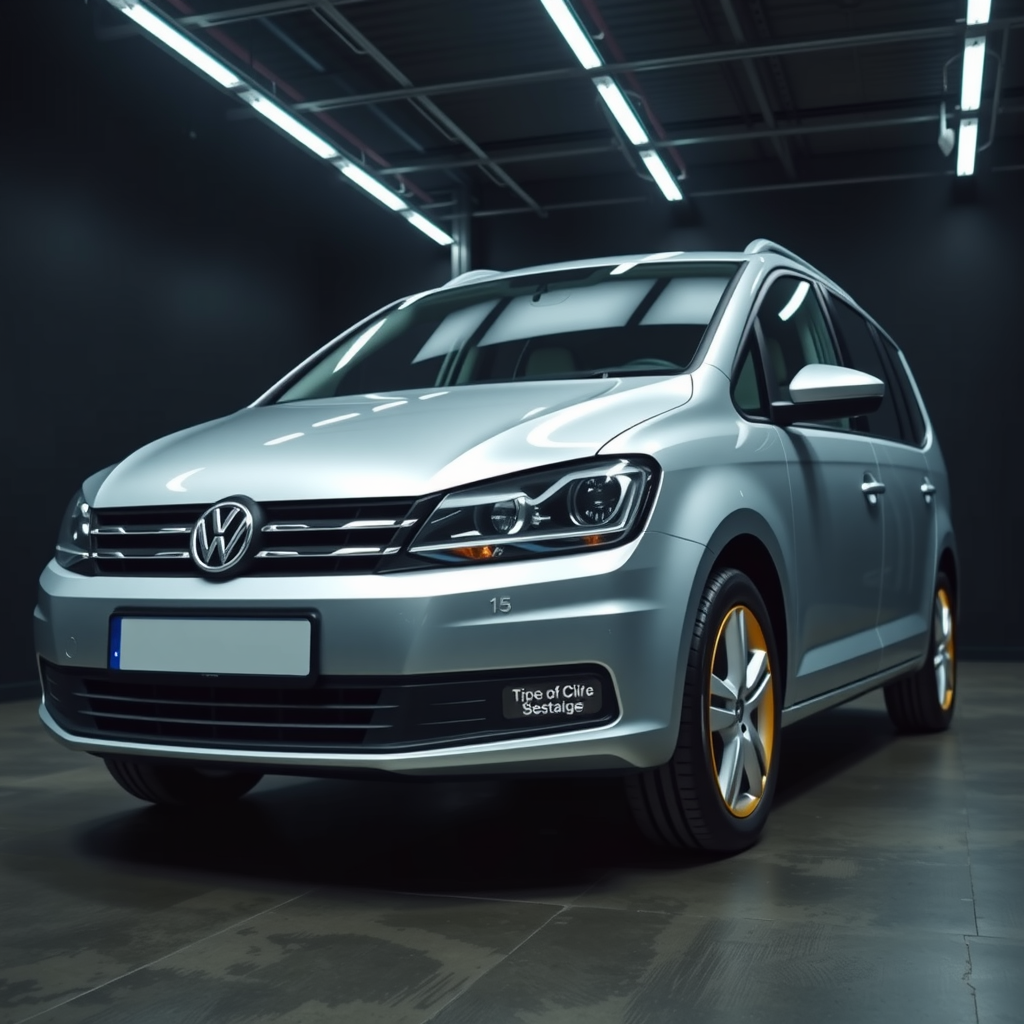
Volkswagen Touran wheel fitment — Ii 1T
Overview
The Volkswagen Touran (Typ 1T) is a compact multi-purpose vehicle (MPV) manufactured by German automaker Volkswagen since 2003. It fills a gap in Volkswagen's model lineup between the Volkswagen Golf and its larger counterpart, the Volkswagen Sharan. The first generation of the Touran was based on the PQ35 platform, sharing many components with the Golf Mk5. Introduced in December 2002, it went into production shortly after and sales commenced in 2003. It is known for its electro-mechanical steering system, which varies the weight of the steering depending on road speed, improving overall efficiency. The Touran was also the first vehicle to use Volkswagen's 2.0 TDI engine.
History & notable variants
The Touran received a facelift in October 2006 at the Paris Motor Show, featuring redesigned headlights with chrome accents and a refreshed grille. In late 2010, SAIC-VW released an updated version of the Touran in China, incorporating newer Golf VI looks but retaining some elements from earlier models. The car also saw minor yearly changes such as updates to fog lights and tinted glass colors.
Volkswagen Touran wheel fitment
Everything below is what the fit-check uses for Volkswagen Touran wheel fitment: the factory bolt spec first, then the width and offset window that clears the arches and the brakes on the Volkswagen Touran (Ii) 1T.
| Bolt pattern (PCD) | 5x112 |
| Centre bore | 57.1 mm |
| Bolt / thread | M14x1.5 (bolts) |
| Wheel-bolt torque | 120 Nm |
| Seat type | radius |
| Factory setup | square |
| TPMS | indirect |
Aftermarket wheel sizes — read per position:
| Position | Width | Offset |
|---|---|---|
| Front | 6.5J–8.5J | ET35–ET52 |
Width and offset move together: roughly 8 to 10 ET more for every extra 1J keeps the wheel inside the arch. Final offset and any spacer come from the fit-check.
Engines & drivetrain
| Variant | Engine | Fuel | Power | Drive, years |
|---|---|---|---|---|
| 1.2 TSI | I4 8V | petrol | 77 kW (105 PS) | 2010 to 2015 |
| 1.4 TSI | I4 16V | petrol | 103 kW (140 PS) | 2006 to 2010 |
| 1.4 TSI | I4 16V | petrol | 125 kW (170 PS) | 2007 to 2015 |
| 1.4 TSI EcoFuel | I4 16V | petrol | 110 kW (150 PS) | 2009 to 2015 |
| 1.6 R4 | I4 8V | 75 kW (102 PS) | 2003 to 2010 | |
| 1.6 FSI | I4 16V | petrol | 85 kW (116 PS) | 2003 to 2006 |
| 2.0 FSI | I4 16V | petrol | 110 kW (150 PS) | 2003 to 2006 |
| 2.0 EcoFuel | I4 8V | 80 kW (109 PS) | 2006 to 2009 | |
| 1.6 TDI | I4 16V | diesel | 66 kW (90 PS) | 2010 to 2015 |
| 1.6 TDI | I4 16V | diesel | 77 kW (105 PS) | 2010 to 2015 |
| 1.9 TDI | I4 8V | diesel | 66 kW (90 PS) | 2004 to 2010 |
| 1.9 TDI | I4 8V | diesel | 74 kW (101 PS) | 2003 to 2004 |
| 1.9 TDI | I4 8V | diesel | 77 kW (105 PS) | 2004 to 2010 |
| 2.0 TDI | I4 16V | diesel | 100 kW (136 PS) | 2003 to 2004 |
| 2.0 TDI | I4 16V | diesel | 103 kW (140 PS) | 2004 to 2010 |
| 2.0 TDI DPF | I4 8V | diesel | 103 kW (140 PS) | 2005 to 2010 |
| 2.0 TDI DPF | I4 16V | diesel | 103 kW (140 PS) | 2010 to 2015 |
| 2.0 TDI DPF | I4 16V | diesel | 125 kW (170 PS) | 2005 to 2010 |
| 2.0 TDI DPF | I4 16V | diesel | 130 kW (177 PS) | 2012 to 2015 |
Source: Volkswagen Touran, en.wikipedia.org.
UK popularity & demand
Based on DfT VEH0124 vehicle-parc data (2025), there are approximately 63,630 Volkswagen Touran on UK roads, placing it in the top 5% of car models by volume across our fitment database.
A parc that size is why Volkswagen Touran wheel fitment is worth getting exactly right: a lot of owners are shopping for these numbers.
Source: DfT/DVLA licensed-vehicle statistics (VEH0124), matched to the AIWheelTech fitment database.
Dimensions
| Length | 4,389 to 4,409 mm |
| Width | 1,791 to 1,793 mm |
| Height | 1,641 to 1,674 mm |
| Wheelbase | 2,680 mm |
| Kerb weight | 1,436 to 1,710 kg |
Source: Volkswagen Touran, en.wikipedia.org; EU type-approval data (EEA).
Body styles & production
| Produced | 2003–2015 |
| Units produced | 2,300,000 |
Factory colours
Trim levels
Reliability & owner notes
- Pros: Compact MPV with versatile seating configurations; electro-mechanical steering system; Euro 4 compliant engines
- Cons: Limited cargo space when third row is in use; some models have lower fuel efficiency compared to diesel variants
- Common issues: None explicitly mentioned