
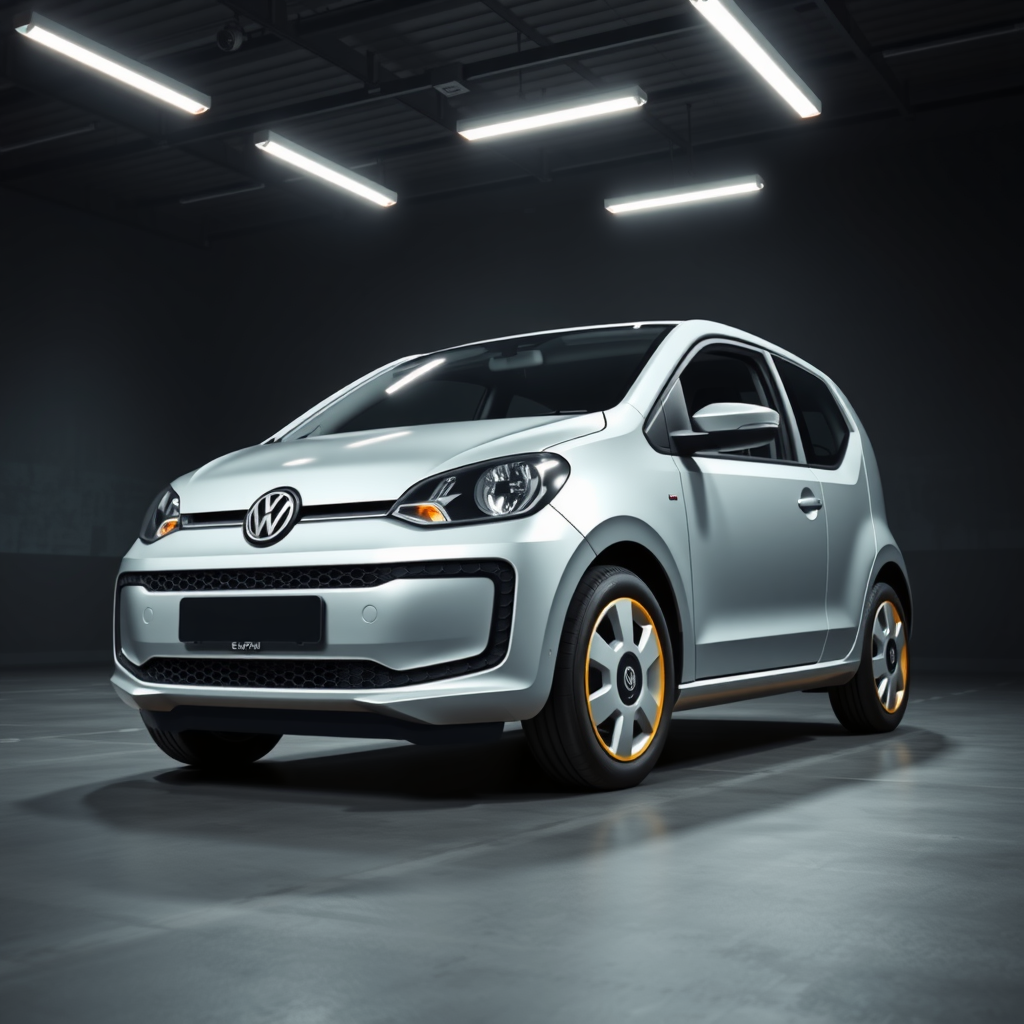
Volkswagen Up! wheel fitment — E-Up! AA, AAN
Volkswagen Up! wheel fitment
Volkswagen Up! wheel fitment for the Volkswagen E-Up! AA, AAN (2013–2021): the factory PCD, centre bore and bolt spec, then the aftermarket width and offset window we fit to.
| Bolt pattern (PCD) | 4x100 |
| Centre bore | 57.1 mm |
| Bolt / thread | M12x1.5 (bolts) |
| Wheel-bolt torque | 110 Nm |
| Seat type | tapered |
| Factory setup | square |
| TPMS | indirect |
Aftermarket wheel sizes — read per position:
| Position | Width | Offset |
|---|---|---|
| Front | 5J–7.5J | ET25–ET43 |
Go wider and the offset has to rise with it, about 8 to 10 ET per extra 1J, or the wheel pokes past the arch. The fit-check settles the exact offset and any spacer.
Overview
The Volkswagen E-Up! AA, AAN is a battery electric version of the Volkswagen up!, launched in autumn 2013. It was produced alongside its petrol counterparts until October 2023 when production ended. The E-Up! features an 18.7 kWh lithium-ion battery for the first iteration and later received a second iteration with a larger 32.3 kWh battery, offering improved range to 260 km (160 mi) on the NEDC cycle. It shares its platform and dimensions with the petrol up!, including seating for four passengers.
Dimensions
| Kerb weight | 1,214 to 1,279 kg |
Source: EU type-approval data (EEA).
Body styles & production
| Produced | 2013–2021 |
Trim levels
Factory colours
History & notable variants
The E-Up! was announced in July 2010 and unveiled at the September 2013 International Motor Show Germany, marking Volkswagen's entry into the electric city car market. The first iteration had a range of approximately 99 miles (NEDC cycle) and could be charged via standard sockets or fast-charging stations. In 2019, it received an upgrade with a larger battery for extended range and efficiency.
Reliability & owner notes
- Pros: Electric powertrain offers zero emissions and low running costs; compact size ideal for urban environments
- Cons: Limited range compared to modern EVs; charging infrastructure was less developed at launch